Cashier

 Deutsch
 Français
 Español
BlogRestaurants and cafés
Malak Heindy13 min read
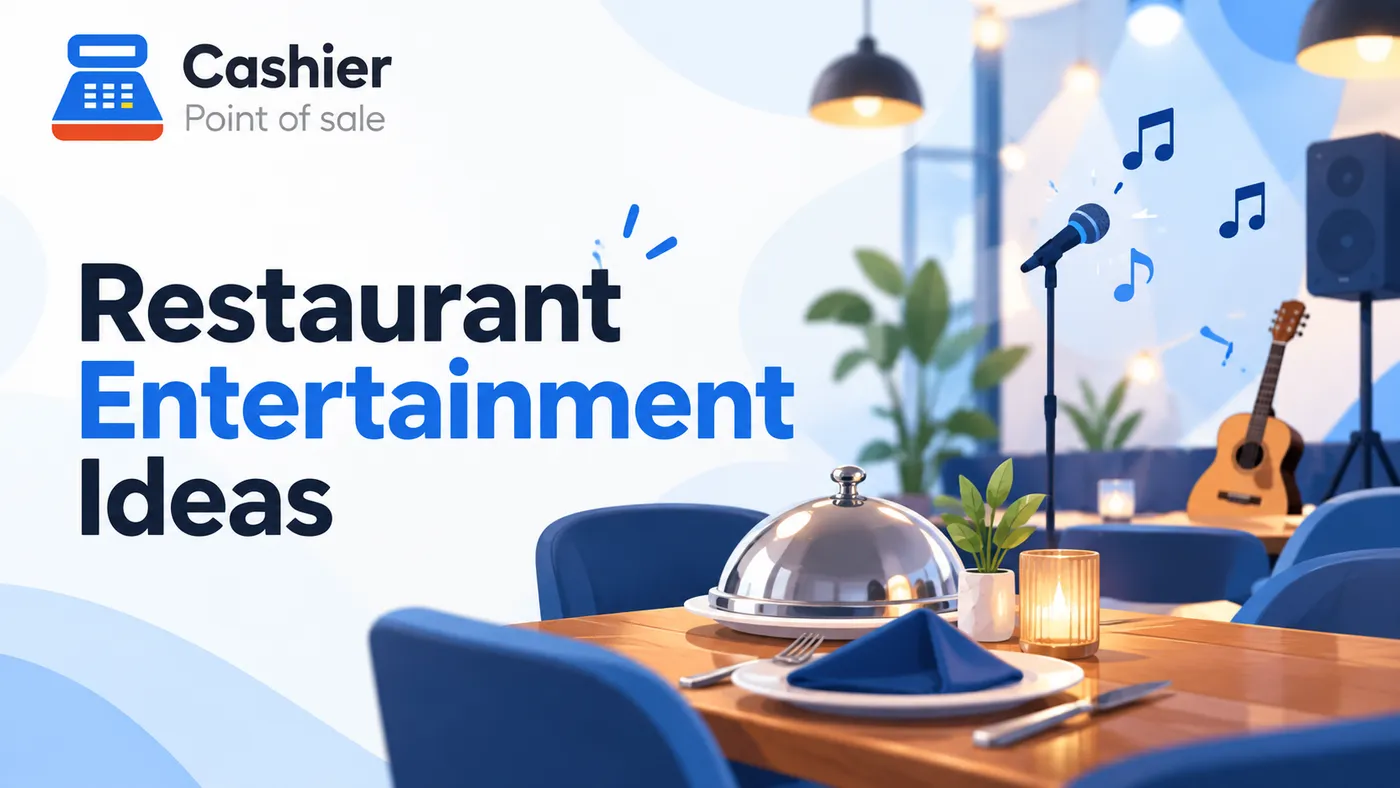
Running a successful restaurant is no longer only about serving good food. Customers have more choices than ever, including delivery apps, takeaway options, cafés, entertainment venues, and competing restaurants. To encourage people to visit, stay longer, return more often, and recommend your business, you need to create an experience that goes beyond the menu. This is where restaurant entertainment ideas can make a meaningful difference.
The right entertainment can turn an ordinary dinner into an experience customers remember. Live music, trivia nights, family activities, themed events, cooking demonstrations, competitions, and interactive experiences can help restaurants attract new customers while giving existing guests another reason to return.
However, successful restaurant entertainment should not be treated as entertainment alone. Restaurant owners need to understand whether an event actually increases customer traffic, average order value, repeat visits, and overall sales.
Combining creative restaurant events with reliable operational tools, including a modern restaurant POS system, helps businesses create enjoyable experiences while keeping sales, orders, inventory, and performance under control.
Here are 20 practical restaurant entertainment ideas that can help attract customers and increase restaurant sales.
Why Restaurant Entertainment Can Help Increase Sales
Entertainment changes the reason customers choose a restaurant.
Instead of visiting only because they are hungry, customers may visit because they want to participate in an event, meet friends, watch a performance, celebrate an occasion, or enjoy an experience they cannot get at home.
Successful entertainment can support restaurant growth in several ways.
Attract More Customers During Quiet Hours
Many restaurants experience predictable slow periods. Tuesday afternoon, Wednesday evening, or the hours between lunch and dinner may generate significantly less activity than Friday night.
Rather than discounting the menu heavily, restaurants can create specific events around those quieter periods.
For example, a weekly Wednesday trivia night can give customers a reason to visit when they otherwise might not.
Encourage Customers to Stay Longer
Entertainment can increase the amount of time customers spend inside the restaurant.
When customers stay for a live performance, competition, sports match, or game, they may place additional orders for appetizers, desserts, drinks, or other menu items.
The goal, however, should be to manage longer visits carefully so table occupancy remains profitable.
Create Repeat Visits
Recurring events can turn occasional visitors into regular customers.
If customers know that your restaurant hosts live music every Thursday or a quiz every Tuesday, the event can become part of their routine.
Consistency is especially important. A successful weekly event can gradually build its own community.
Generate Organic Social Media Content
Interesting restaurant experiences naturally create opportunities for photos and videos.
Customers may post a performance, competition, themed decoration, special dish, or memorable moment on Instagram, TikTok, Facebook, or other platforms.
This can expose the restaurant to potential customers without relying entirely on paid advertising.
Differentiate Your Restaurant
Two restaurants may offer similar food at similar prices. The customer experience can become the deciding factor.
Creating something distinctive gives customers another reason to choose your restaurant over nearby competitors.
1. Host Live Music Nights
Live music remains one of the most versatile restaurant entertainment ideas.
Restaurants can invite local singers, acoustic performers, small bands, instrumentalists, or DJs depending on the atmosphere and target audience.
The entertainment should match the restaurant concept. A quiet café may benefit from acoustic guitar or piano performances, while a casual restaurant may successfully host energetic bands or DJs.
Instead of scheduling music randomly, create a recurring event such as:
- Acoustic Thursdays
- Friday Live Sessions
- Sunday Jazz Evenings
- Weekend DJ Nights
Promote the schedule consistently through social media, your website, email, and in-store displays.
Restaurant owners should also compare sales during live music nights with normal evenings to determine whether the entertainment is producing measurable results.
2. Create Weekly Trivia Nights
Trivia is particularly effective because it encourages group participation.
Customers often arrive in teams, which can increase table size and create an energetic atmosphere without requiring expensive entertainment equipment.
Questions can cover:
- Movies
- Music
- Sports
- General knowledge
- Local culture
- Food
- Television
- History
You can also create themed trivia nights around popular entertainment trends or seasonal events.
Offer simple prizes such as a free dessert, restaurant voucher, complimentary menu item, or discount on a future visit.
The real benefit is consistency. A successful weekly trivia night can encourage groups to return regularly.
3. Organize Themed Restaurant Nights
Themed nights can transform the restaurant experience without changing your entire business concept.
Possible ideas include:
- Italian Night
- Mexican Night
- 1980s Night
- Retro Night
- Movie Night
- Mediterranean Evening
- Tropical Night
- Local Culture Night
- International Food Night
The theme can influence decorations, music, staff uniforms, menu specials, and entertainment.
The important point is authenticity. A theme should enhance the experience rather than feel like a random decoration added to the restaurant.
Restaurant owners can also introduce limited-time menu items connected to each theme.
4. Host Sports Viewing Events
Major sporting events can create strong restaurant traffic, particularly for casual restaurants, cafés, and venues with large screens.
Football matches, basketball games, international tournaments, racing events, and other competitions can become restaurant events.
Instead of simply turning on a television, build an experience around the match.
You could introduce:
- Team-inspired menu items
- Group meal packages
- Match-day appetizers
- Table competitions
- Score predictions
- Half-time games
Make sure the kitchen and service team are prepared for concentrated ordering periods before the event begins and during breaks.
5. Introduce Live Cooking Demonstrations
The kitchen itself can become entertainment.
Live cooking demonstrations allow customers to see how dishes are prepared while learning something about ingredients, techniques, or culinary traditions.
This approach works particularly well for restaurants with:
- Open kitchens
- Pizza ovens
- Grills
- Sushi counters
- Dessert stations
- Traditional cooking methods
A chef could demonstrate how a signature dish is prepared before customers receive their own version.
This creates an experience connected directly to the restaurant’s core product: food.
6. Run Restaurant Cooking Classes
Cooking classes take the live demonstration concept one step further by allowing customers to participate.
Restaurants can organize small workshops teaching guests how to make:
- Pizza
- Pasta
- Sushi
- Desserts
- Bread
- Coffee drinks
- Mocktails
- Signature sauces
Classes can be offered during slower business hours when tables and kitchen resources are available.
Participants can pay for the experience, creating an additional revenue stream beyond normal restaurant sales.
Cooking classes are also suitable for couples, families, tourists, corporate groups, and private events.
7. Create Family Entertainment Days
Family-friendly restaurants can attract more parents by making the dining experience easier and more enjoyable for children.
Activities could include:
- Coloring stations
- Face painting
- Balloon artists
- Magicians
- Storytelling
- Craft activities
- Children’s games
- Mini cooking workshops
Consider hosting family activities during specific hours rather than throughout the entire week.
For example, Saturday lunch could become a dedicated family period.
Parents receive a more relaxed dining experience, children remain entertained, and the restaurant creates a clear reason for families to choose the venue.
8. Add Board Games to the Restaurant Experience
Board games are affordable, flexible, and easy to introduce.
Create a small collection that customers can use while dining.
Options might include:
- Card games
- Chess
- Checkers
- Strategy games
- Family games
- Party games
Restaurants targeting students, young adults, families, or groups of friends may find board games particularly useful.
A dedicated board game evening can also turn the concept into a recurring restaurant event.
Keep games organized, regularly check for missing pieces, and choose options that are easy to clean.
9. Organize Karaoke Nights
Karaoke works because customers become part of the entertainment.
A successful karaoke night can create an energetic atmosphere and encourage groups to visit together.
You will need suitable microphones, speakers, screens, song selection software, and someone responsible for coordinating performances.
Choose a night that fits your audience.
A casual restaurant might run karaoke every Thursday, for example, helping build traffic before the weekend rush.
Promote upcoming karaoke nights in advance and encourage customers to reserve tables.
10. Host Open Mic Events
Open mic nights allow local singers, musicians, comedians, poets, and performers to showcase their talent.
Restaurants gain entertainment while local artists gain exposure.
This can help build stronger connections with the surrounding community.
Create clear participation rules and use a sign-up system so the event remains organized.
Restaurants can gradually develop a reputation as a place where customers discover local talent, giving people another reason to return.
11. Organize Seasonal Restaurant Events
Seasonal events give restaurants frequent opportunities to create something new.
Examples include:
- Summer evenings
- Winter menus
- Halloween events
- New Year’s celebrations
- Mother’s Day activities
- Father’s Day experiences
- Valentine’s Day dinners
- Back-to-school family events
- Cultural celebrations
Avoid simply adding seasonal decorations.
Connect the event to menu items, entertainment, competitions, or customer activities.
Seasonal events can also create urgency because customers know the experience is available for a limited time.
12. Create Food Challenges
Food challenges can be highly shareable when they are designed responsibly.
Examples include:
- Finish a large pizza challenge
- Complete a tasting menu
- Try several spice levels
- Identify mystery ingredients
- Complete a dessert challenge
The challenge does not need to involve excessive eating. Smaller skill-based or tasting competitions can be equally entertaining.
Provide a visible reward, such as a photo on a winner board, restaurant merchandise, voucher, or complimentary item.
Customers watching the challenge can become part of the entertainment as well.
13. Organize Customer Competitions
Simple competitions can make an ordinary restaurant visit more interactive.
Possible restaurant competition ideas include:
- Best photo contest
- Dish naming competition
- Table quiz
- Recipe contest
- Guess-the-ingredient game
- Dessert decoration contest
- Score prediction
- Restaurant history quiz
Keep participation easy.
Complicated competitions create friction. Customers should understand how to participate within seconds.
Competitions can also generate valuable social media engagement when customers are encouraged to submit entries online.
14. Create an Instagram-Friendly Photo Area
Sometimes entertainment does not require a scheduled performance.
A visually distinctive area inside the restaurant can become part of the experience.
Consider creating a dedicated photo space using:
- Branded signage
- Creative lighting
- Murals
- Seasonal designs
- Interactive displays
- Unique furniture
- Restaurant-related artwork
The design should reinforce your restaurant identity rather than simply copy popular social media trends.
Include your branding subtly so that when customers share photos online, viewers can identify the restaurant.
15. Host Local Artist Exhibitions
Restaurants can collaborate with local painters, photographers, illustrators, and designers.
Display their work throughout the restaurant and rotate exhibitions periodically.
You can also organize opening nights where customers meet the artists.
This approach creates fresh visual interest while helping the restaurant connect with the local creative community.
Some restaurants also allow displayed artwork to be purchased, potentially creating partnerships with artists without requiring the restaurant to maintain its own permanent art collection.
16. Organize Mystery Dining Experiences
Mystery experiences can turn dinner into interactive entertainment.
Guests might solve clues between courses, participate in a detective story, or interact with actors throughout the evening.
These events require more preparation than ordinary restaurant entertainment, but they can support premium pricing because the customer is purchasing both a meal and an experience.
Restaurants do not necessarily need to create the experience internally. Local theatre groups or event companies may be suitable collaboration partners.
17. Host Tasting Events
Tasting events allow customers to explore the menu in a structured way.
Restaurants can create:
- Dessert tastings
- Coffee tastings
- Cheese tastings
- Regional food tastings
- New menu previews
- Sauce tastings
- Seasonal menu tastings
Tasting events are particularly useful when introducing new products.
Restaurant owners can observe customer reactions before deciding which items should become permanent menu options.
A POS system can later help compare how newly introduced products perform after launch.
18. Create a Customer Loyalty Challenge
Entertainment can also be connected to repeat visits.
Instead of offering only standard discounts, create challenges such as:
“Try five different signature dishes and receive a reward.”
Or:
“Visit four times this month to unlock an exclusive menu item.”
Gamification creates a sense of progress and can encourage customers to explore more of the menu.
Rewards should be attractive enough to motivate customers without creating unnecessary pressure on margins.
19. Collaborate With Local Businesses
Restaurant entertainment does not always have to be created alone.
Collaborate with nearby businesses such as:
- Gyms
- Bookstores
- Art studios
- Game stores
- Tourism companies
- Event organizers
- Local shops
- Sports clubs
A bookstore and café, for example, could organize a monthly book discussion.
A restaurant could partner with an art studio for a painting workshop followed by dinner.
Partnerships allow businesses to share audiences and create experiences neither company might produce independently.
20. Create Your Own Signature Restaurant Event
The strongest restaurant entertainment idea may be one competitors cannot easily copy.
Instead of depending entirely on standard events, create something associated specifically with your restaurant.
It could be:
- A monthly signature dinner
- A special chef competition
- A recurring community event
- A restaurant game
- A unique tasting format
- A cultural experience
- An exclusive menu evening
Give the event its own name and promote it consistently.
Over time, customers may begin to associate the event directly with your restaurant.
That is more valuable than simply following every new restaurant marketing trend.
How to Choose the Right Entertainment for Your Restaurant
Not every restaurant should introduce every idea.
The best entertainment depends on your customers, menu, location, restaurant format, available space, and operating capacity.
Before choosing an event, ask:
| Question | Why It Matters |
|---|---|
| Who is our main customer? | Entertainment should match the audience. |
| Which days are slowest? | Events can target periods that need more traffic. |
| How much space is available? | Some activities require dedicated areas. |
| What will the event cost? | Revenue should justify the additional expense. |
| Can the kitchen handle additional traffic? | More customers are only useful if service remains efficient. |
| Can we measure the results? | Decisions should be based on performance, not assumptions. |
Start with one or two ideas instead of introducing several events at once.
Test them, collect data, and improve them over time.
How to Turn Restaurant Entertainment Into More Sales
A busy restaurant event is not automatically a profitable restaurant event.
Owners should connect entertainment with clear business objectives.
Create Event-Specific Menu Offers
Build menu combinations around the event instead of relying only on discounts.
For example, a trivia night could include a group appetizer package, while a sports event could offer meal combinations designed for larger tables.
This can increase order value while simplifying kitchen preparation.
Promote Events in Advance
Customers cannot attend events they do not know about.
Promote restaurant events using:
- Social media
- Your website
- Google Business Profile
- SMS
- In-store signs
- Table displays
- Online booking channels
Consistency matters more than posting once.
Encourage Reservations
Popular entertainment nights can create sudden demand.
Reservations help restaurants anticipate customer volume and prepare staff, tables, and inventory accordingly.
Train Employees Before Each Event
Staff should understand:
- Event timing
- Promotions
- Special menu items
- Seating plans
- Customer questions
- Competition rules
- Available inventory
A good idea can quickly become a poor customer experience if the team is unprepared.
Measure the ROI of Restaurant Events
Creative ideas attract customers, but data tells you whether those ideas are actually helping your restaurant.
A modern restaurant POS system can help restaurant owners compare sales and operational performance across different days, events, products, and branches.
For example, after introducing a Thursday trivia night, you can compare:
- Thursday revenue before and after the event
- Number of transactions
- Average order value
- Best-selling menu items
- Order type
- Inventory movement
- Cashier activity
- Branch performance
This allows restaurant managers to distinguish between events that simply create attention and events that contribute to business growth.
Cashier POS, for example, combines restaurant sales management, inventory tracking, reporting, cashier management, and multi-branch visibility in one point of sale system.
Restaurants can manage dine-in, takeaway, and delivery orders while keeping sales data organized. Cashier POS can also operate online and offline, helping restaurants continue processing sales if internet connectivity is interrupted.
Instead of evaluating an entertainment idea based on how busy the restaurant appeared, owners can use real sales information to understand its performance.
How to Turn Restaurant Entertainment Into More Sales
Every entertainment activity has a cost.
You may need to pay performers, purchase equipment, provide prizes, create decorations, advertise the event, or schedule additional employees.
Calculate the financial impact rather than looking only at total sales.
A simple approach is:
Event Return = Additional Gross Profit Generated – Event Costs
Suppose a restaurant normally generates $2,000 on Wednesday but generates $2,800 during a trivia event.
The event generated $800 in additional revenue.
However, that does not mean the restaurant made an additional $800 in profit. You still need to consider:
- Food cost
- Additional labor
- Entertainment cost
- Prizes
- Marketing costs
- Equipment
- Other event expenses
Track several events before reaching conclusions. One unusually busy or quiet evening may not provide enough information.
Conclusion
The most effective restaurant entertainment ideas do more than make customers smile for one evening. They give people a reason to choose your restaurant, invite friends, return regularly, discover more of your menu, and remember your brand.
Live music, trivia nights, cooking classes, themed events, sports screenings, family activities, tasting experiences, competitions, and local collaborations can all work when they are aligned with the restaurant’s audience and operations.
The key is to combine creativity with measurement.
Test ideas during specific periods, prepare employees and inventory carefully, promote events consistently, and track their financial results.
A modern point of sale system can make that process significantly easier. Cashier POS helps restaurants manage sales, orders, inventory, cashiers, branches, and reports from one platform, giving restaurant owners clearer visibility into what is happening across the business.
Great entertainment can bring customers through the door. Strong restaurant management helps turn that attention into sustainable sales and long-term growth.