Cashier

 Deutsch
 Français
 Español
BlogRestaurants and cafés
Malak Heindy13 min read
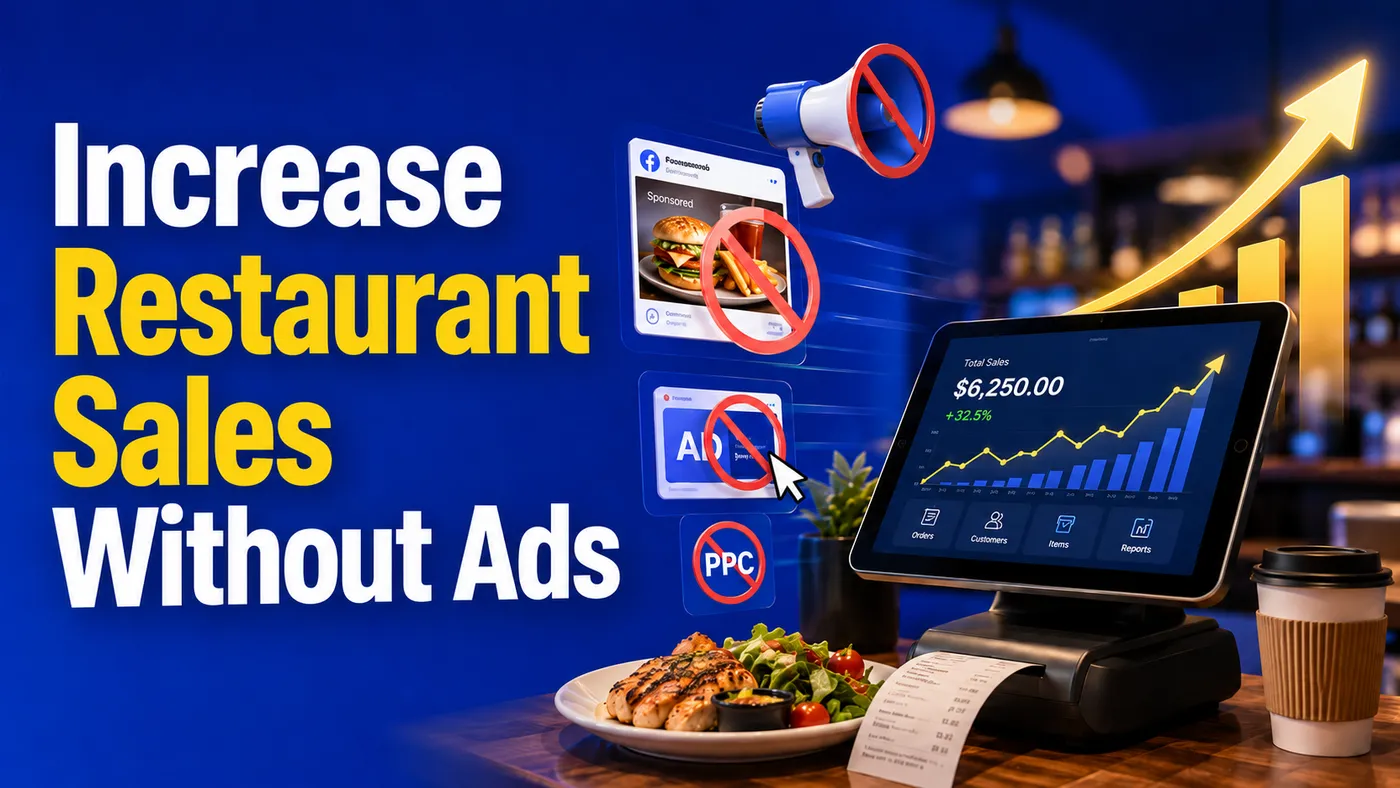
Increasing restaurant sales does not always require a large advertising budget. Paid campaigns may help attract attention, but long-term growth usually comes from improving the customer experience, increasing repeat visits, optimizing the menu, reducing operational mistakes, and making better use of sales data.
Every order creates an opportunity to generate more revenue. A restaurant that serves customers faster, recommends relevant add-ons, keeps popular products available, and understands its most profitable menu items can improve sales without paying for additional advertising.
A modern restaurant POS system plays an important role in this process. It helps owners monitor sales, identify popular products, track inventory, manage orders, review discounts, and understand performance across different hours, employees, or branches. Instead of relying on assumptions, managers can use real business data to decide what to promote, what to change, and where revenue may be lost.
This guide explains practical ways to increase restaurant sales without paid ads. The strategies apply to restaurants, cafés, fast-food businesses, bakeries, food trucks, and other food service operations.
Why Restaurants Should Look Beyond Paid Advertising
Advertising can bring new customers, but it cannot guarantee a profitable restaurant. If service is slow, orders are inaccurate, products are unavailable, or the menu is confusing, paid traffic may not lead to repeat business.
Restaurants should first strengthen the areas they already control, including menu pricing, service speed, order accuracy, employee performance, inventory availability, customer retention, online ordering, and sales reporting.
Improving these areas can increase revenue from existing customers while encouraging organic recommendations. A satisfied customer may return regularly, bring friends, leave a positive review, or share the restaurant online.
The objective is not simply to attract more visitors. It is to create more value from every visit and build a customer base that chooses the restaurant repeatedly.
1. Improve the Customer Experience
The customer experience begins before the food arrives. It includes how quickly customers are welcomed, how clearly the menu is presented, how easily they can order, how long they wait, and how smoothly they can pay.
Small improvements can increase both customer satisfaction and revenue. Customers are more likely to order additional items and return when the experience feels organized and convenient.
Reduce Waiting Times
Review the complete service process. How long does it take to enter an order? How quickly does the kitchen receive it? Are special requests communicated correctly? Where do delays usually happen?
A POS app can send orders directly to the kitchen, reduce handwritten mistakes, organize table orders, and speed up checkout. Faster service can improve table turnover and allow the restaurant to serve more customers during busy periods.

Improve Order Accuracy
Incorrect orders create waste, refunds, delays, and negative reviews. Use clear menu categories, product modifiers, kitchen notes, and order confirmation screens.
For example, a restaurant POS system can let employees select size, toppings, cooking preferences, side dishes, and special instructions directly within the order. This reduces misunderstandings between the service team and kitchen.
Simplify Payment
Customers expect convenient payment options. Depending on the market, restaurants may need to accept cash, cards, mobile payments, or other digital methods.
A smooth checkout process reduces queues and improves the final stage of the customer journey. It is particularly important for cafés, fast-food restaurants, takeaway businesses, and other locations where customers expect quick service.
2. Use Menu Engineering to Improve Profit
Menu engineering is the process of analyzing menu items according to popularity and profitability. It helps restaurants decide which products to promote, reprice, redesign, or remove.
A product may sell frequently but produce a low profit margin. Another may be highly profitable but receive little attention because of its position, description, or presentation.
Restaurant managers can classify items into four groups:
- Popular and profitable
- Popular but less profitable
- Profitable but less popular
- Low-profit and low-demand
Popular and profitable items should be visible and consistently available. Popular but low-margin items may require portion control, supplier review, or a price adjustment. Profitable but less popular items may need stronger descriptions, better placement, or staff recommendations.
A modern point of sale system provides item-level sales data. Cashier POS, for example, helps restaurant owners organize sales and reports in one platform. Managers can review product performance and identify which menu items contribute most to revenue.
A shorter menu may also improve results. Removing weak items can reduce customer confusion, simplify employee training, improve preparation speed, and lower inventory waste.

3. Increase Average Order Value with Upselling
Average order value is the average amount spent in each transaction. Increasing it can generate more revenue without increasing customer traffic.
The most effective upselling is relevant and helpful. Staff should recommend products that complete the meal or make the order more convenient.
Common examples include:
- Adding a drink, side, sauce, or dessert
- Upgrading to a larger size
- Choosing a premium ingredient
- Turning individual items into a meal
- Recommending a product that pairs with the original order
A customer ordering a burger may be interested in fries and a drink. A coffee customer may respond well to a pastry recommendation.
Employees may forget to upsell during busy shifts. A restaurant POS system can display recommended add-ons, modifiers, or bundle options during order entry. This makes upselling part of the normal workflow and creates a more consistent experience across the team.
Staff should also receive simple sales training. Natural questions such as “Would you like to make that a meal?” are usually more effective than aggressive sales language.

4. Create Profitable Bundles and Meal Deals
Bundles can increase perceived value and encourage customers to purchase more items together. A well-designed bundle benefits both sides: the customer gets a convenient package, while the restaurant increases transaction value.
Useful bundle ideas include:
- Breakfast combinations
- Lunch deals
- Family meals
- Coffee-and-pastry offers
- Group packages
- Main items combined with a side and drink
- Office lunch packages
- Student meal deals
Before launching a bundle, calculate the food cost and expected margin. Avoid discounting so heavily that sales increase while profit declines.
A POS system can make bundles easier to sell by creating fixed combinations, limiting available choices, tracking performance, and comparing results over time.
Restaurants should also test different bundle structures. A meal deal that works well during lunch may not perform as strongly during dinner. Sales reports can help identify the most successful combinations and selling periods.
5. Encourage Repeat Visits
Repeat customers are valuable because they already know the restaurant and are more likely to order again. Loyalty programs create a reason for customers to return.
A restaurant may offer:
- Points for each purchase
- Visit-based rewards
- Birthday benefits
- Free add-ons
- Discounts after several orders
- Exclusive access to seasonal products
- Rewards for reaching a spending level
The reward should be easy to understand and realistic to achieve.
For example, customers could earn a free drink after several purchases or receive a dessert after reaching a spending target. The goal is not to give products away unnecessarily. It is to make the next visit more attractive.
Restaurants can also reconnect with inactive customers. A simple message introducing a new menu item or return offer may encourage another order.
Any customer information should be collected and used responsibly, with appropriate permission for marketing communication.
6. Build a Referral Strategy
Word-of-mouth remains one of the strongest forms of restaurant promotion. Customers often trust recommendations from friends, relatives, and colleagues more than traditional advertising.
Restaurants can encourage referrals by offering a small reward to both the existing customer and the new visitor.
Referral ideas include:
- Referral codes for regular customers
- A free add-on after a successful referral
- Group-order incentives
- Office lunch rewards
- Discounts for both the customer and their friend
- Rewards for introducing a new family or group
The process should be simple. Customers are less likely to participate if they need to complete several steps.
Most importantly, the restaurant must provide an experience worth recommending. Referral programs cannot replace good food, consistent service, accurate orders, and a welcoming environment.
7. Strengthen Online Ordering and Takeaway Sales
An online ordering channel can generate additional sales from customers who may not visit the physical location. It can also make repeat ordering faster and more convenient.
Restaurants can use an online POS or connected ordering platform to manage online and in-store orders in one place. This reduces the risk of missed orders, incorrect prices, and disconnected inventory.
An effective online menu should include:
- Clear product names
- Accurate pricing
- Simple categories
- Available modifiers
- Product descriptions
- Preparation or pickup details
- Easy payment options
- Clear estimated preparation times
Avoid unnecessary checkout steps because long forms can cause customers to abandon their orders.
Third-party delivery apps may provide visibility, but commission fees can reduce profit. Restaurants can promote direct ordering through receipts, packaging, table cards, social media profiles, QR codes, and their website.
Direct ordering also gives the restaurant more control over pricing, customer relationships, menu updates, and promotions.

8. Increase Table Turnover Without Rushing Customers
Table turnover measures how many groups use a table during a service period. Improving turnover can increase sales during busy hours, but customers should never feel pressured to leave.
The best approach is to remove avoidable delays.
Mobile ordering devices can allow employees to send orders immediately instead of returning to a fixed terminal. Kitchen printers or display systems can improve coordination. Mobile payment or faster bill preparation can also shorten checkout time.
Review seating patterns as well. A restaurant serving many two-person groups may lose capacity if most tables are designed for large parties. Flexible seating arrangements can help the business use available space more effectively.
Restaurants should also review how long each stage of service takes, including seating, ordering, preparation, food delivery, bill requests, and payment.
The purpose is to create a smooth service flow, not to reduce hospitality.
9. Prevent Stockouts and Protect Best-Sellers
A customer cannot purchase an unavailable product. Frequent stockouts reduce sales and may damage trust, especially when they affect popular menu items.
Inventory management helps restaurants maintain the right balance. Too little stock creates missed sales, while too much stock increases waste and ties up cash.
A restaurant POS system with inventory features can help monitor item movement, identify low-stock products, and support purchasing decisions.
Restaurants should prioritize:
- Ingredients used in best-selling dishes
- High-value stock
- Perishable products
- Items used across several menu products
- Products with long supplier lead times
- Seasonal ingredients with changing demand
Sales patterns should guide purchasing. If a product sells more on weekends, stock planning should reflect that demand.
Cashier POS supports sales, inventory, payments, employees, and reports across connected business operations. Because it works as both an online POS and offline POS, restaurants can continue processing orders when internet access is interrupted, helping reduce disruption during busy periods.

10. Reduce Waste and Uncontrolled Discounts
Increasing sales will not guarantee higher profit if food waste, incorrect orders, overportioning, and unrecorded discounts remain high.
Restaurants should monitor:
- Spoiled ingredients
- Returned dishes
- Preparation mistakes
- Overproduction
- Complimentary items
- Voided orders
- Portion inconsistencies
- Expired stock
- Unapproved discounts
Standardized recipes and measured portions help protect margins while maintaining consistent quality.
Employees should also record the reason for waste so management can identify patterns and correct repeated problems. For example, repeated spoilage may indicate inaccurate purchasing, while frequent returned dishes may reveal a recipe, quality, or communication issue.
Discounts and cancellations require similar attention. A point of sale system can record who applied a discount, which reason was selected, and how often the action occurred. This creates accountability without slowing normal service.
Managers should review unusual activity, but the process should be fair. The purpose is to improve controls and training, not to assume that every correction is improper.
11. Improve Employee Performance
Employees influence order accuracy, service speed, upselling, customer satisfaction, and repeat visits. Supporting the team can therefore improve restaurant sales.
Employees should understand how to:
- Welcome customers
- Explain menu items
- Recommend relevant add-ons
- Enter orders correctly
- Handle complaints
- Follow discount rules
- Complete payments
- Communicate with the kitchen
Sales data can help managers provide focused coaching. For example, one employee may have excellent accuracy but a lower average order value. Another may be effective at upselling but need support during checkout.
Performance reports should be used carefully. Results may be affected by shift type, customer volume, assigned section, or job responsibilities. Compare employees fairly and combine numbers with direct observation.
Recognition is also important. Positive customer comments, teamwork, reliable order handling, and improved performance should be acknowledged. Motivated employees are more likely to deliver a consistent experience.

12. Review Restaurant Sales Reports Regularly
Restaurant growth requires continuous review. Managers should not wait until the end of the year to understand what is happening.
A weekly or monthly sales review can answer questions such as:
- Which menu items sold the most?
- Which products generated the strongest margins?
- What were the busiest hours?
- Which days had lower revenue?
- What was the average order value?
- How many discounts, returns, or voids occurred?
- Which payment methods were used?
- Which products were unavailable?
- How did branches or service channels compare?
- Which promotions or bundles performed best?
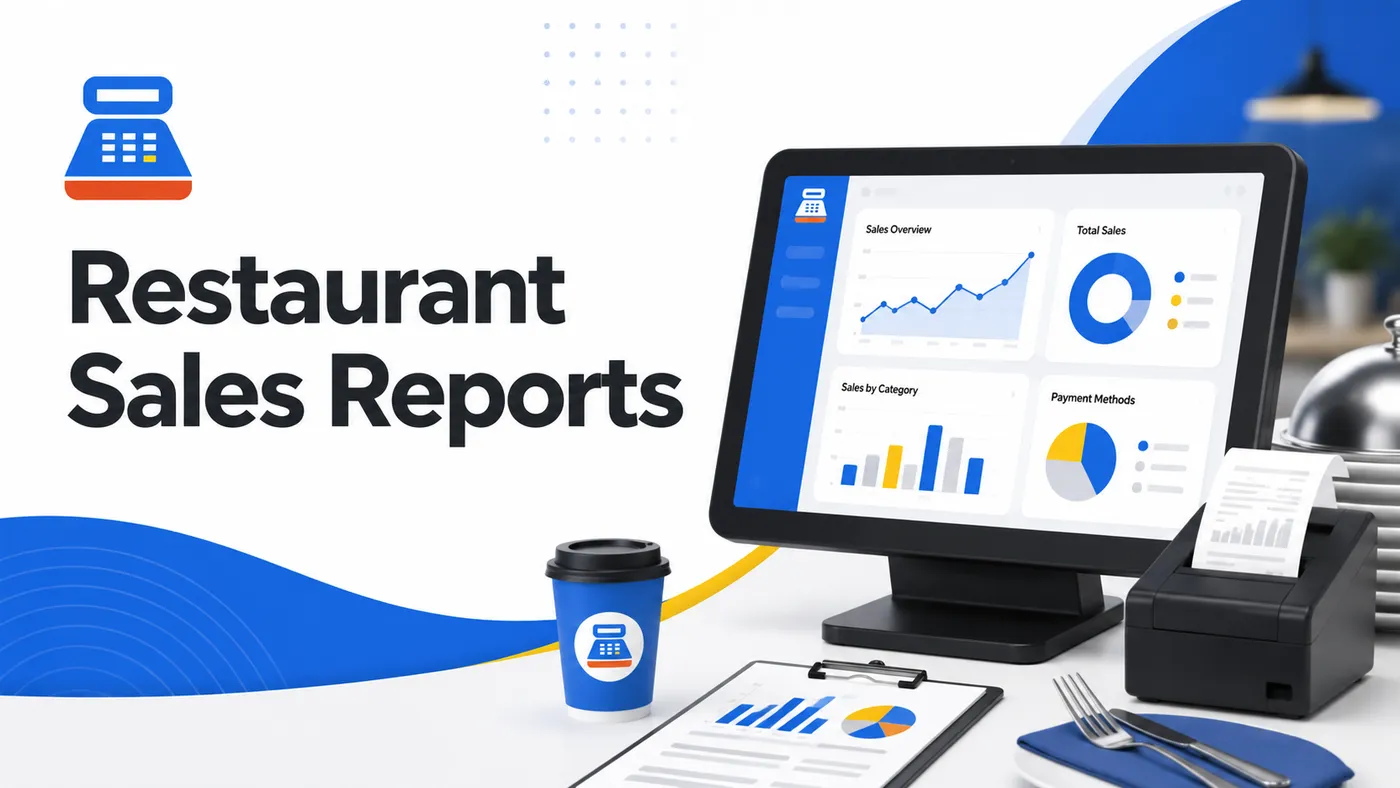
Sales reports turn daily transactions into useful business information. They can help managers adjust staffing, menu placement, purchasing, pricing, bundles, and opening hours.
For example, a restaurant may discover that sales are strong on Friday evenings but preparation times increase significantly. Management could schedule additional kitchen employees during that period.
Another restaurant may find that a popular menu item produces little profit. It could review ingredient costs, portion sizes, supplier pricing, or menu pricing before deciding what to change.
When evaluating a free restaurant POS, do not look only at subscription cost. Review whether the system supports order management, inventory, payments, reports, employee permissions, online ordering, and offline operation.
A free POS system should save time and improve decision-making rather than create new limitations.

How a Restaurant POS System Supports Sales Growth
A POS system is more than a digital cash register. It connects sales activity with the operational information needed to improve performance.
A modern restaurant POS system can help a business:
- Process orders faster
- Reduce order mistakes
- Create modifiers and add-ons
- Manage dine-in, takeaway, and online orders
- Track best-selling items
- Monitor inventory
- Review discounts and returns
- Compare sales by hour, employee, or location
- Manage user permissions
- Accept multiple payment methods
- Continue operating during internet interruptions
Cashier POS is designed for restaurants, cafés, supermarkets, and retail businesses that need a flexible point of sale solution.
It is available as a mobile POS app, desktop application, and web-based POS, allowing businesses to manage operations from different devices.
Its online and offline capabilities help restaurants continue selling across different operating conditions. For businesses comparing a free point of sale solution, this flexibility is important because the selected system should support current needs while allowing room for future growth.
Restaurants should also consider how easy the system is to use. A complicated platform can slow employee training and create order mistakes. A simple, organized interface makes it easier for employees to learn the system and complete transactions accurately.
The right POS system should provide clear information that business owners can act on. Reports should not simply display numbers. They should help managers understand what is happening and what needs attention.
Conclusion
Restaurants do not need to depend entirely on paid advertising to increase sales. Sustainable growth often begins inside the business.
Improving service, simplifying the menu, promoting profitable items, training employees, reducing waste, preventing stockouts, increasing average order value, and encouraging repeat visits can all strengthen revenue.
The most effective decisions come from accurate data. A restaurant POS system helps owners understand what is selling, when customers are buying, where profit is being lost, and which changes can produce the greatest impact.
Cashier POS gives restaurants a flexible way to manage orders, sales, inventory, payments, employees, and reports from mobile, desktop, or web devices. With online and offline POS capabilities, it can support daily operations while helping business owners make informed decisions.
By combining reliable technology, consistent service, and smart operational planning, restaurants can increase sales without increasing advertising spend.