In today's business environment, where competition is intense and customers are more aware and experienced, relying on traditional ways of managing sales, such as paper invoices or notebooks, is no longer enough. Small businesses in particular need smart tools that help them organize their daily operations and give them a chance to grow in the future. One of these tools is the point-of-sale (POS) system, which is no longer just a device for issuing invoices but a complete system for managing the business.
Managing sales with high efficiency
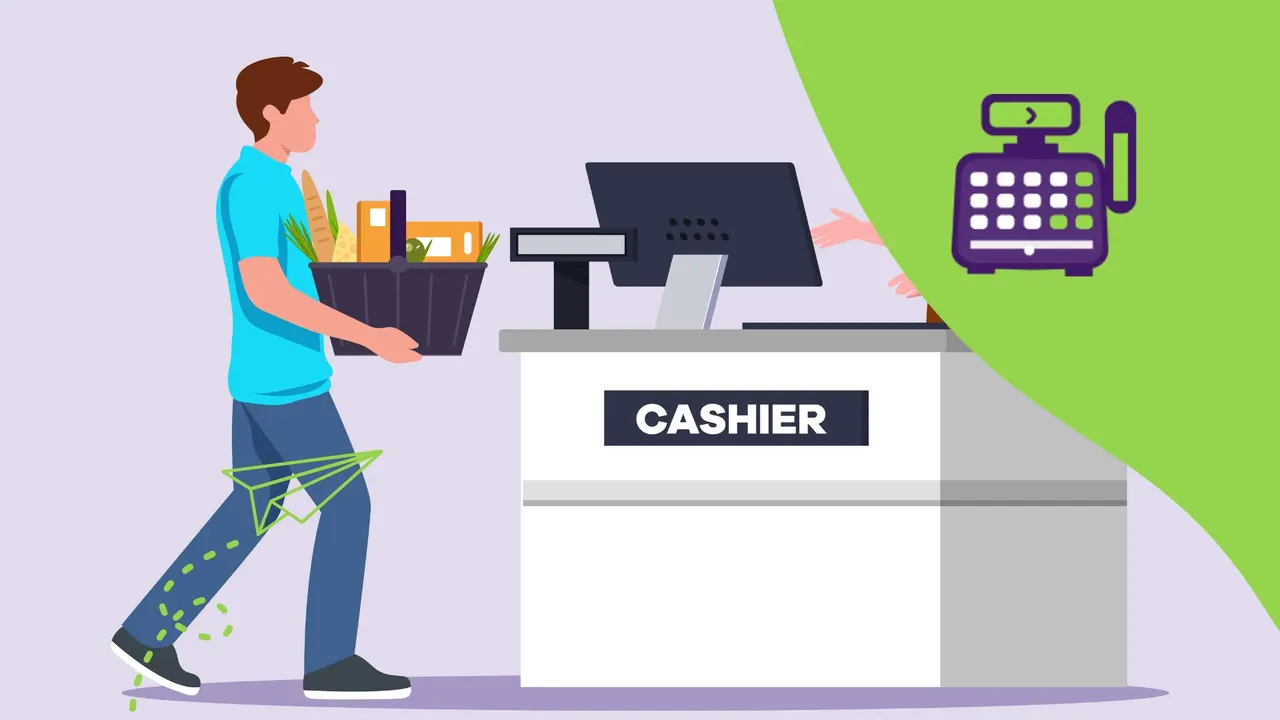
The first thing small businesses need is to get the sales process itself under control, because it is the backbone of any business. POS systems provide a smooth, professional experience from the moment the customer walks in until they leave the store.
When the purchase is completed, the system calculates the total automatically, including taxes and discounts, with no manual intervention.
The system supports multiple payment methods such as cash, bank cards, e-wallets, or even payment by phone. This variety matters because it gives the customer flexibility and increases the likelihood of completing the purchase.
Invoices are issued in a neat, clear format and can be sent electronically to the customer, which adds a professional touch.
This way, the cashier turns from a simple calculation step into a complete service experience that leaves a positive impression on the customer.
Tracking inventory with pinpoint accuracy
Inventory is the heart of any business, and any problem with it means either losing customers because items run out, or losing money because products pile up.
The POS system automatically deducts the quantity sold from inventory as soon as the invoice is completed.
You can set a “reorder level” for each item, so the system sends a notification when the quantity drops.
For perishable products such as food, the system provides an expiry date tracking feature to avoid losses.
You can follow inventory across more than one warehouse or branch, which gives a comprehensive and accurate view.
Without these tools, small businesses often have to rely on manual stocktaking, which is exhausting and leads to big errors.
Accurate financial reports and analytics
Small businesses often make decisions based on intuition, and that can be risky. With POS systems, decisions are based on accurate data.
The owner can view daily, weekly or monthly reports on sales and profits.
The system shows the most in-demand products, which helps you understand customer trends and direct your investment toward them.
You can analyze sales by time period, branch or even employee, which gives a comprehensive picture.
Some systems, such as Alcashier, offer graphical dashboards that make the numbers easy to read without any accounting expertise.
This data makes the business owner more confident in their decisions, whether they relate to pricing, stocking or even expansion.
Cutting costs and increasing profits
Resources in small businesses are limited, and any waste can cause a financial crisis. POS systems help you control these resources efficiently.
Reducing human errors when entering data or calculating.
Limiting waste of goods through accurate inventory alerts.
Doing away with separate accounting software or costly stocktaking.
Automating routine tasks that used to consume employees' time.
Over time, the business owner realizes that the cost of the system is far lower than the losses they would have suffered from disorder or poor management.
Improving the customer experience and building loyalty
Today's customer is not only looking for a product but for the complete experience.
When the customer receives a clear, fast invoice, they feel confident.
Loyalty programs built into the system (points, coupons, discounts) encourage customers to come back.
The system can track each customer's purchase history, which helps you offer personalized deals that suit their interests.
Supporting modern payment methods such as QR payments or Apple Pay raises the level of service.
All of this builds a strong relationship with the customer and makes them prefer your store over others.
Flexibility and support when working offline
One of the concerns of small business owners is the system stopping when the internet goes down. But modern systems such as Alcashier handle this smartly.
When the network goes down, the system keeps recording sales locally.
As soon as the connection returns, all data is synced with the cloud.
This ensures no sale or data is lost and keeps the service running.
This feature gives business owners peace of mind and makes them less worried about communications infrastructure.
Monitoring employees and reducing tampering
Transparency inside the business is no less important than customer service.
Every sale or return is linked to a specific employee's account.
You can set different permissions: a cashier cannot change prices, for example, while only the manager has that permission.
The system provides a complete log (Audit Trail) showing everything that was done on the device.
Instant alerts for abnormal operations such as excessive discounts or repeated returns.
This makes it easy to monitor performance and ensure the integrity of operations.
Supporting future expansion
Even if the business is small, its owner needs to think about the future. POS systems help with that.
The ability to add new branches linked to the same account.
Integrating the system with your online store or delivery apps to follow all sales from one place.
Unified reports that show the performance of all branches.
Easy management of employees and inventory across the whole network.
Having an integrated system from the start makes expansion a natural process instead of a challenge.
Increasing competitiveness
Having a POS system gives small businesses the ability to compete with the big players.
Fast, professional service makes the store look high-end even if it is small.
Combining sales between the physical and online store provides a unified shopping experience.
It is easy to offer flexible deals and competitive prices.
In a crowded market, these features can be the difference between success and decline.
FAQ
Do small businesses really need a POS system?
Yes, even the smallest stores benefit from these systems. They help organize sales operations, track inventory accurately, produce comprehensive financial reports, and provide a better experience for customers. Without these tools, the business owner has to rely on manual effort, which increases errors and waste.
Is investing in a POS system expensive?
The cost varies depending on the size of the business and the features of the system. Some systems offer flexible plans suited to very small businesses. And although the cost may seem high at first, the system saves a lot of expenses in the long run by reducing waste and increasing efficiency.
Do POS systems work without the internet?
Yes, most modern systems such as Alcashier support working in offline mode. Operations are recorded locally while the internet is down, then synced with the cloud when the connection returns, which ensures uninterrupted service.
Can a POS be connected to an online store or delivery apps?
Absolutely. Integration with digital channels is one of the most important advantages of modern POS systems. When a purchase is completed online, inventory and invoices in the system are updated immediately, which prevents errors and gives a seamless experience between the physical and online store.
How secure is customer and sales data in these systems?
POS systems rely on encryption technologies and cloud data storage with continuous backups. They also provide mechanisms to control employee permissions and monitor every operation carried out on the system, which reduces the likelihood of tampering or breaches.
Can I follow more than one branch through the same system?
Yes, modern systems allow you to link all branches and warehouses to a single account. The business owner can follow sales, inventory and reports for all branches from a central dashboard, which provides a comprehensive and accurate view.
Are these systems approved by the Zakat, Tax and Customs Authority in Saudi Arabia?
Yes, systems such as Alcashier are approved for issuing electronic tax invoices according to the requirements of the Zakat, Tax and Customs Authority, which protects the business from fines and ensures legal compliance.
Do POS systems support Arabic?
Of course. Most systems aimed at the Saudi and Gulf market, such as Alcashier, fully support Arabic alongside English, whether in invoices, the interface or reports.
How do these systems help reduce waste and increase profits?
By tracking inventory accurately, sending alerts when quantities run low, and providing sales reports that reveal the most profitable and least in-demand products, the business owner can readjust purchasing and pricing strategies to get the maximum benefit and cut losses.
Are POS systems easy to use?
Yes, these systems are designed with a simple, easy interface so new employees can learn them quickly. They also often come with training and ongoing technical support.
POS as a tool for sustainability in the Saudi restaurant sector
The restaurant sector in Saudi Arabia is experiencing rapid growth, with reports indicating that the size of the restaurant and café market in the Kingdom has exceeded…
Connecting your online store with your POS to boost efficiency
In recent years, e-commerce has become a core part of any business, whether it is a restaurant, a clothing store, or even a pharmacy.…
POS devices: a business guide to a fast, lower-cost start
A POS device is a complete operating system that is managed at the moment of payment, but in practice it extends far beyond that and what comes after…
The post Why do small businesses need POS systems? appeared first on Alcashier.