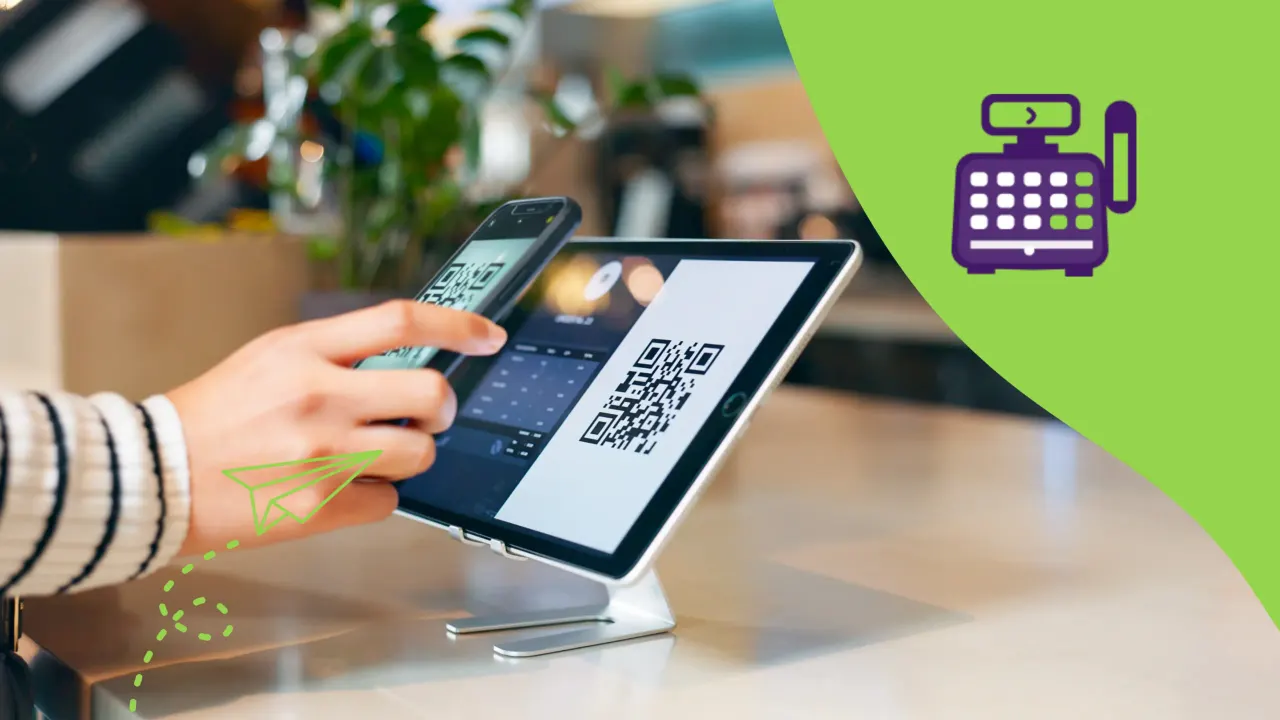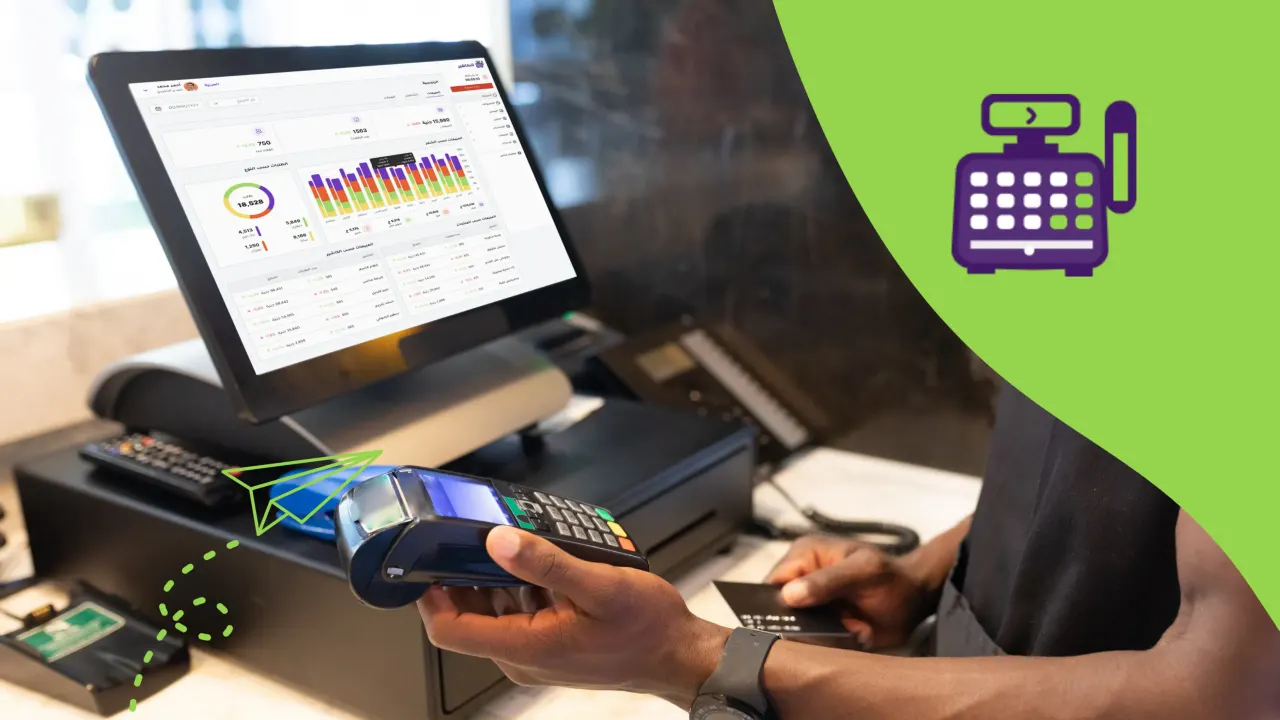
The restaurant sector in Saudi Arabia is growing rapidly, with reports indicating that the size of the restaurant and café market in the Kingdom has exceeded 45 billion Saudi riyals [Source]. This growth is not limited to major cities such as Riyadh and Jeddah, but also extends to secondary cities and new tourist destinations that attract major investment in the hospitality sector. This diverse expansion imposes growing sustainability challenges, whether in managing food and energy resources, reducing waste across production and consumption, or improving operational efficiency in line with the requirements of the market and consumers. This is where POS systems come in, not only as a technical tool for managing invoices, but as a strategic platform that helps restaurant owners balance lasting profitability with environmental, social and economic sustainability.
What are POS systems and why are they central to sustainability?
POS systems are no longer just a tool for recording sales; they have become integrated smart platforms that allow stock tracking, performance monitoring, human resources management, and in-depth data analysis that includes key performance indicators. In the restaurant sector, these features help to:
- Reduce food waste through close stock monitoring and linking purchasing to actual demand.
- Improve the customer experience through faster and more accurate service, with the option of offering varied payment methods and sending invoices electronically.
- Support data-driven decisions, which boosts operational efficiency and helps identify peak hours and plan resources in advance.
- Make it easier to connect with loyalty programs and digital marketing, ensuring a lasting relationship with customers.
- Provide a large database that can be analyzed to discover market trends and forecast future demand.
Environmental and economic challenges in Saudi restaurants
- Food waste: The Food and Agriculture Organization (FAO) indicates that Saudi Arabia records high rates of food waste, reaching 250 kg per person per year [Source]. This large figure reflects an environmental and economic challenge, as it means wasting huge quantities of resources used in farming, transport, storage and cooking. In addition, food waste contributes to higher greenhouse gas emissions as a result of disposing of leftover food in unsustainable ways. National initiatives such as the Food Loss and Waste Reduction Program of the Ministry of Environment, Water and Agriculture work to raise awareness and encourage technical solutions, and this is where POS systems stand out as a tool that links dish recipes to stock to forecast consumption and reduce excess orders.
- Energy consumption: Restaurants are among the sectors that consume the most electricity because of refrigeration, cooking, lighting and air conditioning systems. Local studies have shown that energy consumption in the Kingdom's restaurants represents a notable share of total commercial consumption [Source]. Using old, energy-inefficient equipment increases the burden on the environment and raises monthly costs significantly. Linking the POS to peak hours helps switch off or reduce unnecessary loads during quiet periods, which can save between 10-25% of energy consumption.
- Rising operating costs: Hiring, raw materials and taxes all affect the sustainability of small and medium restaurants. With economic challenges such as fluctuating food prices, rising labor wages and delivery platform fees, restaurant owners need to look for technical solutions to manage expenses efficiently. Monsha'at reports show that digital transformation and cost management are among the most prominent challenges in the food and beverage sector [Source]. POS systems provide precise tools for allocating costs at the item, branch or shift level, with real-time indicator dashboards that help make better decisions about purchasing and pricing.
1. Reducing food waste
By linking sales to stock, POS systems such as Alcashier can alert managers when stock is low or in excess. This reduces the chance of food spoiling or running short, and also helps build a historical database that can be relied on to forecast seasonal demand and adjust menus to match customer consumption. It also helps design smarter pricing strategies and reduce waste of high-cost ingredients.
2. Improving energy management
By tracking peak hours and order volumes, restaurants can run electrical appliances only when needed, which reduces energy consumption. Data extracted from the system can also be used to set up proactive maintenance plans for energy-hungry equipment, and to compare consumption across different branches to identify best practices and roll them out more widely.
3. Supporting the digital economy
Using POS systems contributes to the digital transformation that Saudi Arabia is pursuing under Vision 2030, which strengthens the economic sustainability of restaurants. This means introducing electronic payment technologies and digital invoicing, and integrating these systems with delivery and e-commerce platforms to widen the customer base, and therefore ensuring greater resilience against market changes.
4. Promoting transparency and reporting
POS systems make it possible to prepare accurate reports on sales and expenses, which helps restaurant owners improve operations and cut unnecessary spending. In addition, these systems offer the ability to create interactive dashboards that display key performance indicators in real time, such as average service time and customer satisfaction rates, which strengthens transparency and lets management make faster and better-informed decisions.
Social sustainability through POS systems
Sustainability is not limited to the environment and the economy, but also includes the social side:
- Improving the work environment: Through staff tracking systems and working-hours control, in addition to enabling management to offer flexible schedules that respect employees' work-life balance.
- Fairer customer service: Human errors in invoices are reduced, which builds trust and gives customers a sense of transparency and fairness in transactions. Advanced systems can also detect and analyze customer complaints to continually improve service.
- Supporting local jobs: By making it easier for small and medium businesses to grow, and enabling them to expand without the need for huge infrastructure, which has a positive effect on creating new job opportunities. POS systems also help train local staff to use modern technologies, which raises their efficiency and helps build a sustainable knowledge economy.
The role of Alcashier in supporting sustainability
Alcashier provides integrated solutions that support Saudi restaurants in managing their operations intelligently through an easy-to-use interface and data-rich dashboards. The system works online and offline, which ensures service continues even if the internet goes down, and prevents lost sales or disrupted operations. It also allows deep integration with online stores and delivery platforms, which opens the door for restaurants to expand into different sales channels while reducing waste and improving operational efficiency. In addition, the system supports loyalty programs and detailed reports on sales and expenses, and helps monitor staff performance and allocate resources better, making it a strategic tool for achieving comprehensive sustainability.
The future of POS systems in the Saudi restaurant sector
POS systems are expected to evolve to integrate technologies such as artificial intelligence and advanced data analytics, in addition to the Internet of Things (IoT), machine learning and integration with supply chain applications. This evolution will give restaurants the ability to:
- Forecast demand accurately, not only at the daily or weekly level, but even by the hour and by seasonal period.
- Improve supply chains through smart tracking of ingredients from the vendor to the customer's plate, reducing any gaps or delays in supply.
- Adopt more sustainable payment solutions such as digital invoicing, e-wallets and contactless payment, which helps reduce paper use and improves the customer experience.
- Strengthen cybersecurity in transactions and ensure customer data is protected in line with local and international regulations.
- Integrate artificial intelligence into customer service through smart chatbots that answer customer inquiries and give personalized recommendations about dishes and offers.
Frequently asked questions (FAQ)
Can POS systems help reduce costs?
Yes, and this can be measured at several levels. First, linking sales to stock reduces losses through reorder-point alerts and ingredient expiry tracking, which lowers the cost of goods sold. Second, the POS reporting system allows profitability analysis at the item, branch and shift level, and helps spot low-margin items so they can be repriced or their recipes improved. Third, the system supports automating accounting processes such as matching sales against daily expenses, and reducing human errors linked to manual entry. In quick-service restaurants, these measures can translate into a tangible reduction in operating costs and an improvement in overall profit margin within a relatively short time.
Do POS systems work without the internet?
Absolutely. Systems such as Alcashier support offline mode through secure local storage for all core operations—order entry, invoicing, and immediate acceptance of cash payments—and cloud sync then runs automatically when the connection returns, with no data loss. This is useful for restaurants with outdoor locations, temporary events, or branches that may face network fluctuations. The sync log also shows pending cases and lets management verify that data transfer is complete, while keeping reports consistent across the entire business.
What is the role of POS systems in boosting customer satisfaction?
POS systems provide speed of service and accuracy of invoices, but the most important impact comes from data-driven personalization. Through order histories and loyalty programs, you can offer personalized deals and suggest suitable add-ons (upselling/cross-selling) without being intrusive. Contactless payment and e-wallet integrations also cut waiting time at peak hours, while digital receipts and connected channels (the website, delivery app) give a consistent experience that builds trust. With complaint reports and measurement of average service time, you can continually improve the workflow.
Is a POS system a long-term investment?
Yes, because the value does not stop at speeding up the sales cycle. Investing in a modern POS creates a data infrastructure that can be built on later to introduce advanced tools such as demand forecasting, staff schedule balancing, and smart energy management. Scalable cloud solutions such as Alcashier also reduce total cost of ownership (TCO) through continuous updates, local technical support and ready-made integrations with multiple sales channels. As the brand grows and new branches open, the system remains scalable while keeping policies and settings consistent.
Can a POS be linked to the website and delivery platforms to achieve multiple sales channels?
Yes, and this is a central aspect of financial sustainability. Alcashier supports the omnichannel model through integration with online stores and delivery apps, so that stock, prices and offers are unified across all channels. This reduces conflicts and stockouts, and gives management a unified view of performance, with the ability to track customer acquisition cost and return on marketing campaigns for each channel separately.
Conclusion
POS systems are a strategic tool for the Saudi restaurant sector seeking sustainability in an environment full of challenges and rapid change. They are more than a sales management system; they are an integrated platform that helps strike a balance between profitability and conserving resources. With advanced systems such as Alcashier, restaurants can combine operational efficiency with flexibility in the face of market fluctuations, ensure optimal use of stock and energy, and strengthen transparency in managing financial data and human resources. Together, these advantages directly contribute to supporting the goals of Vision 2030 by enabling restaurants to operate with sustainable practices, increase competitiveness, and help build a diversified economy based on innovation and digital transformation.

Connecting your online store with your POS to boost efficiency
In recent years, e-commerce has become a core part of any business, whether it is a restaurant, a clothing store, or even a pharmacy.…

POS devices: a business guide to a fast, lower-cost start
A POS device is a complete operating system that is managed at the moment of payment, but in practice it extends far beyond that and what comes after…
What is a point of sale? And how to choose the right system for your business
The business environment in Saudi Arabia and the world is undergoing rapid digital transformation, and relying on traditional methods such as paper notebooks or the cash register is no longer…
The post POS systems as a tool for sustainability in the Saudi restaurant sector appeared first on Alcashier.