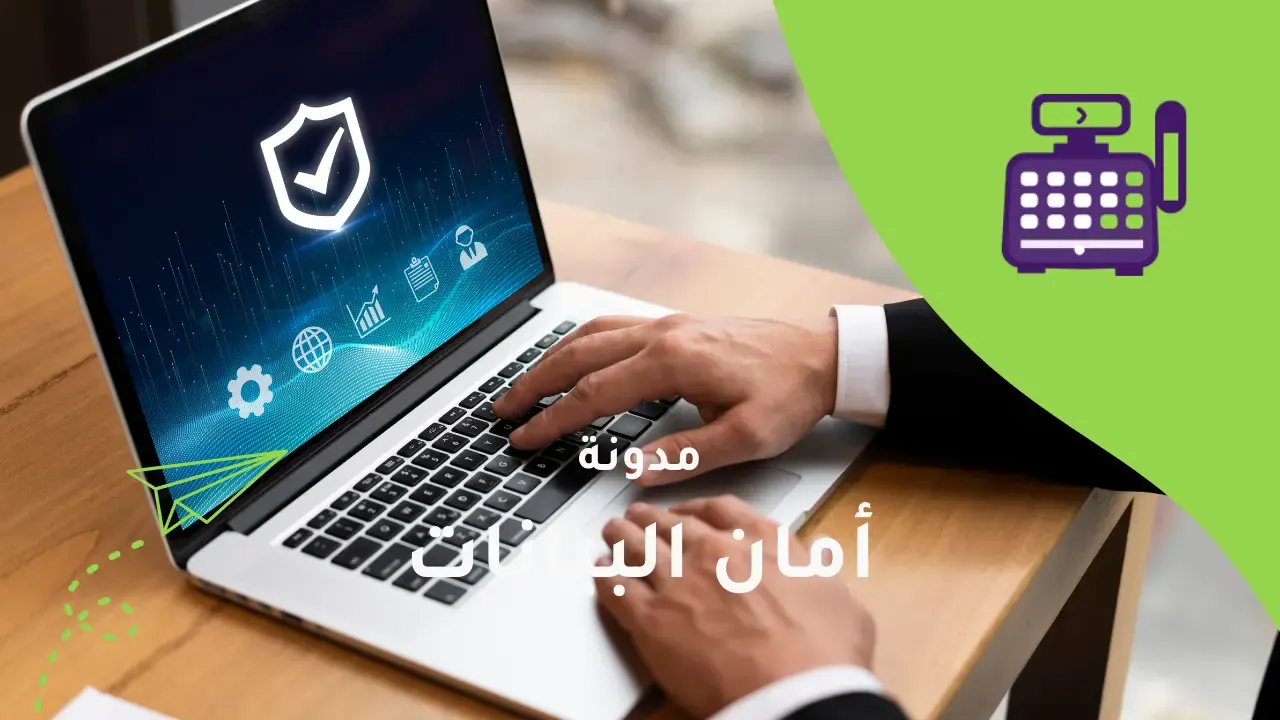
With digital transformation accelerating and reliance growing on advanced technology solutions and cloud systems across business sectors, data security has become one of the top priorities for any organization or business that uses a cloud POS system. The data that is collected and stored, whether customer data, transaction details or inventory, is a real asset that needs comprehensive protection from many risks such as breaches, loss or unauthorized use.
The concept of security in cloud systems
Cloud data security refers to a comprehensive set of policies, procedures and modern technologies designed to protect the following:
- Stored data such as customer and transaction information.
- Applications connected to the cloud system.
- The infrastructure that handles processing, storage and transmission.
In cloud POS systems, protection takes several forms, including:
- Ensuring information confidentiality through encryption and access restrictions.
- Preventing unauthorized access to the store's database or sales records.
- Protecting against cyberattacks such as DDoS attacks or phishing.
- Strengthening business continuity through available backups and emergency response plans.
These measures aim to achieve an operating environment that is secure, flexible and compliant with regulations, so that business owners and their customers feel confident using the system.
Why data security matters in a cloud POS system
Relying on cloud systems offers great flexibility and enormous potential for scaling and remote access, which allows business owners to:
- Manage operations remotely from anywhere in the world.
- Reduce the cost of local infrastructure.
- Make it easier to integrate data with other systems.
- Speed up access to information.
However, this heavy reliance on cloud technologies also opens the door to new threats that require preparation and professional handling. The main threats include:
- Cyberattacks such as malware and ransomware.
- Leakage or theft of sensitive customer data.
- Human errors that lead to data loss or sending data to unauthorized parties.
- Weak security configurations, such as weak passwords or incorrect settings.
Failing to secure customer data properly may lead to:
- Loss of customer trust, which affects the business's reputation.
- Legal fines for violating data security protection laws.
- Partial or complete business interruption as a result of an attack or technical failure.
Encryption as the first line of defense
One of the most important mechanisms for protecting data security is encryption, which serves as the first line of defense against unauthorized access attempts. Professional cloud POS systems rely on encrypting data in transit and at rest using strong protocols such as SSL/TLS. Encryption works to:
- Convert data into encrypted code that no third party can read.
- Ensure information confidentiality when it is transmitted over the internet.
- Protect databases from tampering or unauthorized modification.
- Strengthen trust between the customer and the service provider.
The types of encryption most often used include:
- Symmetric encryption: uses a single key for encryption and decryption.
- Asymmetric encryption: uses two different keys, one for encryption and the other for decryption, such as RSA.
These modern techniques ensure that data cannot be understood even if it is intercepted in transit, which protects it from:
- Electronic eavesdropping attacks.
- Intrusion attempts through public networks.
- Data leaks during updates or syncing.
In short, encryption is not a luxury but a basic necessity for any cloud POS system that aims to deliver a secure and reliable experience for users and customers alike.
Advanced authentication and multi-factor authentication
Another additional protection method that strengthens user data security is multi-factor authentication (MFA), which requires the user to provide more than one proof of identity when logging in or performing sensitive operations.
Multi-factor authentication usually includes:
- A strong password that is created and updated regularly.
- A verification code sent to a mobile phone by text message or an authenticator app.
- A fingerprint or face recognition (biometrics) on some modern devices.
- Backup codes generated in advance for use if the second verification method is lost.
This technique strengthens the system's security because it:
- Reduces the chances of a breach even if the password is leaked.
- Blocks unauthorized login from suspicious devices or locations.
- Adds an extra layer of verification without significantly affecting the user experience.
- Makes it hard for attackers to access the system even with advanced methods.
Adopting MFA is not only a preventive step but a basic standard that leading companies rely on to protect their data and their customers' data.
Advanced authentication and multi-factor authentication
Data security does not only mean protecting it from unauthorized access. It also means making sure it is never lost under any circumstances. For this reason, reliable cloud POS systems rely on automatic, regular backup plans. The features of this system include:
- Running backups daily or at predefined intervals.
- Storing copies in multiple geographic locations to avoid the risk of natural or technical disasters.
- Encrypting backups to keep data safe even in storage.
- The ability to schedule backups according to the store's operational needs.
The benefits of these measures are many, including:
- Ensuring quick data recovery in case of a sudden technical failure.
- Reducing downtime and maintaining continuity of operations.
- Protecting against ransomware attacks that rely on encrypting files and demanding a ransom to unlock them.
- Meeting regulatory and legal compliance requirements in the Saudi market.
When a reliable backup is available, store owners can work with peace of mind, knowing that their vital data is safe and can be restored quickly when needed.
Defined access permissions
It is important for every employee to have access permissions that match the nature of their job and responsibilities within the system, which is known as the “least privilege” principle. For example, it makes no sense for a cashier to have the same level of access as the finance manager or the administrator.
The benefits of defining permissions include:
- Reducing the chances of unauthorized access to sensitive information.
- Protecting data from tampering or accidental or deliberate deletion.
- Increasing transparency in the way the work system operates by monitoring permissions.
- Making audits and reviews easier by tracking who did what and when.
It is recommended to implement strict policies in this area, such as:
- Assigning a personal login account to each employee.
- Reviewing permissions periodically based on changes in roles or the organizational structure.
- Using an activity log to document all access and modification operations.
- Disabling access permissions as soon as an employee's employment ends.
Dividing permissions clearly and thoughtfully limits the risks that come from internal misuse and ensures a safer, more stable operating environment.
Regular security updates
Strong systems commit to issuing regular security updates that close vulnerabilities that may be discovered and prevent attackers from exploiting them. These updates play a key role in:
- Protecting the system from modern cyberattacks.
- Closing newly discovered software vulnerabilities.
- Improving system efficiency and performance.
- Strengthening service stability and reducing failures.
Companies that provide a cloud POS system should ensure:
- That these updates are delivered to users automatically, with no manual intervention needed.
- That users are informed of updates and their contents when necessary.
- That updates are tested thoroughly before release to make sure they don't conflict with ongoing operations.
- That a history log of the applied updates is available for review and auditing.
Relying on regular security updates is one of the foundations of proactive protection, and it ensures the system keeps running in an ever-changing digital environment.
Activity monitoring and login logging
A comprehensive monitoring system that records all activity inside the system is a core element of the security framework, as it provides accurate, comprehensive visibility into everything that happens in the system in real time. This kind of monitoring makes it possible to:
- Spot any abnormal behavior, such as logins at unusual times.
- Detect intrusion attempts or unauthorized changes to databases.
- Track suspicious activity inside the system before it turns into an actual threat.
- Make investigation easier after any security incident through a detailed event log.
- Identify the user responsible for each action taken in the system.
- Document incidents and analyze threat patterns to prevent them from recurring in the future.
The main characteristics of effective monitoring systems are:
- Sending instant alerts when unusual activity is detected.
- Showing regular reports on usage and login and logout records.
- Compatibility with incident management and response systems.
Relying on this mechanism strengthens the ability to make proactive decisions based on real data, which makes the cloud POS system safer and more reliable.
Compliance with local regulations and systems
In the Saudi market, complying with systems such as the e-invoicing system (Fatoorah) is mandatory and is one of the basic conditions for continuing to operate legally. Cloud POS systems must therefore strictly observe these regulatory requirements, which include:
- Issuing e-invoices in a format approved by the authority.
- Including a QR code on every invoice.
- Direct integration with the systems of the Zakat, Tax and Customs Authority.
- Storing data in data centers inside the Kingdom or approved by the authority.
- Securing and protecting customer data from tampering or leakage.
Non-compliance may lead to financial penalties or suspension of business activity, so a secure system must adhere to all of the following:
- Updating immediately with any legislative change issued by the regulatory bodies.
- Providing tools and reports that help the merchant monitor their compliance regularly.
- Multi-language support to make it easier for different users to understand and apply.
Regulatory compliance is not only a legal requirement but also evidence of a business's credibility and stability.
Table: comparing a traditional POS with a secure cloud POS
| Item | Traditional POS | Secure cloud POS |
|---|---|---|
| Security updates | Manual | Automatic and regular |
| Data access | Local only | From anywhere |
| Backups | Irregular or manual | Automatic and regular |
| Encryption | Often not available | Advanced encryption |
| Multiple permission levels | Often not supported | Supported |
| Regulatory compliance | Not guaranteed | Compliant with local standards |
Frequently asked questions (FAQ)
1. Can customer data be breached in a cloud system?
Yes, but good systems greatly reduce this likelihood through encryption, multi-factor authentication and monitoring.
2. How do I know whether a cloud POS system is secure?
Look for security certifications such as ISO, and check for features such as backups, security updates and multiple permission levels.
3. Is data stored in the cloud safer than local data?
In many cases, yes, because cloud service providers invest heavily in securing their infrastructure.
4. Is it easy to recover data if a problem occurs?
Yes, if the system provides regular backups and an effective data recovery mechanism.
5. Do I need to be a tech expert to use a secure cloud POS system?
No. Most modern systems are designed to be easy to use and have simple interfaces.
Conclusion
Data security is the cornerstone of any successful cloud POS system, especially in the Saudi market, where technical and regulatory requirements are growing. By making sure elements such as encryption, backups, multi-factor authentication and permission control are in place, store owners can rest assured that their data and their customers' data are completely safe. And don't forget to choose a reliable cloud system that follows local standards and keeps up with security updates at all times. Relying on a secure cloud POS system doesn't just protect your data. It also strengthens your customers' trust and reflects your professionalism in running your business.
Common challenges in e-invoicing and how to avoid them
E-invoicing is one of the most important digital shifts brought about by recent technological change, especially in the Saudi market, which is undergoing a major transformation…
Alcashier: the solution for managing sales in modern stores
In a business environment that is changing rapidly and driven by digital transformation, a “POS system” is no longer just a way to complete sales and collect payments.…
5 modern technologies that make a difference to your store's sales
With the development of digital tools and the growing reliance on technology solutions, modern innovations have become a key factor in boosting store performance and growth.…
The post How to ensure data security in a cloud POS system appeared first on Alcashier.