Restaurant management is no longer just the art of serving food or giving customers refined service. It has become a complete discipline built on financial analysis, cost control, supply chain management and accurate operational data. According to a study by Statista, the average net profit margin in the restaurant sector worldwide is only between 3% and 5%, so even a small mistake in costs or operations can cut profits sharply and may even turn a restaurant from profit to loss. Some recent estimates also suggest that more than 60% of new restaurants fail within their first three years because of weak cost control. This is where point of sale (POS) systems and their smart reports come in, such as those offered by Alcashier, helping restaurant owners uncover hidden mistakes they might not notice and reset their operating strategies for better financial sustainability.
What are the hidden mistakes restaurants face?
1. Invisible food waste
A restaurant owner may not realize that a large part of their profit leaks away through daily food waste. According to a report by the FAO 17% of the food prepared worldwide is wasted before it reaches the consumer. In restaurants, this means a direct loss of raw materials and higher operating costs, in addition to negative environmental effects linked to more waste and the carbon emissions from producing food that is never eaten. Waste can also come in small scattered amounts, such as bread or drinks, that the owner never notices but that add up to a real monthly loss. Some local studies suggest that food waste in the restaurant sector in the Kingdom can reach 30% during seasons and holidays, a figure that shows how much it threatens profit margins.
How do POS reports reveal it?
- By comparing stock levels with actual sales and analyzing the difference regularly.
- By alerting you when consumption of certain ingredients exceeds normal levels, or when items are repeatedly recorded as discarded.
- By issuing weekly and monthly reports that show consumption trends, which helps you adjust purchasing plans and avoid over-ordering.
2. Unplanned pricing
Pricing dishes at random, or without accurately modeling direct costs (ingredients, packaging) and indirect costs (energy, wages, rent, spoilage), leads to prices below real cost or to weak contribution margins that do not cover fixed expenses. A common rule of thumb in the restaurant sector is to keep food cost (Food Cost%) between 28% and 35% of the net selling price before tax, while monitoring total operating cost (Prime Cost = food + labor) so that it does not exceed 55%–65% of sales.
Advanced pricing considerations:
- Adopt contribution margin (Contribution Margin = net selling price − dish cost) as your main indicator instead of relying on the percentage alone.
- Apply menu engineering (Menu Engineering) by classifying items into: Stars (acceptable cost and high demand), Plowhorses (high demand but low margin), Puzzles (high margin but low demand) and Dogs (low demand and low margin), with clear decisions: improve the recipe, reprice, reposition or remove.
- Take price elasticity of demand into account: raise prices gradually while monitoring the effect on quantities and total sales.
- Include hidden costs such as delivery packaging, commissions on ordering platforms, and payment gateway fees.
- Use pricing psychology (99/95) and different serving sizes (Regular/Medium/Large) to raise the average basket value.
How do POS reports help?
- Show profitability reports for each item separately, with a breakdown of ingredient costs, contribution margin and Food Cost%.
- Repricing simulation: enter a new price and see the immediate effect on margin and expected revenue.
- Menu engineering analytics run automatically (Stars/Plowhorses/Puzzles/Dogs) with practical recommendations to keep, promote or remove.
- Track order cost across channels (dine-in, takeaway, delivery) and highlight how margins differ after commissions and packaging fees.
- Measure the impact of temporary offers and bundles (Combo) on overall margin and average invoice value.
- Alerts when the contribution margin of a particular dish falls below a preset threshold, linking it to a rise in the cost of a key ingredient or to unusual waste.
3. Employee theft
According to a study by the National Restaurant Association, 75% of restaurant losses are caused by internal theft, such as not recording some orders, tampering with invoices, or even giving fake discounts to friends and family. Additional studies have indicated that the average loss from individual thefts can reach thousands of riyals a year in a single restaurant, making it one of the most dangerous hidden challenges.
The role of POS reports:
- Recording every transaction accurately with a timestamp and the identity of the responsible employee.
- Comparing cash sales with electronic payments and spotting differences immediately.
- Alerts for unusual behavior such as repeated invoice cancellations or unjustified discounts.
- Pulling regular reports to review the differences between expected sales and what was actually collected.
- The ability to connect the system to surveillance cameras for closer checking of sensitive transactions.
4. Weak tracking of working hours and productivity
Having too many staff during slow periods or poorly distributing working hours drives up costs with no return. Weak oversight of working hours can also lead to paying unearned extra wages or having surplus employees who are not productive. Some studies indicate that labor cost rising above 30% of sales is a direct threat to profit margins in restaurants.
How do modern systems reveal it?
- Accurate attendance and departure reports that compare actual working hours with recorded hours.
- Analyzing sales performance per employee and linking it to the hours they worked to determine individual productivity.
- Issuing alerts when labor cost exceeds a certain percentage of sales.
- Staffing distribution reports by peak and slow periods to improve scheduling.
5. No overall view of side expenses
Electricity, preventive and corrective maintenance, variable rent, delivery and packaging fees, ordering platform commissions, payment gateway fees, insurance, software subscriptions, and equipment depreciation… all look small on their own, but together they have a big effect on operating profit margin if they are not monitored with precise indicators (Cost per Cover, Cost per Order and Utility Cost%). Ignoring these items leads to inaccurate dish pricing and to expansion decisions that have not been calculated.
The Alcashier advantage:
- The ability to enter all operating expenses and classify them by cost center (kitchen, dining area, delivery, external platforms) and analyze their effect on net profit.
- Dashboards that show cost trends (Trend Lines) with alerts when set thresholds are exceeded (for example, an electricity bill rising by >15% month over month).
- Linking expenses to channels (dine-in/takeaway/delivery) to calculate the margin after commissions and packaging fees for each channel.
- “What if?” simulations for scenarios such as higher energy prices or an increase in delivery platform commissions, and their effect on the break-even point (Break-even Point).
- Creating variance reports (Variance Reports) between the actual and approved budget, with automatic recommendations to cut costs (switch a vendor, change operating hours, reduce energy use).
How do POS reports help improve financial performance?
A. Real-time sales reports
They let managers follow performance daily and hourly, revealing the best times for marketing and promotions. They also provide interactive dashboards showing sales for different branches and the differences between days of the week and seasons. You can also track average invoice value, customers per hour, and the share of sales for each product category, which helps in making accurate decisions about promotions and staff allocation.
B. Smart inventory reports
They reduce waste by alerting you to stock shortages or excess. These reports let you link inventory consumption to actual sales volume, which reveals any fault or deviation. They also give future forecasts based on historical data to estimate purchasing needs and avoid sudden shortages or unwanted overstock.
C. Customer analysis
Building a database of your most loyal and frequent customers, which helps improve marketing strategies. The system can track buying behavior, dish preferences and visit frequency, and then offer personalized deals or loyalty programs that increase customer retention. It also lets you tell new customers from regulars, which helps improve both acquisition and retention efforts.
D. Accounting integration
It makes tax filing and preparing financial statements easier in line with local regulations. It also ensures compliance with the requirements of the Zakat, Tax and Customs Authority (ZATCA) in Saudi Arabia, and lets you pull advanced financial reports such as profit and loss and the balance sheet. This integration reduces manual errors and saves valuable time for running operations instead of being busy with paperwork.
Why choosing the right system matters
Generic reports are not enough. Restaurants need a flexible system like Alcashier, which combines advanced technical and operational capabilities. It does not just display data, it turns it into smart performance indicators that help you make decisions:
- Support for Arabic and English to suit both local and international markets.
- Works online and offline with automatic sync to ensure continuity.
- Integration with online stores and delivery platforms to add more sales channels.
- Easy customization of reports to fit each restaurant and the size of its operations.
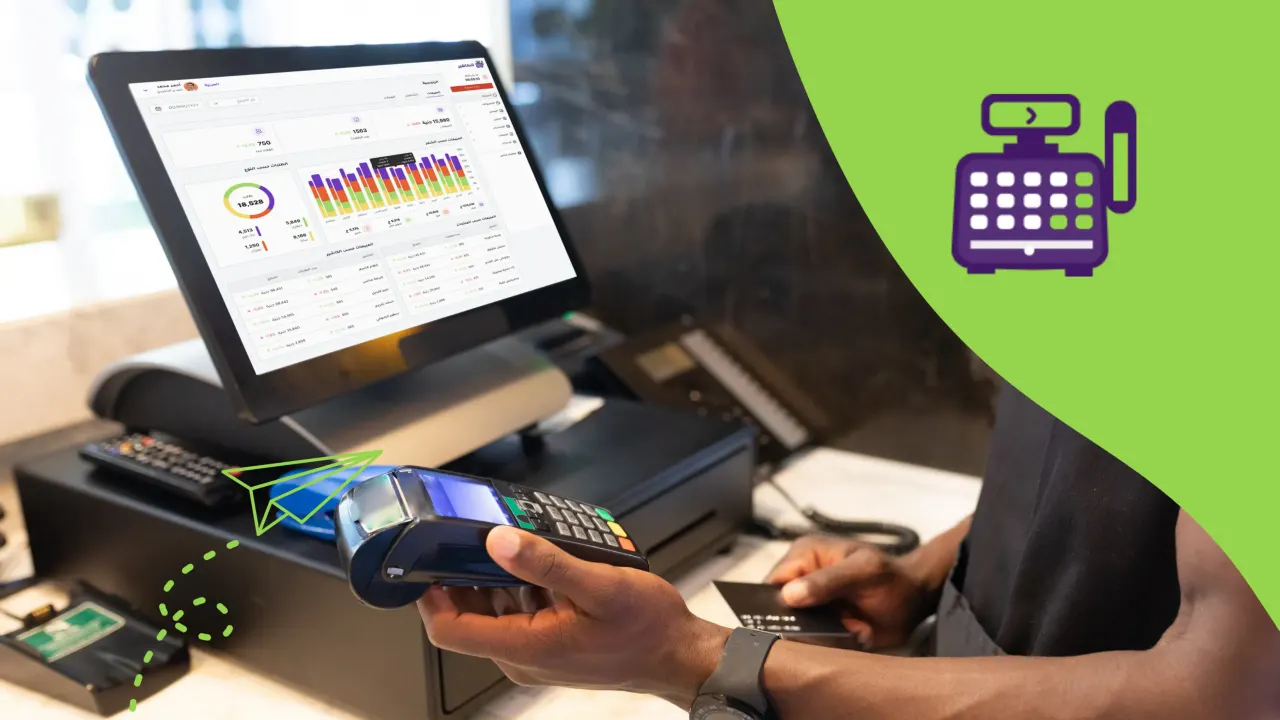
- Interactive dashboards (Dashboards) showing indicators such as overall profit margin, labor cost and inventory waste.
- Support for connecting to HR and accounting systems to increase operational efficiency and reduce manual errors.
Conclusion
Hidden mistakes in restaurant management can be the difference between profit and loss, because they creep in through seemingly simple daily details such as portion size, pricing deviations, or swings in labor cost. To avoid this, advanced POS reports give you the ability to analyze in real time and spot deviations from the very first moment, starting with monitoring Food Cost% and Prime Cost% and comparing them with targets, all the way to uncovering differences between channels (dine-in/takeaway/delivery) and the effect of commissions and packaging on margin.
In short: moving to data-driven management is no longer a luxury but a condition for sustainability. With Alcashier you get real-time dashboards, smart alerts, and accounting and tax integration that complies with ZATCA requirements, plus online/offline operation to ensure continuity. Take a practical step today: review your top 5 best-selling items, turn on contribution margin reports for them, and adjust prices according to the results. To empower your team quickly, book a demo or try the trial version through Alcashier to put your data on the right track toward stronger margins and sustainable growth.
Frequently asked questions (FAQ)
1. What are the main mistakes that affect restaurant profitability?
Food waste, wrong pricing, employee theft, and weak tracking of side expenses. These mistakes look small, but together they eat into margins quickly, and studies have shown that failing to control waste alone can cut net profit by more than 10%. Random pricing or ignoring side expenses also leads to ill-considered expansion decisions that raise financial risk.
2. Do POS reports detect employee theft?
Yes, by matching cash and electronic sales, reviewing invoices carefully, and tracking repeated invoice cancellations or unjustified discounts and linking them to the employee’s name. Some systems, such as Alcashier, let you pull time-comparison reports to reveal variances between the day and night shifts, which makes it easier to find the problem. The system can also be connected to surveillance cameras for an added level of checking.
3. How does Alcashier help restaurant owners?
It provides detailed reports on sales, inventory and expenses, which helps in making sound financial decisions. It also offers interactive dashboards showing key performance indicators (KPIs) such as Food Cost%, Prime Cost%, average invoice value, and labor-to-sales ratios. In addition, Alcashier supports accounting and tax integration, and gives smart alerts when costs exceed certain limits.
4. Can the POS be used when the internet is down?
Definitely. The system supports offline mode to record transactions and sync them later. This ensures work continues even when the network goes down, as all transactions are saved locally and then synced automatically with the server when the connection returns, with no data lost. This feature is essential during peak times or when the internet suddenly fails.
5. Do POS systems support integration with online stores?
Yes, modern systems, including Alcashier, offer smooth integration with online stores, so you can manage sales from physical branches and the online store from a single dashboard. This integration lets you unify inventory, track orders across different channels, and give customers a complete experience whether they buy from the restaurant directly or online.
Cashier jobs in Saudi Arabia: a complete guide to the duties and skills required
In the world of retail, restaurants and services, the cashier plays a pivotal role in the customer experience. They are responsible for recording sales, collecting payments,…
3 lessons small business owners can learn from Saudi National Day using POS reports
Saudi National Day is a unique occasion when markets see a notable boom in sales volume and consumer traffic. For small business owners,…

Saudi National Day sales analysis: what does POS data reveal about Saudi consumer behavior?
Saudi National Day is an exceptional occasion where feelings of belonging and pride blend with celebration, and it is also a season of economic activity…
The post The hidden mistakes that destroy restaurant profit margins, and how POS reports uncover them appeared first on Alcashier.