The food and beverage market worldwide, and in the Arab region and Saudi Arabia in particular, is developing rapidly, relying mainly on speed of service, accuracy of operations, and the customer experience. With the expansion of the restaurant sector and the variety of business models, relying on a restaurant POS system (Restaurant POS system) is no longer just a technical option; it has become a core element for keeping the business running and achieving profitability.
A POS system plays a pivotal role in linking orders, inventory, sales, and staff in one integrated system. This is where advanced systems like Alcashier stand out, having helped raise restaurant efficiency through easy-to-use tools and precise operational features that support Arabic and English and also work without a constant internet connection.
According to a report by Statista, the global restaurant technology market exceeded 40 billion dollars in 2024, and it is expected to keep growing as operating models expand and the shift toward modern digital solutions continues.
What is a restaurant POS system?
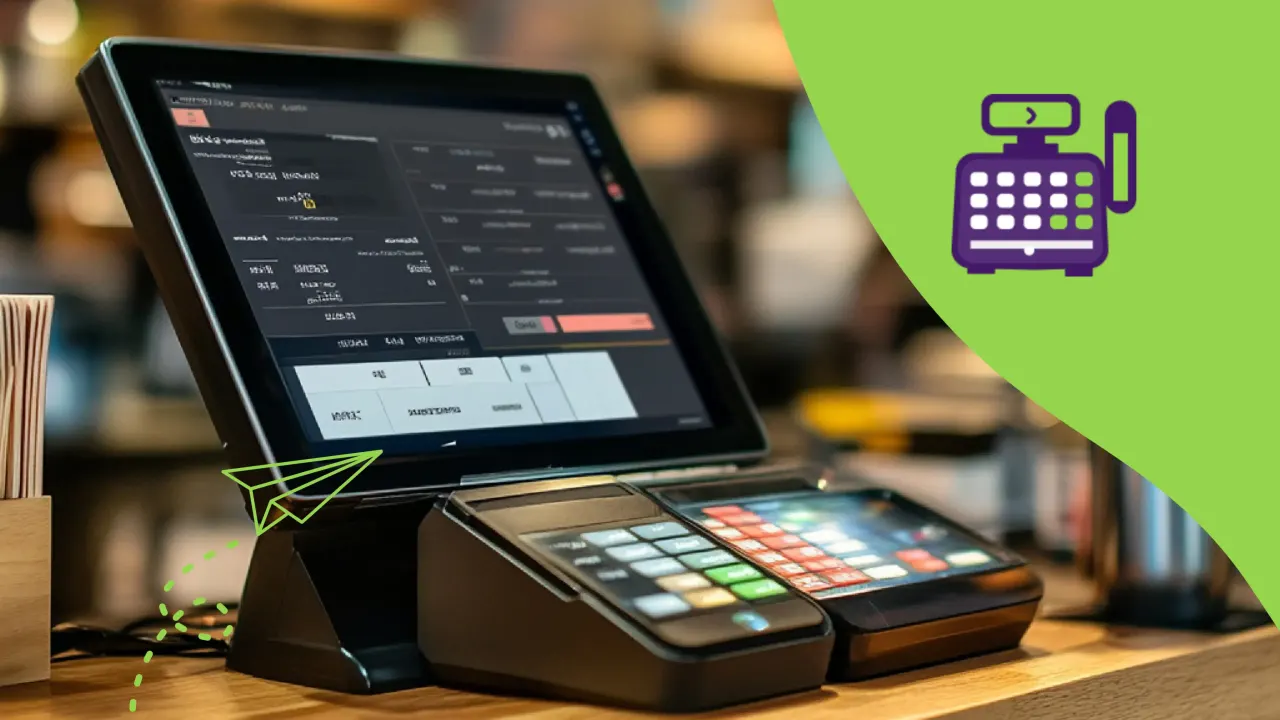
A restaurant POS system is a comprehensive digital system designed to manage ordering, record sales, track inventory, and organize work among restaurant staff from the moment an order is received until the bill is handed over. Its role is not limited to recording sales; it extends to improving operating efficiency by unifying all operations in a single, easy-to-use platform. The system helps track daily performance, reduce errors, and provide accurate visibility into product movement, as well as support strategic decisions based on real-time data. Today it is the foundation for delivering professional, fast service, especially in competitive markets such as the restaurant sector in Saudi Arabia, where speed and accuracy have become decisive factors in attracting and retaining customers.
Why has a POS system become a necessity in the food and beverage market?
1. Rising customer expectations and speed of service
Customers now expect fast, accurate service without any mistakes, and with growing competition in the food and beverage sector, improving the customer experience has become a necessity, not a choice. This is where a POS system comes in, boosting service efficiency and improving the quality of daily operations. The system helps with:
- Speeding up order entry, instantly and in an organized way.
- Reducing human errors caused by pressure or crowded tables.
- Making communication between the cashier and the kitchen easier through order display screens.
- Improving order accuracy, which reduces complaints and raises customer satisfaction.
- Enabling the team to serve more customers in less time.
According to the National Restaurant Association, 74% of customers prefer restaurants that use digital solutions that cut waiting time and improve service speed.
2. Accurate inventory management and waste prevention
Food waste is one of the biggest challenges for restaurants, and its impact is not limited to financial losses; it also affects operating efficiency, customer satisfaction, and business sustainability. POS software provides real-time reports that help to:
- Know which ingredients are used most and analyze ingredient consumption behavior more deeply.
- Determine the cost of each dish more accurately, taking differences in supply prices into account.
- Prevent running out of items during peak times through proactive reorder alerts.
- Monitor stock levels around the clock and compare consumption across days and periods.
- Improve purchase planning and reduce waste caused by overstocking.
Systems like Alcashier provide real-time inventory management linked to sales, which helps reduce waste by up to 25%, and in some restaurants by even more when the system is linked to the menu and ingredients are updated automatically.
3. Accurate financial reports to make decisions easier
Restaurant owners need a clear, accurate view of sales and profits in order to understand the performance of their businesses as a whole. A POS system provides:
- Detailed daily and monthly reports showing revenue, expenses, and growth rates.
- An in-depth comparison of branch performance, with analysis of the strengths and weaknesses of each branch.
- Tracking of demand patterns and analysis of best-selling dishes by time period and season.
This information helps in making stronger strategic decisions, such as adjusting the menu based on actual demand, changing opening hours to match peak times, or adding new offers to boost sales during slow periods.
4. Support for multichannel operations
With the spread of delivery apps and digital platforms, it is no longer enough to receive orders inside the restaurant only; restaurant owners now have to manage different channels at the same time, which makes operations more complex without an integrated system. That is why it has become necessary for a POS system to support:
- In-house orders placed in the restaurant's dining area.
- Drive-thru orders, which require high speed and accuracy in fulfillment.
- Online orders, whether from the restaurant's website or through direct ordering platforms.
- Delivery app orders, which today make up a large share of restaurants' total sales.
Modern systems like Alcashier offer direct integration with multiple channels to ensure order accuracy and prevent duplicates, in addition to syncing orders instantly and unifying reports for all channels, giving the restaurant owner a clear, comprehensive view of the performance of each channel individually.
5. Reducing errors and improving order accuracy
Manual order entry causes costly mistakes that can affect service quality and customer satisfaction, especially during peak periods when the speed of fulfilling orders is critical. With a POS system:
- All orders are recorded accurately and in an organized way that prevents any order from being lost.
- The order is sent to the kitchen automatically through a digital system that makes the order details clear.
- Any conflict or misunderstanding between the service staff and the kitchen is reduced.
- The workflow is sped up and operations inside the restaurant run more smoothly.
- The level of professionalism rises and the rate of re-orders or complaints falls.
6. Managing staff and tracking performance
A restaurant POS system lets you:
- Record staff attendance accurately, with the ability to track actual working hours.
- Track the performance of service staff in terms of speed in completing orders and quality of dealing with customers.
- Distribute tasks automatically to keep the workflow organized and reduce pressure on staff.
- Monitor each employee's productivity and identify the periods with the highest service rates.
- Generate performance reports that help management give fair rewards and improve training.
7. Offline support
One of the most important features today is the ability to work without internet, especially at busy times, as many restaurants face sudden challenges such as network outages or a weak connection during peak hours. Having a system that can keep going without any interruption ensures that sales operations don't stop and orders don't pile up, which helps keep work running smoothly.
Software like Alcashier works fully offline and stores all operations locally while the internet is down, then syncs the data automatically and securely as soon as the connection returns, which protects the restaurant owner from halted sales or lost data and provides a stable, reliable operating experience even in the most complicated conditions.
8. Strengthening security and reducing financial risk
A POS system records every financial transaction with high accuracy, which:
- Greatly reduces the chances of theft or tampering by tracking all operations in real time and linking them to the user.
- Gives management full transparency through detailed reports showing sales activity, discounts, and the payment method for each transaction.
- Makes accounting reviews easier by providing a comprehensive historical record that is easy to refer to at any time.
- Helps management spot financial discrepancies quickly and take corrective action immediately.
- Builds trust between the team and management thanks to a clear system that prevents ambiguity or financial errors.
9. Supporting growth and expansion
Restaurants that start small can expand easily with a POS system that supports multiple branches and provides a single dashboard for management, while also letting you track the performance of each branch individually and making it easier to open new locations without rebuilding the technical structure from scratch. With comparison reports across branches and the flexibility to add new users, expansion becomes smoother and cheaper, enabling restaurant owners to grow with confidence and in well-planned steps.
How does Alcashier help restaurants?
Alcashier offers a set of features that make it suitable for the food and beverage market, including:
- Full Arabic support with an interface designed specifically to suit the user experience in the local market.
- Easy connection to websites and delivery apps through smooth integrations that ensure orders arrive without any delay.
- Working via the cloud and offline, which gives restaurants great flexibility in all operating conditions.
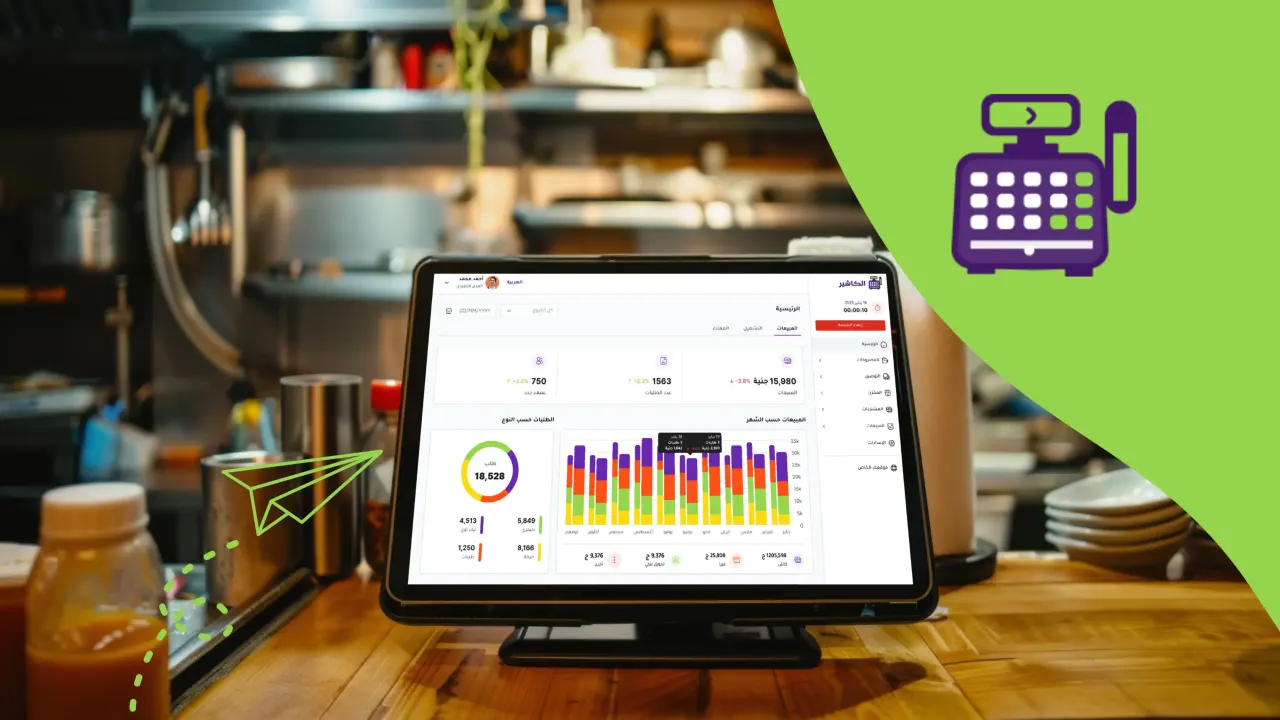
- Real-time financial and inventory reports that show the restaurant's performance accurately, with analysis of branches, products, and best-selling dishes.
- Mobile device support so staff can manage orders from anywhere inside the restaurant.
- Fast setup and an easy interface that let you launch the system within minutes with no technical complications.
- The ability to customize system settings to fit the type of restaurant, whether it is a fast-service restaurant, a café, a food truck, or a fine-dining restaurant.
- Smart options for managing offers, discounts, users, and team permissions.
These features have made the system one of the most widely used POS solutions among restaurants and cafés in the region, especially since it combines ease of use with strong performance, making it easier for business owners to run their operations more efficiently and achieve better results.
The role of digital transformation in restaurant success
Digital transformation is no longer a luxury; it has become a core pillar of restaurant success in an era of accelerating competition and constantly changing customer expectations. While consumers look for faster service and a smoother experience, modern restaurants rely on digital systems such as restaurant POS to ensure operational flow, reduce errors, and raise quality. Digital transformation strengthens restaurants' ability to manage orders across different channels, whether inside the restaurant or through delivery apps, as well as improving inventory management and providing accurate analytical reports that let business owners make decisions based on real data rather than guesswork.
Digital transformation also gives restaurants the ability to follow performance moment by moment, understand customer behavior, and improve internal operations, which ultimately raises productivity and noticeably improves the customer experience. Studies have shown that restaurants that invest in digital technologies achieve higher satisfaction rates and better financial results than those that rely on traditional systems.
According to a study by Deloitte, restaurants that use digital systems saw a 33% rise in customer satisfaction, reflecting the strong impact of digital transformation in improving the customer experience, speeding up service, and reducing errors.
Frequently asked questions (FAQ)
1. Is Alcashier's POS system suitable for all types of restaurants?
Yes, it can be used in small and large restaurants, cafés, and food trucks, and it is highly flexible, adapting to the nature of each business, whether it offers fast service or table service or operates in a mobile environment. The system also helps owners of new businesses manage their operations easily without complex equipment, while letting large restaurants organize workflow between different departments more efficiently.
2. Can the Alcashier software be used without internet?
Absolutely. Alcashier offers an offline mode with syncing later, allowing the restaurant to keep working without any disruption even during sudden internet outages or a weak network. The system records all operations and stores them securely on the device, then syncs them automatically as soon as the connection returns, which ensures no data is lost and protects all records and sales. This feature is essential for high-pressure restaurants or those operating in locations prone to frequent network outages.
3. Does Alcashier's POS system help with inventory management?
Yes, it links sales to inventory automatically and reduces waste, in addition to providing real-time visibility into stock levels and forecasting the quantities needed based on actual demand. The system also helps identify which items are used faster than others, which improves purchasing and avoids overstocking or sudden shortages. Thanks to smart inventory management, restaurants can control their costs better, reduce losses, and improve their profit margin.
4. Can the Alcashier system be connected to delivery apps?
Yes, Alcashier supports integration with the most important apps in the market, allowing orders from different delivery platforms to be received directly inside the system without having to re-enter orders manually, which reduces the error rate and unifies all operations in one platform. The integration also makes it possible to track the performance of each delivery platform individually, analyze its sales, and identify the right offers for each channel, giving restaurant owners a comprehensive picture of each app's impact on sales and helping them improve their marketing and operating strategies.
5. Does the Alcashier system support multiple branches?
Yes, all branches can be managed through a single dashboard that provides a comprehensive, accurate view of each branch's performance, separately or combined, with the ability to easily compare sales, inventory, and operations across branches. The dashboard also lets you track staff, monitor orders, and identify the top-performing branches, which helps restaurant owners make strategic decisions based on clear, reliable data.
Conclusion
The restaurant POS system has become a core element of the food and beverage market, given its major role in improving operations, supporting decision-making, and speeding up service. With growing competition, advanced systems like Alcashier's Alcashier have become an ideal choice for restaurants looking for accuracy, speed, and business growth, especially in a working environment that needs flexible solutions that can scale quickly. The system helps strengthen operating efficiency and reduce costs, as well as enabling restaurant owners to gain a deeper understanding of their business performance through detailed data and instant reports.
With the rapid expansion of the food and beverage sector, restaurants' ability to adapt to digital change has become essential for staying in the competition. Digital transformation is the road to a more efficient future, and POS is the first step on that road, as it provides the technical foundation on which all development and improvement inside the restaurant is built.
The best sales software for restaurants
In today's fast-moving restaurant world, using sales software for restaurants is no longer a luxury or an optional extra; it has become a basic necessity to ensure accuracy…
Cashier job in a restaurant: duties and required skills
The cashier job in restaurants is one of the most important jobs in the hospitality and restaurant sector, as it is the final point of contact the customer deals with before…
Free supermarket cashier software: the ideal solution for small and medium businesses
In a world where competition accelerates and technology advances day by day, free supermarket cashier software has become a necessity, not a luxury.…
The post Why has a restaurant POS system become a necessity in today's food and beverage market? appeared first on Alcashier POS.