With the rapid transformations in the restaurant management sector, careful planning and reliance on modern technology have become essential for the success of any restaurant project in 2026. The Saudi market in particular is seeing major changes in consumer behaviour and rising demand for distinctive, personalised dining experiences, making competition fiercer than ever.
Whether you aspire to open an upscale restaurant serving international cuisine, or a modern café with a local touch, understanding the local market accurately, defining your target segment, using the available digital tools, and running operations with high efficiency are among the key ingredients for success in this dynamic sector.
In this comprehensive article, we review the steps to starting a successful restaurant, backed by recent statistics and reliable links, along with practical tips and lessons drawn from the Saudi market, to give accurate and comprehensive answers about the restaurant sector in 2026.
1. Study the Saudi restaurant market in 2026
Reports from Statista indicate that the food services market in Saudi Arabia exceeds 20 billion dollars a year, with annual growth expected to range between 6% and 8% through 2028. This growth reflects rising demand for dining out, especially from the new generation seeking quality and innovation, as well as from families who increasingly prefer eating out as part of a modern social lifestyle.
Reports from Euromonitor also confirm that Saudi Arabia is undergoing a major shift toward premium fast-casual restaurants and healthy-eating concepts, reflecting growing consumer awareness of nutrition and a balanced lifestyle. Sales of healthy restaurants alone are expected to reach more than 2 billion dollars by 2026.
It is important to define precisely and carefully the type of restaurant you intend to open: is it a traditional restaurant serving local cuisine? An international kitchen that attracts visitors of different nationalities? Or a vegetarian restaurant that meets the needs of the growing segment of health-conscious customers? Each category targets a different audience and faces its own challenges in terms of the kind of chefs needed, ingredient prices, and marketing strategy.
2. Prepare a clear, solid business plan
The business plan is the foundation on which the project is built. It should include:
- A financial feasibility study covering start-up costs, operating costs, and expected profits.
- A SWOT analysis to identify strengths, weaknesses, opportunities, and threats.
- A clear marketing strategy, identifying the right advertising and digital channels.
- A revenue model: will you rely only on in-restaurant sales, or will you also offer delivery services?
3. Choose and fit out your location in line with regulations
According to data from the Saudi Food and Drug Authority, restaurants are required to comply with standards for hygiene, storage, and food safety. Choosing the location should be based on:
- Population density in the area, as studies indicate that restaurants located in densely populated areas achieve returns 25% to 40% higher than those in less busy areas.
- Enough convenient parking, a decisive factor in attracting customers, especially in big cities where visitors prefer not to spend a long time looking for a spot.
- Easy access from main roads and clear visibility on navigation apps such as Google Maps and Waze, which increases the chance of visits from new customers.
- Fit with the target segment in terms of income, food culture, and social habits, which helps build a loyal and sustainable customer base.
Restaurants located in lively areas (such as shopping centres or upscale residential neighbourhoods) perform 30% better than those located away from commercial activity.
4. Build a distinctive visual identity and brand
In a world crowded with restaurants, you need an identity that attracts customers and expresses your vision:
- A professional logo that reflects the restaurant's identity and message, is easy to remember and visually appealing, and ideally fits with the restaurant's culture and the local community.
- An attractive interior design that is consistent with the type of cuisine and takes into account visual comfort and practicality for visitors, as well as providing a complete sensory experience that encourages customers to come back and recommend the place.
- An inspiring story behind the restaurant (such as family recipes, organic ingredients, or the founder's story), which helps build an emotional connection between customers and the brand and provides rich content for digital marketing and PR campaigns.
Strong brands have a 50% higher chance of retaining customers.
5. Adopt a modern restaurant management system
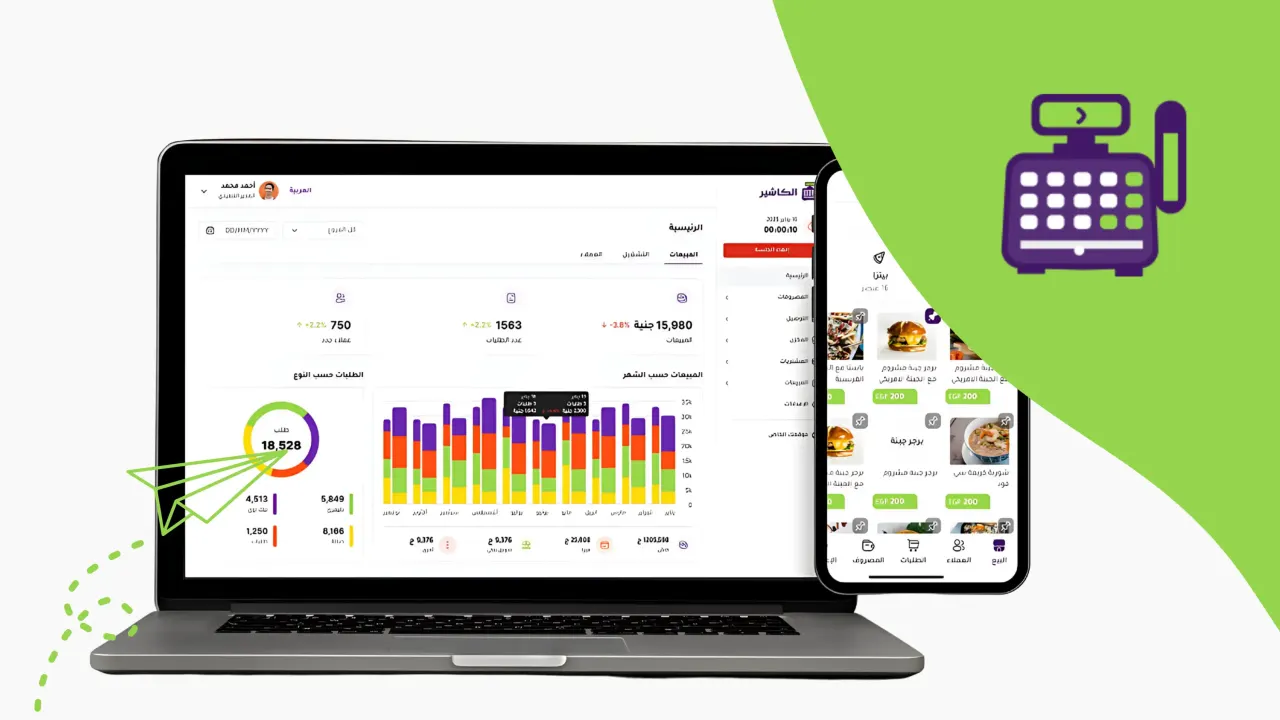
In 2026, you cannot rely on traditional ways of running a restaurant. Digital solutions such as Alcashier offer a comprehensive point-of-sale (POS) system that lets you:
- Manage sales, inventory, and expenses.
- Monitor performance in real time.
- Support both Arabic and English.
- Keep working without interruption even when the internet goes down.
To learn more about these solutions, visit alcashier.com.
6. Hire and train your team
Choosing the right crew directly affects customer satisfaction. Make sure to:
- Choose chefs with experience and high quality.
- Train staff in customer service.
- Set a clear code of conduct and work rules.
Research indicates that 70% of customer complaints are linked to poor service rather than the quality of the food.
7. Digital marketing and online presence
In 2026, a digital presence is a must:
- Create a website that shows the menu and photos of the place.
- Use social platforms such as Instagram and Snapchat to reach your audience.
- Work with local influencers to promote the restaurant experience.
- Monitor customer reviews on Google Maps and TripAdvisor and engage with them.
According to a Google report, 80% of customers search for restaurants online before visiting them for the first time.
8. Control costs and increase profitability
One of the most common reasons restaurants fail is weak financial management. Some tips:
- Monitor ingredient costs and use tools such as Alcashier to keep track of costs.
- Reduce food waste.
- Offer smart deals to increase the number of visits during quiet times.
- Provide loyalty programs for customers.
9. Keep developing and innovating
Don't settle for a successful start:
- Try new dishes based on customer preferences, by analysing past order data and running regular surveys to learn which trends are most popular, which helps you offer a constantly refreshed menu that keeps meeting customers' expectations.
- Follow global trends (such as vegetarian eating or eco-friendly food), and bring innovative elements into the menu such as plant-based meat alternatives, organic products, or dishes with a low carbon footprint, which strengthens the restaurant's image as a responsible, up-to-date brand.
- Rely on customer feedback to update your services, whether through digital platform reviews or internal surveys, and it is also advisable to hold internal tasting sessions to test new dishes before adding them to the menu, which better ensures product quality and consistency.
10. Make use of analytics and artificial intelligence
With systems such as Alcashier, you can:
- Analyse the best times for sales.
- Identify the most-ordered dishes.
- Predict inventory shortages.
- Make decisions based on real data.
Conclusion:
Restaurant success in 2026 depends on a balanced blend of passion for food and hospitality, smart restaurant management built on scientific foundations, and modern technology that makes operations easier and supports decision-making. It is no longer enough to serve delicious food alone; you must be able to adapt to continuous changes in consumer behaviour, and use digital tools to analyse data and improve performance.
Start your project armed with a clear, comprehensive plan that covers every aspect of operations, marketing, and financing, and don't hesitate to use powerful tools like Alcashier, which give you real-time control over sales, inventory, and expenses, enabling you to make strategic decisions at the right time.
With the food sector in the Kingdom continuing to grow and competition increasing, entering this field takes a long-term vision and flexibility in execution, so be part of the future of food in Saudi Arabia and start your journey with confident steps.

Effective steps to improve staff training on a POS system
Amid rapid changes in the retail and service sectors, using a POS system is no longer just an option. It has become a necessity…

Menu engineering in restaurants: your guide to smartly increasing the profit on every dish
In the world of restaurants and cafés, delicious food and excellent service are not enough. High competition, rising operating costs, and changing customer tastes,…

The role of the cashier system in improving inventory and sales management
In a business environment that changes quickly, with customers more aware and their expectations rising, it is no longer acceptable to manage sales and inventory the traditional way…
The post Restaurant management guide in Saudi Arabia – how to start and run your restaurant successfully appeared first on Alcashier Software.