The restaurant sector in Saudi Arabia and the Arab region is going through a radical transformation thanks to modern technologies, led by artificial intelligence (AI), which now plays a pivotal role not only in improving the customer experience, but also in raising operational efficiency, analyzing big data, and offering smart solutions that reduce waste and increase sales, with continuous support for more accurate management decisions. Studies show that restaurants that have adopted AI technologies have seen growth in productivity and a drop in operating costs, making these technologies an indispensable strategic tool amid growing competition and Saudi Vision 2030.
In this article, we discuss how AI is changing the restaurant industry, review recent statistics and studies, and offer practical tips so you can tell whether your restaurant is ready for the future.
What is artificial intelligence in the restaurant sector?
Artificial intelligence is the ability of digital systems to simulate human intelligence by analyzing data and making accurate decisions based on large and varied inputs, including sales patterns, customer preferences, and even external factors such as weather and seasons. In the restaurant sector, AI can show up in:
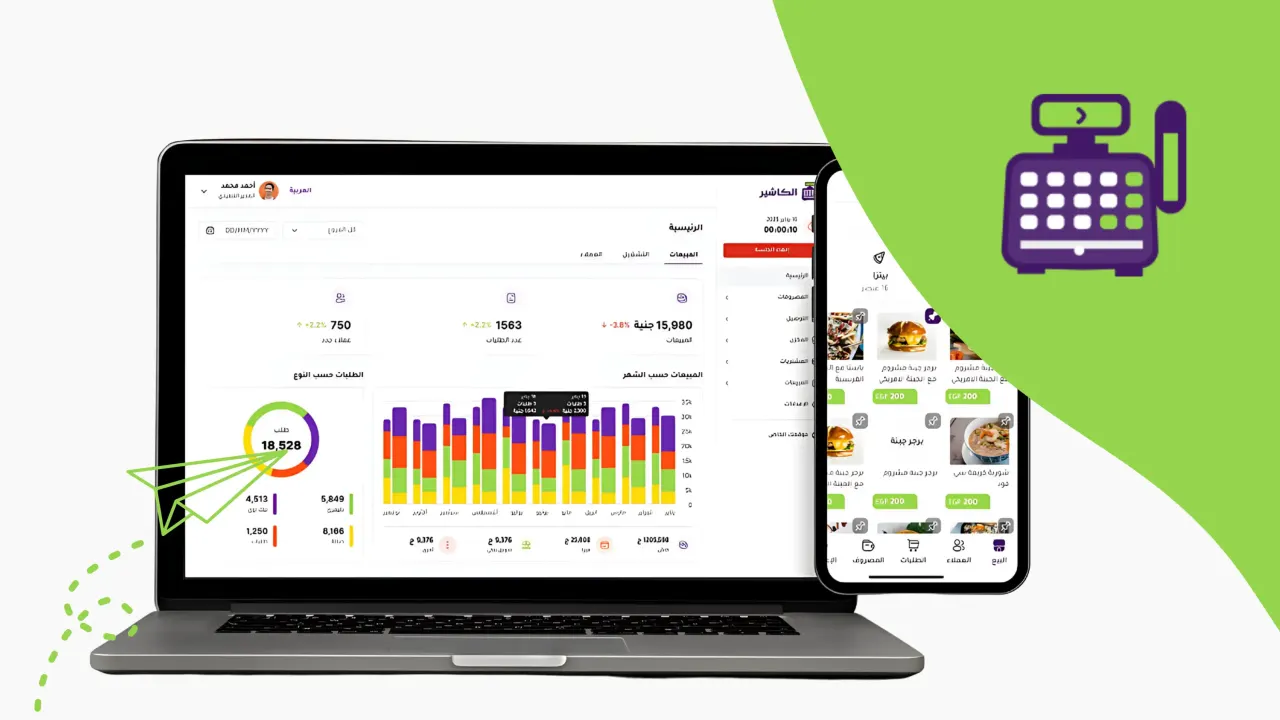
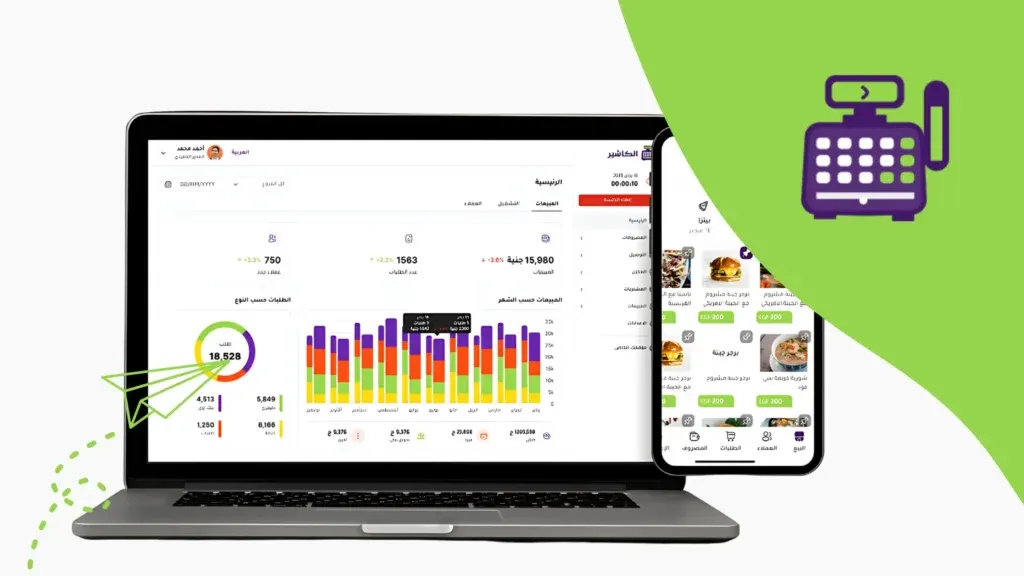
- Smart point-of-sale (POS) systems such as Alcashier , which support real-time data analysis and provide detailed reports that help restaurant owners follow financial and operational performance at any time.
- Demand forecasting using advanced algorithms to identify best-selling dishes and estimate future sales volume, which helps fine-tune inventory and avoid waste.
- Staff management through dynamic work schedules based on demand analysis and peak times, with performance evaluation tools that raise productivity and improve employee satisfaction.
- Customer service through chatbots that handle bookings and enquiries and offer smart recommendations, and even integrate with loyalty programs to enhance the customer experience.
- Customer experience analysis by tracking comments and reviews across different platforms, which gives a clearer picture of market needs and opportunities for improvement.
Global statistics on AI in restaurants
- According to a report by Grand View Research, the AI market in hospitality and restaurants was worth more than 6.3 billion dollars in 2023, and is expected to grow at 25% a year through 2030 (source).
- A study by Deloitte showed that 56% of restaurants that adopted AI increased their operating profits by 20% or more.
- In Saudi Arabia, AI investment is expected to reach 135 billion dollars by 2030, making the Kingdom one of the largest markets in the region (Source: Vision 2030).
Benefits of AI for your restaurant
1. Improving the customer experience
- Chatbots provide instant replies to customers around the clock.
- Smart recommendation systems suggest dishes based on customers' past preferences.
2. Less waste and greater efficiency
- Forecasting algorithms help determine the exact quantities of ingredients needed each day.
- According to a report by World Resources Institute, reducing food waste can increase restaurant profits by up to 14%.
3. Support for management decisions
- Smart dashboards like those in Alcashier let you track sales, profits, and inventory in real time.
- The ability to compare the performance of different branches and identify strengths and weaknesses.
4. Automating staff management
- AI creates smart work schedules that account for peak demand and save on labor.
- Performance evaluation systems motivate employees and increase productivity.
Real examples of AI integration in restaurants
1. McDonald’s
- Drive-throughs: McDonald’s uses AI to improve order taking and personalize interaction with customers.
- Order accuracy: AI systems help reduce errors and improve customer satisfaction.
- Equipment maintenance: AI-powered tools detect potential faults before they happen, which reduces downtime and increases efficiency.
- Management tools: Managers use AI-based tools to simplify operations, manage schedules, and improve food safety standards.
- Customer experience: The ultimate goal is a smoother experience through personalization and faster service.
- Partnership with Google: McDonald’s works with Google to speed up the rollout of these solutions using cloud computing and data analytics.
2. Domino’s Pizza
- Demand forecasting and inventory management: Domino’s uses sales data, weather, and economic indicators to forecast demand and fine-tune inventory.
- Customer feedback analysis: Generative AI analyzes feedback on platforms such as Reddit to understand preferences and identify areas for improvement.
- Pizza quality monitoring: The “DOM Pizza Checker” tool, equipped with computer vision, ensures pizza quality at all branches.
- Process improvement in collaboration with Microsoft: to improve staff scheduling, inventory management, and the customer experience more efficiently.
- Custom ordering and smart customer service: through the “Dom” chatbot, which works on Facebook Messenger, Slack, and Alexa devices, with order tracking and personalized experiences.
- AI-powered delivery: partnerships with companies such as Nuro and Flirtey to explore delivery by self-driving vehicles and drones.
- AI model management: through Datatron to ensure models run efficiently and are monitored continuously.
3. Starbucks
- Deep Brew: an AI platform for improving personal recommendations, inventory management, and staff scheduling.
- Personalized experiences: suggesting drinks based on past purchases, customer preferences, and even the weather.
- Operational efficiency: improving the supply chain and maintaining espresso machines by predicting needs and failures.
- Green Dot Assist: an AI-powered virtual assistant that helps baristas with recipes and equipment problems.
- Smart chatbots: through the Microsoft Azure platform, to handle customer enquiries about orders, rewards, and payments.
- Siren Craft System: an AI-driven industrial system that improves roasting and extraction quality and ensures consistency.
Challenges of adopting AI in restaurants
Despite its great benefits, there are some challenges:
- Startup costs: Investing in smart systems can be high, especially for small and medium restaurants, but it is considered a long-term investment that brings tangible benefits over time.
- Staff training: Employees need to learn how to work with modern technology, which may require regular training programs to ensure easy adaptation and the most from the systems.
- Data protection: Keeping customer data private and protecting it from cyberattacks is a top priority, which calls for advanced security protocols and regular reviews.
- Compatibility with existing systems: Some restaurants may face challenges integrating new systems with their current software or devices.
- Changing the organizational culture: Adopting AI requires a change in mindset and management style, which may take time and effort to bring the team on board.
But with local cloud solutions such as Alcashier, many of these challenges can be overcome, especially with its Arabic language support, the ability to work without a constant internet connection, and training courses and practical guidance to speed up adaptation.
How do you know if your restaurant is ready for the future?
Ask yourself the following questions:
- Do you still rely on paper schedules to manage staff?
- Do you track your sales manually?
- Do you struggle to know which dishes sell best?
- Do you have accurate data on your daily costs and food waste?
If your answers are “yes”, your restaurant urgently needs AI solutions to raise its efficiency.
Practical steps to apply AI in your restaurant
- Adopt a smart POS system such as Alcashier to manage sales and inventory in real time, with the ability to follow the performance of different branches and analyze sales trends to develop offers.
- Use data analytics to forecast demand and plan inventory more accurately, drawing on seasonal data and external factors such as weather and local events.
- Install a chatbot on your website to take orders and bookings and give customers personal recommendations, and link it to loyalty programs to increase return rates and customer retention.
- Automate staff schedules using smart software based on demand analysis, with the ability to monitor team performance, reward achievements, and improve the work environment.
- Follow periodic reports to identify opportunities for expansion and efficiency, including reports on reducing waste, analyzing customer behavior, and measuring the return on investment in marketing campaigns.
Summary
AI is no longer a luxury in the restaurant sector, but a necessity for staying in the market and keeping up with competition, as forecasts indicate that restaurants adopting AI technologies may achieve revenue growth of up to 30% over the next five years. And as Saudi Arabia enters the era of digital transformation under Vision 2030, investing in AI solutions such as Alcashier is not just about improving performance. It is a gateway to a more successful, profitable, and sustainable future, one that ensures your restaurant can compete locally, regionally, and globally.
“AI will not replace restaurant owners, but it will give those who use it a chance to excel, while those who ignore it fall behind the competition.”
Alcashier reports: the secret to making successful decisions for your restaurant
Data is the essential fuel for any restaurant’s success. It is no longer only about food quality or the restaurant’s location, but has become…
The best digital option for your restaurant: a website or an app?
The digital experience has become an essential element of success for restaurants, large and small. The modern era is witnessing a major shift…

Restaurant management guide in Saudi Arabia – how to start and run your restaurant successfully
Amid the rapid changes in restaurant management, careful planning and reliance on modern technology have become essential to the success of any project…
The post AI in restaurant management: is your restaurant ready for the future? appeared first on Alcashier.