Ramadan is one of the most important commercial seasons in Saudi Arabia, especially for restaurants and cafés. With changing working hours, higher demand during iftar and suhoor, and more orders coming through apps, operational efficiency becomes a decisive factor in making profits and avoiding losses.
In this complete guide to Ramadan 2026, we offer practical, proven strategies that help restaurant and café owners prepare early, improve inventory management, speed up cashier operations, organize staff, and get the most out of modern POS systems such as the cloud cashier system from Alcashier software.
If you are looking for a way to turn seasonal pressure into a real growth opportunity, this article will give you the complete roadmap.
Manage your sales and inventory in seconds with Alcashier!
Control sales, inventory and users in moments, and give your business an integrated system that runs smoothly without complexity.
Create your store for freeFirst: understanding demand in Ramadan
1. Changing consumption patterns
During Ramadan, customer behavior changes radically because of different fasting, working and social schedules, which directly affects the performance of restaurants and cafés. The most notable changes include:
- A sharp rise in demand one to two hours before the Maghrib call to prayer, as customers try to get their orders ready before iftar.
- A noticeable increase in delivery orders, especially for families and gatherings at home.
- High activity in cafés after Taraweeh prayers and until late at night.
- Larger group and family orders compared with ordinary days.
- A higher average invoice value because of combined orders and Ramadan bundles.
- A shift in item preferences toward quick-to-prepare meals and Ramadan drinks.
It is also noticeable that customer behavior in Ramadan is more sensitive to time and service quality, which makes speed of execution and order accuracy decisive factors in customer satisfaction and repeat visits.
So restaurants and cafés should rely on past sales data, POS analytics and daily performance indicators to predict operational peaks accurately, and to allocate staff and inventory in line with expected demand. Data-based planning reduces operational surprises and gives management greater control over seasonal pressure.
2. Why analyzing data from past seasons matters
Analyzing last Ramadan's reports is not just about knowing sales volume. It means understanding customer behavior patterns and finding the strengths and weaknesses in operations. The key indicators to review include:
- The best-selling and most profitable items.
- Daily peak times, down to the hour.
- The average invoice value during iftar and suhoor.
- The share of dine-in orders versus delivery and app orders.
- The rate of cancellations or order errors.
- Staff performance during busy periods.
By analyzing this data, you can make strategic decisions such as stocking more of certain items, cutting slow-to-prepare items, or redistributing staff at certain times.
With an integrated POS system like Alcashier software, you can pull detailed, real-time reports that help you plan smartly, build accurate forecasts and make decisions based on real numbers instead of random guesses or personal experience alone.
Second: early operational planning for Ramadan
1. Updating the menu (Menu Engineering)
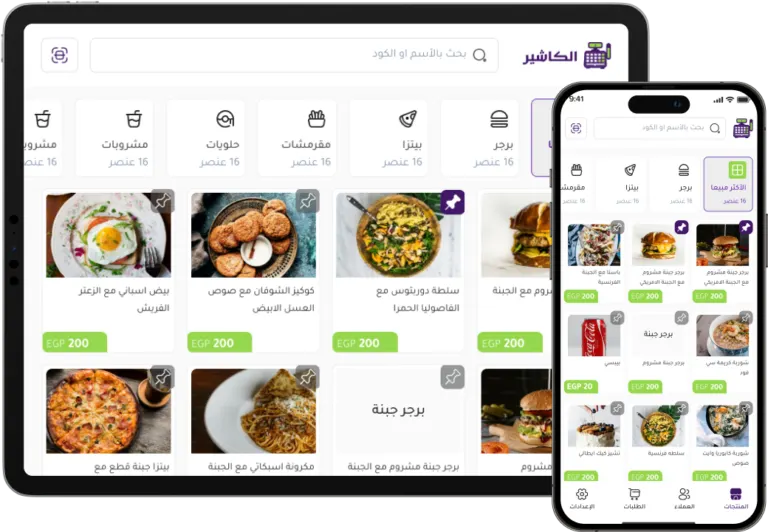
Ramadan is the ideal time to redesign the menu to match seasonal demand, the required speed of service and the target profit margin. Menu engineering does not just mean adding Ramadan dishes, it means analyzing the performance of each item in terms of sales, profitability and preparation speed.
To achieve this:
- Focus on quick-to-prepare Ramadan meals that cut waiting time before iftar.
- Offer ready-made iftar and suhoor bundles to raise the average invoice value.
- Cut low-demand or slow-to-prepare items to ease pressure on the kitchen.
- Improve profit margin through considered repricing based on ingredient costs.
- Highlight the most profitable items at the top of the menu or in special offers.
- Standardize ingredients across several dishes to reduce inventory complexity.
It is also best to test the new menu at least two weeks before Ramadan, analyze customer reactions and review actual preparation times in the kitchen.
Use the profit and sales reports in the Alcashier system to analyze the profitability of each item and its share of total revenue before deciding whether to keep or drop it. Relying on data in menu engineering helps you balance customer satisfaction with maximizing profit.
2. Smart inventory management
Inventory management in Ramadan is one of the most sensitive challenges, because any shortage of a key item before iftar can cause direct revenue losses and harm the brand's reputation and customer trust.
On the other hand, overstocking can lead to financial and food waste after the season ends. So you need to strike a careful balance between having enough stock and minimizing waste.
To avoid operational problems:
- Set a minimum and maximum level for each item based on past consumption data.
- Turn on low-stock alerts so you can act immediately before an item runs out.
- Link sales to inventory automatically so quantities are updated in real time.
- Track daily consumption during the first week of Ramadan to adjust forecasts quickly.
- Classify materials as perishable or long-life to set how you order from vendors.
- Run quick periodic stock counts during quiet times to avoid surprises.
The integrated inventory management systems in Alcashier software update quantities in real time with every sale and produce accurate reports on consumption and waste, helping management make purchasing decisions based on real numbers rather than guesswork.
Third: speeding up the cashier and cutting waiting time
1. Speeding up payment
At peak times during iftar and suhoor, every second counts. A slow cashier does not just mean longer queues, it can mean losing potential customers, lower satisfaction and negative ratings on digital platforms. The speed of completing orders is a key element in improving the customer experience and increasing table turnover in the restaurant.
To improve performance and raise operational efficiency:
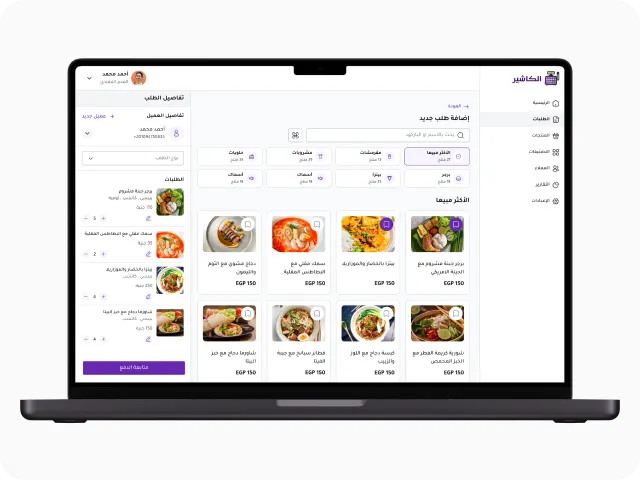
- Use fast-responding POS devices that can handle the pressure of back-to-back transactions.
- Turn on electronic and contactless payment to cut cash handling time.
- Reduce manual steps in the system by setting up shortcuts for the most-ordered items.
- Split payment points at peak times to ease the load on a single cashier.
- Train staff on the system's shortcuts and on handling combined orders quickly.
- Make sure the internet connection is stable or turn on offline mode to avoid interruptions.
It is also advisable to monitor the average invoice closing time through system reports, and analyze the periods when waiting time rises in order to address the causes of slowness, whether technical or human.
2. Reducing human error
Errors in invoices or order entry rise noticeably under pressure, especially when relying on handwritten notes or verbal communication between the cashier and the kitchen. These errors can lead to re-preparing an order, wasting ingredients, or even losing the customer's trust.
The effective solution is to rely on an automated system that links the order directly to the kitchen and minimizes manual intervention. Entering an order once in the cashier system should be enough to send it to all the departments involved.
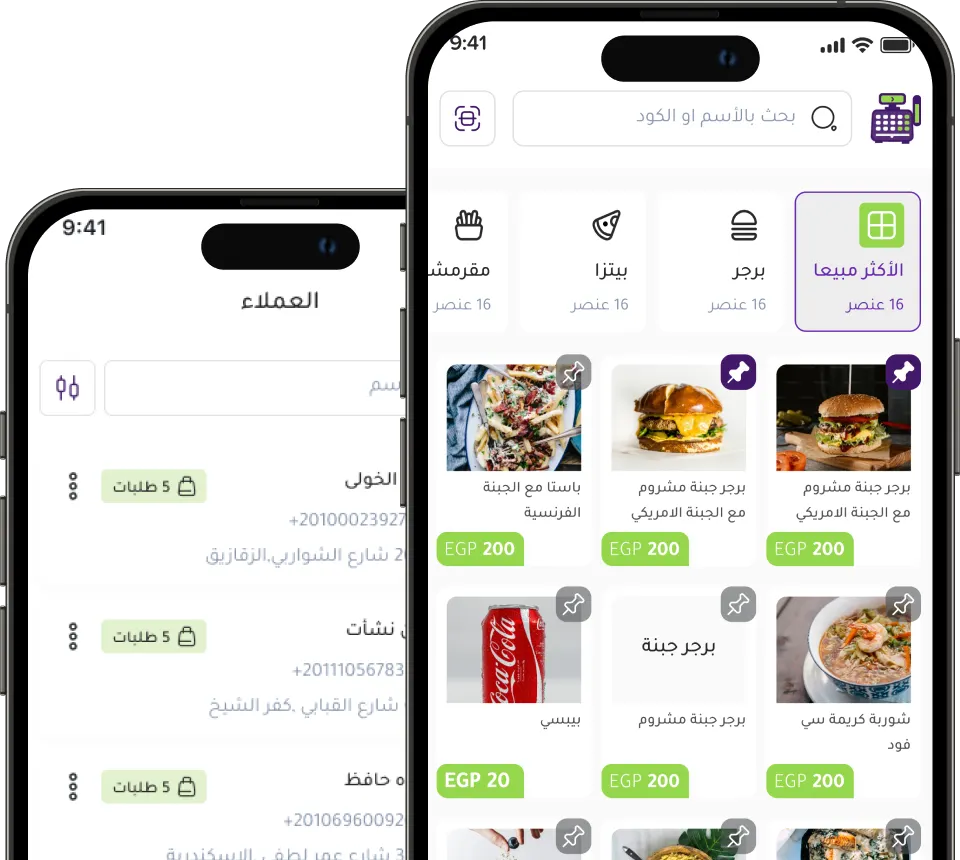
With an integrated cloud cashier system, the order is sent instantly to the Kitchen Display System, with precise details about the customer's modifiers or special changes, which reduces errors, speeds up execution and gives the kitchen team a clear view of order priorities during peak times.
Fourth: managing staff efficiently during the holy month
1. Organizing schedules around peak times
Ramadan requires different work schedules from the rest of the year, because operations change completely between the period before iftar, the hours after Taraweeh, and the suhoor period. Relying on the same traditional shift system can lead to severe pressure at certain times and unused surplus at others.
So you should prepare a flexible schedule based on analysis of actual peak-time data, not just general estimates. The key steps include:
- Increase the number of staff at least an hour before iftar to cover the sudden peak in orders.
- Distribute the team between the dining room, the cashier and delivery to make sure no one section gets choked.
- Assign a support team for the suhoor period, when working hours stretch late into the night.
- Appoint a supervisor responsible for coordinating operations during peaks to make immediate decisions.
- Schedule breaks in a way that does not affect workflow at busy times.
It is also advisable to prepare a backup contingency plan in case an employee is absent, especially in the first days of Ramadan, which usually see the highest turnout.
2. Monitoring performance and productivity
Managing staff in Ramadan is not limited to distributing schedules. It extends to tracking daily performance to ensure the highest operational efficiency. Relying on personal impressions can be misleading, while digital reports give you an accurate and fair picture.
Using the performance reports in the Alcashier system, you can track:
- The number of transactions per employee over a given period.
- The average order execution time from entry to delivery.
- Individual sales value and the average number of add-ons per invoice.
- The rate of errors or cancellations tied to each point of sale.
Analyzing these indicators helps management identify strengths and weaknesses, provide extra training when needed, and motivate outstanding employees with fair rewards based on actual performance.
This data helps you make fair decisions based on real numbers, which promotes fairness at work, raises morale, and ultimately improves the customer experience and increases the restaurant's profits during the Ramadan season.
Fifth: making the most of online orders and delivery
1. Integrating with delivery apps
In Ramadan, the share of orders through apps rises sharply, and in some restaurants it can account for more than half of total daily sales around iftar time. This shift in buying behavior requires management to adopt an integrated technical system that ensures orders flow smoothly without duplication or operational errors.
So you should:
- Connect all platforms to a single system to manage orders from one screen.
- Avoid entering orders manually to reduce human error and speed up execution.
- Unify inventory between the branch and the apps to avoid selling unavailable products.
- Sync prices and offers automatically between the internal system and the apps.
- Track each platform's performance in terms of order count and average invoice value.
Technical integration does not just save time, it gives management precise analytical insight into the most profitable channels and helps make marketing decisions based on real data.
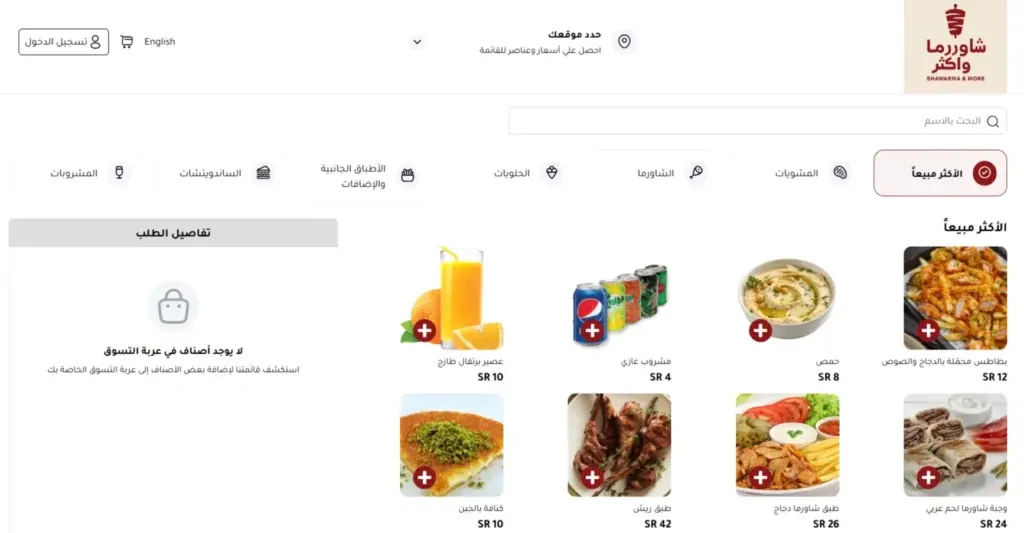
The Alcashier system lets you connect online sales directly to the system, update inventory in real time, and produce detailed reports for each sales channel, which prevents data conflicts and ensures a consistent customer experience across all platforms.
2. Managing time between in-house and outside orders
The biggest challenge in Ramadan is striking a fair balance between serving customers in the branch and delivery orders, especially in the peak hour before iftar. Focusing on one channel at the expense of the other can lead to delayed orders or a drop in service quality.
So you need a clear mechanism for managing operational priorities, including:
- Set a time priority for orders based on the expected pickup time.
- Dedicate an independent production line or workstation for quick orders or app orders.
- Split the kitchen team between in-house and outside orders to reduce conflicts.
- Track actual preparation time through reports and analyze the causes of delays.
- Set a maximum number of orders accepted per minute to avoid excessive pressure.
When time is managed efficiently, the restaurant can maintain service quality in the branch and deliver outside orders on time, which boosts customer satisfaction and raises the store's ratings on delivery apps during the Ramadan season.
Sixth: smart Ramadan offers
1. Designing profitable iftar bundles
Instead of relying on random discounts that may cut your profit margin with no clear results, it is better to design considered iftar bundles based on analysis of ingredient costs, average invoice value and customer behavior in Ramadan. The goal is to increase order value (Average Order Value) while keeping profitability stable.
You can design bundles that include:
- A main dish + a drink + a dessert at an attractive price slightly above the price of the single dish.
- A family offer with a set quantity that feeds 3 to 5 people with a calculated saving.
- Affordable suhoor offers aimed at recurring late-night orders.
- Special bundles for companies or large gatherings with advance ordering.
- An optional paid add-on (upselling) such as a drink upgrade or a side dish at a special price.
It is also advisable to limit certain bundles to a set time before iftar to encourage quick decisions, or to launch a “golden hour offer” after Taraweeh to increase sales in relatively quiet periods.
Using the Alcashier system to track the performance of each offer helps you see which is most profitable, analyze how many times it sold, the average profit per bundle, and how popular it is compared with individual orders. This data lets you adjust offers quickly during Ramadan instead of waiting until the end of the season.
2. Loyalty and incentive programs
Ramadan is a strategic opportunity to build a lasting customer base, not just to make seasonal sales. Customers who try your restaurant in Ramadan can be turned into regulars after Eid if they are motivated in a smart way.
Examples of effective loyalty programs include:
- A reward points system that gives the customer points for every purchase.
- A free cup or free dessert after a certain number of visits.
- Discount vouchers valid after Eid to encourage a return visit.
- Special offers for repeat customers during the month.
- Promotional messages personalized from the customer's purchase history.
Managing these programs through a central POS system makes the process more organized and professional, as you can track the number of visits, each customer's total spend, and produce reports showing repeat purchase rate. Linking the loyalty program with a system like Alcashier software gives you a complete view of customer behavior and helps you make marketing decisions based on accurate data, which strengthens loyalty and raises customer value in the long term.
Seventh: real-time performance tracking during Ramadan
1. An instant dashboard
Managing a restaurant should not happen only inside the branch, especially in a fast-paced season like Ramadan when the numbers change from hour to hour. A modern cloud system lets you track all the key performance indicators through a clear, easy-to-read central dashboard, whether on a computer, tablet or smartphone.
Through this dashboard you can track:
- Total daily sales and how they compare with previous days.
- The top products by quantity and profitability.
- Net profit after costs and expenses.
- Operating expenses recorded in real time.
- The number of invoices and the average order value.
- The performance of each branch if you manage more than one location.
This comprehensive view helps you spot any unusual drop or rise in performance as soon as it happens, instead of waiting until the end of the day or week. It also lets you compare iftar performance with suhoor and analyze the most productive time periods, which strengthens your ability to plan for the rest of the month.
Whether you are inside the restaurant or away from it, you can monitor performance in real time and make immediate decisions based on accurate data, without having to be on site all the time.
2. Making quick decisions
Real-time data is not just for display, it is for making quick operational and marketing decisions during peak hours. In Ramadan, a sudden change in ordering behavior may occur, such as increased demand for a certain item or a drop in sales of a specific offer.
If you notice a rise in demand for a certain item, you can:
- Increase its production immediately to avoid running out of stock.
- Adjust its price in a considered way if demand is very high.
- Promote it more on the menu or add it to a Ramadan bundle.
- Direct the kitchen team to give it priority in preparation.
And if you notice a drop in the performance of a certain offer, you can stop it, adjust it or replace it with a more attractive one within the same day.
Real-time data gives you a real competitive edge during a short, intense season like Ramadan, where speed and quality of decision-making are decisive factors in maximizing profits and minimizing losses.
Eighth: cutting costs and increasing profit margin
1. Monitoring food waste
Food waste rises noticeably in high-demand seasons like Ramadan, as a result of overstocking, misjudging consumption volume, and operational pressure that can lead to preparation errors or repeated order cancellations. This waste does not only affect costs, it also reflects on the final profit margin and the efficiency of inventory management.
Reducing waste requires a precise tracking system and a direct link between actual sales and raw material quantities. Every dish sold should be deducted from inventory automatically according to a predefined recipe (Recipe Management), which gives management a clear picture of real consumption.
Solutions include:
- Monitor quantities closely through daily consumption reports and compare them with sales.
- Reuse ingredients within approved health controls to reduce waste without affecting quality.
- Analyze the waste rate weekly and find the causes of any sudden rise.
- Adjust pre-preparation quantities, especially before iftar, to avoid unsold surplus.
- Train the kitchen team to stick strictly to the measurements to avoid waste caused by random estimation.
With an integrated POS system, you can pull reports showing the gap between theoretical and actual consumption, which helps detect any operational fault or mismanagement early, before it turns into a major financial loss.
2. Controlling operating expenses
In Ramadan, operating expenses rise because of more staff, higher consumption of materials and many promotional offers. So controlling expenses is no less important than increasing sales, because real profitability comes from careful cost management.
Tracking daily expenses in the system prevents hidden costs from ballooning, such as:
- Small recurring purchases that are not recorded accurately.
- Free gifts or discounts not recorded in the system.
- Unjustified discounts given under work pressure.
- Cash drawer differences caused by weak oversight.
It is also advisable to set a weekly operating budget during Ramadan, review actual expenses against the plan, and analyze any deviation immediately. Using a system like Alcashier to record expenses and link them to financial reports gives management a clear view of daily net profit and helps take quick corrective action to achieve the highest possible profit margin during the season.
Ninth: why a cloud system matters in Ramadan 2026
In a high-pressure season like Ramadan, there is no room for a system outage or slow response, because any downtime, even for a few minutes, can lose dozens of orders at peak time. So choosing a reliable cloud cashier system becomes a key element in the strategy for managing restaurants and cafés during the holy month.
A cloud system provides a set of operational and technical advantages that keep work running at the highest efficiency, among them:
- Working online and offline with no interruption to operations even if the internet drops.
- Automatic, instant data saving with continuous backup.
- High security for information and protection of sales and customer data.
- Continuous system updates without needing complex technical intervention.
- The ability to manage several branches from one central dashboard.
- Flexible user permissions to control employees' access to data.
A cloud system also gives access to financial and operational reports from anywhere, which gives business owners the freedom to track performance even outside working hours or on the move. This flexibility speeds up decision-making and reduces the risks tied to relying on limited traditional systems.
Alcashier software offers an integrated POS system serving restaurants and cafés in the Saudi market, with Arabic and English support and complete management of sales, inventory, staff and expenses in one platform. Thanks to its cloud architecture, built to withstand seasonal pressure, the system helps business owners achieve operational stability, accurate data analysis and maximum profits in Ramadan and beyond.
Tenth: a practical plan for preparing a month before Ramadan
4 weeks before Ramadan
- Analyze last year's data in detail, reviewing peak times, best-selling items and profit margins.
- Review your vendors and make sure they can meet the expected quantities during the season.
- Update the menu based on the analysis, and drop poorly performing items.
- Review supply contracts and prices in case of any seasonal increase.
- Set a preliminary estimate of the sales target for the month.
3 weeks before Ramadan
- Train staff on the system and make sure they have mastered fast operations during peaks.
- Test the speed of devices and the network and confirm offline mode is ready.
- Draw up a clear Ramadan offers plan with goals for each offer.
- Prepare a detailed operational plan for iftar and suhoor times.
- Clearly distribute roles and responsibilities among team members.
2 weeks before Ramadan
- Raise base stock of the most in-demand items according to forecasts.
- Launch a teaser marketing campaign on social media and delivery apps.
- Make sure packaging materials for outside orders are ready.
- Test the Ramadan bundle recipes in practice in the kitchen.
- Review the queue management and customer service plan.
1 week before Ramadan
- Run a real stress test of the system by simulating the peak hour.
- Review the final schedules and make sure all the sensitive periods are covered.
- Make sure electronic payment and POS devices are ready.
- Hold a motivational meeting with the team to explain the final work plan.
- Prepare baseline reports to measure the performance of the first week of Ramadan.
Manage your sales and inventory in seconds with Alcashier!
Control sales, inventory and users in moments, and give your business an integrated system that runs smoothly without complexity.
Create your store for freeConclusion
Ramadan 2026 is a golden opportunity for the restaurant and café sector in Saudi Arabia, but at the same time it is an operational challenge that requires early preparation, careful management, and reliance on data instead of individual guesswork.
Through advance planning, better inventory management, faster cashier operations, organized staff and making the most of digital orders, seasonal pressure can be turned into real profit growth.
Relying on an integrated POS system like Alcashier software gives you full control over your operations, whether you run one branch or several, and helps you make decisions based on accurate numbers at the right time.
Start preparing now, and make Ramadan 2026 the most successful season in your restaurant's history.
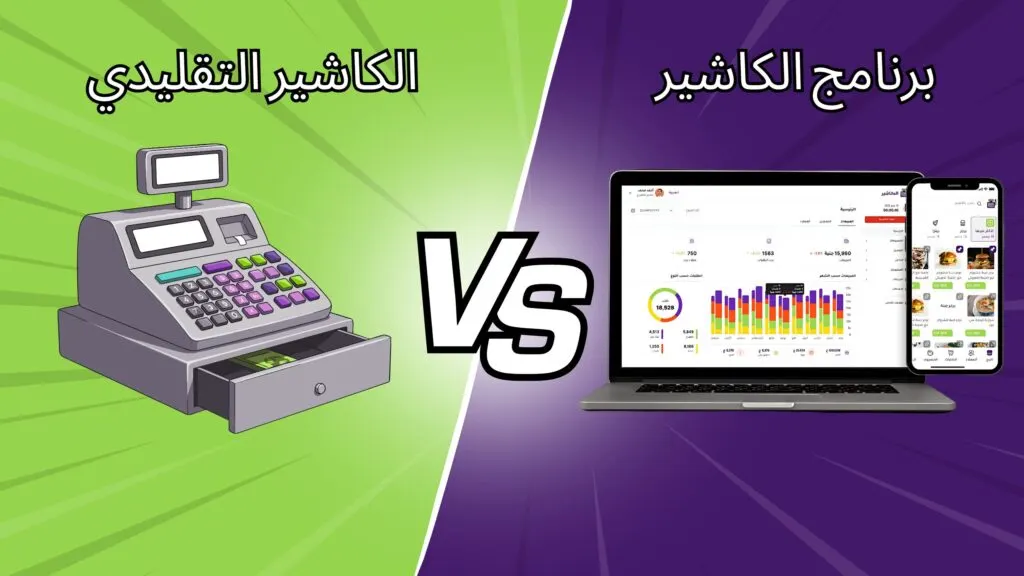
The difference between a traditional cash register and smart POS systems
For many decades, traditional cash registers were the backbone of sales operations in shops and restaurants. They were used to record sales, open the drawer…
Is your cashier system outdated? 9 signs that it is
In the modern business world, a cashier system is no longer just a tool for recording sales; it has become an essential part of a smart management system…
5 tips for choosing the right POS system for business owners
For business owners, time is more valuable than money. It is the real foundation of growth, decision making, and long-term sustainability. Whether you run…
The post Ramadan 2026: the role of the Alcashier system in improving restaurant efficiency appeared first on Alcashier software.