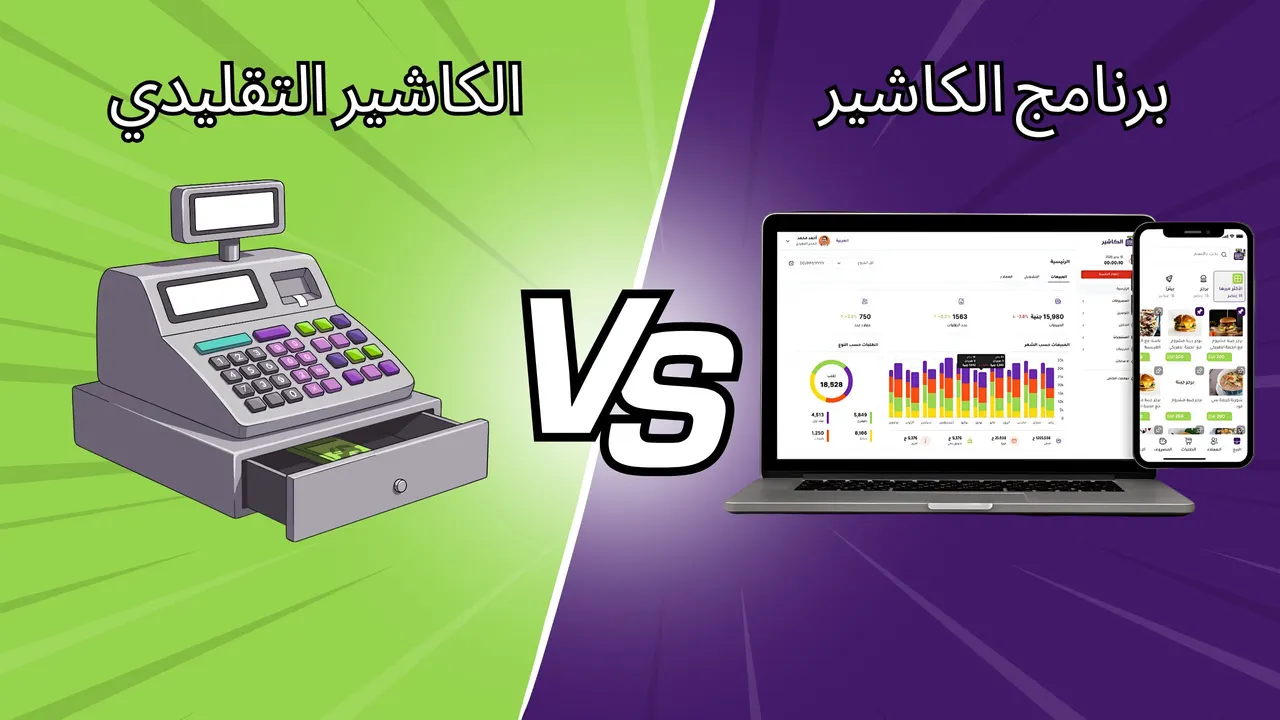
In the modern business world, a cashier system is no longer just a tool for recording sales; it has become an essential part of the smart management system of any business. With evolving customer expectations, growing competition, and the accelerating pace of digital transformation in Saudi Arabia, relying on an outdated cashier system has become a real obstacle to growth and sustainability.
Many shop and restaurant owners do not realize that simple everyday problems, such as slow transactions or inventory errors, can be clear signs that their current point-of-sale system is no longer suitable. In this article, we review in detail the most important signs that it is time to upgrade your cashier system, and why moving to a modern system like Alcashier is a strategic step and not just a technical upgrade.
Manage your sales and inventory in seconds with Alcashier!
Control sales, inventory and users in moments, and give your business an integrated system that runs smoothly without complexity.
Create your store for free1. Slow sales and delayed customer service
If you notice that your employees take a long time to complete a sale, or that queues grow during peak hours, this is a clear sign that your current cashier system can no longer keep up with the demands of daily work. Slow sales do not only affect the speed of service; they hurt the customer experience and may push some customers to leave the store without completing their purchase.
Old cashier systems often suffer from slow response, limited performance, and an inability to process a large number of transactions at the same time, especially under pressure and during seasonal promotions. This slowness adds pressure on employees and raises the likelihood of mistakes when recording orders or payments.
By contrast, a modern point-of-sale system offers high speed in recording orders, processing payments across different payment methods, and printing invoices within seconds. This operational speed directly helps cut waiting times, improve customer satisfaction, and raise efficiency inside the store, which benefits sales and the reputation of the business.
2. Recurring inventory errors
Do you face differences between your actual stock and the stock recorded in the system? Do some products suddenly run out without warning, or do you discover unexplained quantities of slow-moving products in the warehouse? These are among the most common problems in traditional cashier systems, and they are often the result of inventory not being updated in real time and of inaccurate recorded data.
Relying on a system that does not update inventory automatically after every sale leads to wrong purchasing decisions, such as ordering excess quantities or being late to reorder, which causes unnecessary losses and affects cash flow. Inventory errors can also cost you customers' trust when the products they want are unavailable.
By contrast, modern cashier systems provide smart real-time inventory management, where quantities are updated automatically with every sale or return. In addition, these systems provide automatic alerts when quantities run low, and reports that help you forecast demand and improve planning, giving you greater control over your inventory, reducing waste, and raising operating efficiency.
3. Lack of accurate reports and analytics
Making successful, sustainable decisions requires relying on clear, accurate, continuously updated data. If your cashier system does not provide detailed reports on daily and monthly sales, profit margins, best-selling products, peak times, or employee performance, you are effectively running your business blindfolded and relying on personal estimates instead of real numbers.
The absence of accurate reports and analytics makes it hard to discover the strengths and weaknesses of your business, and leads to random decisions that may hurt sales or raise costs without you noticing. For example, you may keep selling low-margin products or fail to take advantage of the highest-demand products because of a lack of analytical data.
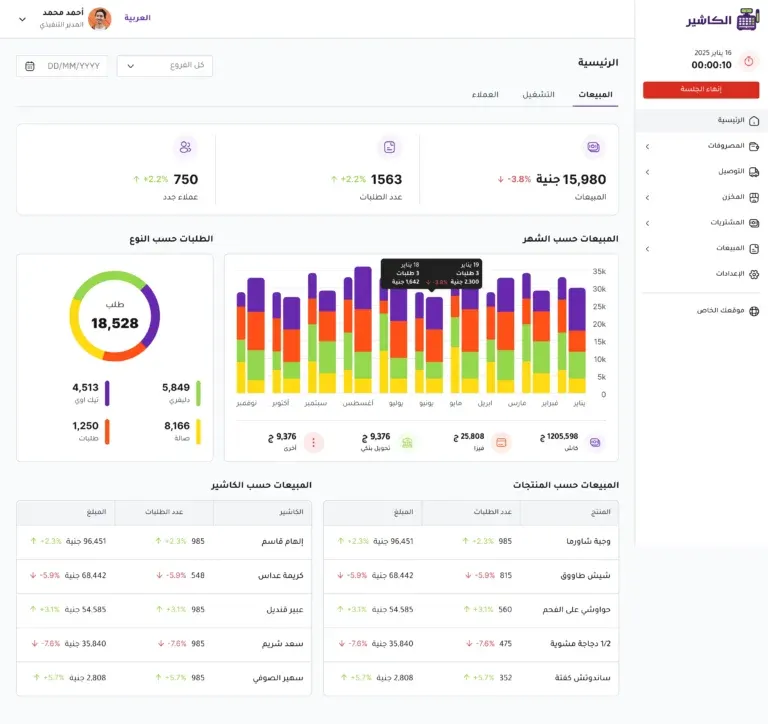
By contrast, an advanced point-of-sale system like Alcashier offers real-time reports and smart, easy-to-understand dashboards that show you key performance indicators in one place. These reports help you analyze customer behavior, evaluate branch and employee performance, and identify real growth opportunities, enabling you to make decisions based on accurate data that boost profits and improve management efficiency.
4. No support for working online and offline
In a changing, fast-paced business environment, an internet outage can bring sales to a complete halt when you use a cashier system that depends entirely on a network connection. This is a common problem in old systems, and it can lead to lost immediate sales, confused staff, and unhappy customers, especially during peak hours or important trading seasons.
Relying on a system that does not work offline exposes the business to unnecessary operational risks, especially in markets that may see temporary internet outages or weak networks in some locations.
By contrast, modern cashier systems support working online and offline seamlessly, so sales and invoicing continue without any interruption even if the connection is lost. All data is saved locally and securely, then synced automatically with the cloud system when the internet returns. This feature is essential for any business in Saudi Arabia that wants to ensure business continuity, protect revenue, and deliver a stable, professional selling experience in all conditions.
5. Difficulty managing more than one branch
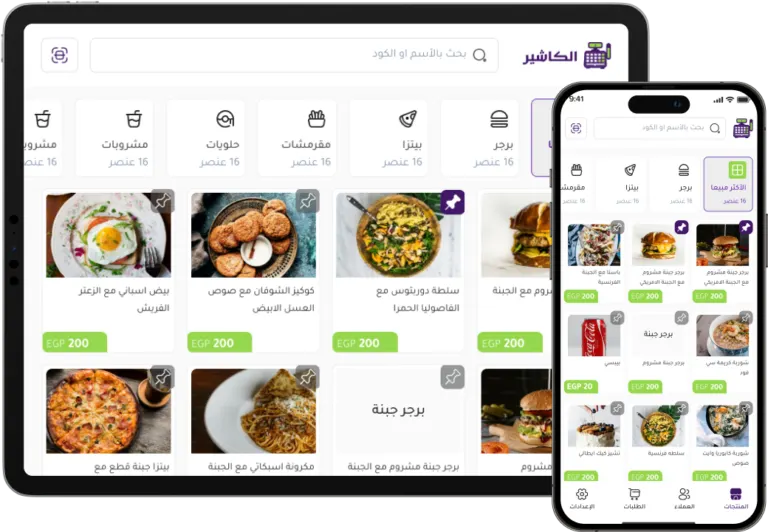
If you own more than one branch and rely on a cashier system that does not let you track performance from one place, this significantly limits your ability to expand and make effective management decisions. Managing each branch separately means more time spent collecting data, difficulty comparing performance between branches, and a greater chance of operational errors or manipulation that you do not catch early.
The lack of a unified view makes it hard to know which branches perform better and which need improvement or extra support, and it complicates planning for expansion or opening new branches.
By contrast, a cloud point-of-sale system provides a comprehensive, integrated view of all branches through a single central dashboard. You can monitor sales, inventory, expenses, and employee performance for each branch in real time, from anywhere. This centralization gives you greater control, faster decision-making, and a real ability to expand with confidence and efficiency without administrative complications.
6. Non-compliance with e-invoicing requirements
With the rollout of e-invoicing in Saudi Arabia, it has become essential for your cashier system to be fully compatible with the requirements of the Zakat, Tax and Customs Authority (ZATCA), in both the first and second phases of e-invoicing. Failing to meet these requirements can disrupt accounting operations, make it difficult to prepare tax reports, or cause problems during audits.
Old systems often do not support creating e-invoices in an approved format, and do not provide mandatory fields such as QR codes or the required system integration, which may expose your business to legal risks, financial penalties, or even suspension of services.
Upgrading your cashier system ensures full compliance with local regulations, and helps you generate approved e-invoices automatically, archive data in an organized way, and prepare for any future regulatory requirements easily and with peace of mind, without the need for temporary workarounds or manual intervention.
7. Weak security and data protection
Sales and customer data are among the most important assets of your business, and any weakness in protecting them can lead to financial losses, reputational damage, and loss of customer trust. Systems that are not updated often lack modern security standards, making them more vulnerable to cyberattacks, data loss, or unauthorized access by internal or external parties.
By contrast, modern point-of-sale systems rely on a secure cloud architecture that uses advanced encryption technologies to protect data in storage and in transit. They also provide automatic backups that ensure information is not lost in case of any technical failure, along with flexible access permissions that let you control what each employee can view or edit. This level of security gives business owners greater peace of mind and ensures business continuity and the protection of sensitive data over the long term.
8. Difficulty training staff on the system
If your current system is complicated and requires a long time to train new employees, this directly affects daily productivity and increases the likelihood of mistakes during sales or data entry. A complicated system frustrates employees, slows down workflow, and raises operating costs because of the need for repeated training and constant technical support.
By contrast, the user interface of modern cashier systems is simple and easy to use, designed to be clear and quick to learn even for new employees. This greatly reduces training time and helps employees work efficiently and confidently from day one, which benefits service speed, operational accuracy, and the customer experience in the store.
9. No integration with other systems
Modern businesses need seamless integration between the cashier system, accounting systems, the online store, and delivery services and other external apps. This integration ensures data flows automatically and accurately between all parts of the business, and reduces reliance on manual entry, which consumes time and increases the chance of errors.
When you use a cashier system that cannot be integrated, separate islands of data are created, where each system works independently without real communication, leading to conflicting numbers, difficulty preparing comprehensive reports, and complicated operations. By contrast, the solution lies in adopting a flexible point-of-sale system that supports integration with a variety of digital tools, such as accounting systems, e-commerce platforms, and delivery services, giving you a unified, comprehensive view that helps you run your business more efficiently and make faster, more accurate decisions.
Why is Alcashier a smart choice for upgrading your cashier system?
Alcashier is an integrated cloud point-of-sale system designed specifically to fit the needs and requirements of the Arab market, with full support for both Arabic and English. The system provides comprehensive management of sales, inventory, expenses, and employees through a single easy-to-use platform, allowing business owners to follow all their operations accurately and in real time.
Alcashier software stands out for its high flexibility and its ability to adapt to different types of businesses, whether you run a small retail shop, a restaurant, a café, or a chain of multiple branches. Through smart automation, analytical reports, and integration with other systems, Alcashier helps you reduce operational errors, improve daily efficiency, and make decisions based on accurate data, supporting sustainable growth and safe expansion in a fast-moving, competitive market.
Frequently asked questions (FAQ)
When should I upgrade my cashier system?
It is recommended to upgrade your cashier system when you start noticing slow sales, recurring operational errors, difficulty producing accurate reports, or your current system's inability to keep up with the growth of your business and the expansion of your branches. Non-compliance with e-invoicing in Saudi Arabia, or weak security and data protection, are also clear signs that upgrading is no longer an option but an operational and investment necessity.
Is upgrading a cashier system expensive?
In fact, the cost of upgrading a cashier system is far lower than the losses caused by continuing to use an ineffective system. Cloud point-of-sale systems on a SaaS model offer flexible subscriptions without the need for large investments in hardware or maintenance, and they help reduce waste, improve sales and inventory management, and raise operating efficiency, making them an economical and profitable choice in the medium and long term.
Can data be transferred from the old system?
Yes, most modern cashier systems let you import data from the old system easily, including product, customer, and inventory data. The transfer is usually done with specialized technical support to ensure data integrity and that no important information is lost, making the move to the new system easier without disrupting workflow or affecting daily operations.
Manage your sales and inventory in seconds with Alcashier!
Control sales, inventory and users in moments, and give your business an integrated system that runs smoothly without complexity.
Create your store for freeConclusion
Ignoring the signs that your cashier system is aging can cost you precious time, wasted money, and real growth opportunities that could have been seized for the benefit of your business. Continuing to rely on an old point-of-sale system hurts work speed, data accuracy, and the customer experience, which directly affects your ability to compete in a market that is developing rapidly.
Upgrading your point-of-sale system is no longer a luxury or a postponed option, but a strategic investment in the future and sustainability of your business. A modern system gives you a clearer view of performance, greater control over daily operations, and a better ability to adapt to regulatory and technical changes.
By choosing a modern, trusted system like Alcashier software, you get smarter management, a better customer experience, and a tangible improvement in operating efficiency and decision-making. The system also gives you a greater ability to expand with confidence, whether by adding new branches or developing multiple sales channels, in a fast-moving competitive market that demands flexible, smart solutions.
If you are looking for a cashier system that keeps pace with your ambitions, supports your growth, and gives you a strong technical foundation for the future, it is time to take the right step and move to a modern point-of-sale system that meets your business needs today and prepares for tomorrow's challenges.

5 tips for choosing the right POS system for business owners
For business owners, time is more valuable than money. It is the real foundation of growth, decision making, and long-term sustainability. Whether you run…
How a POS system helps you increase sales without increasing costs
In today’s highly competitive retail and hospitality environment, business owners face a constant challenge: how can you increase sales without increasing costs?…
How do you know your current cashier system is no longer right for your business?
The cashier system is no longer just a simple tool for recording sales or printing invoices; it has become the backbone of managing daily operations…
The post Is your cashier system outdated? 9 signs that tell you so appeared first on Alcashier Software.