In the era of digital transformation sweeping the business sector in Saudi Arabia, POS systems (point-of-sale systems) have become the cornerstone of managing sales efficiently. They are no longer just a supporting tool but a central element in developing the work environment and increasing competitiveness. The cashier is no longer just a device for issuing invoices. It has evolved into a complete platform for managing inventory accurately, following employee performance in real time, analyzing sales intelligently through interactive dashboards, and connecting branches and stores through the cloud so operations stay in sync anywhere, anytime. These systems have also become a way to raise customer satisfaction by cutting waiting times and offering multiple payment options. Among the leading local solutions in this field is the Alcashier system, which offers innovative, flexible and secure services that suit the needs of the Saudi market and keep pace with the goals of Vision 2030.
What are POS systems?
POS systems (point-of-sale systems) are integrated technology solutions that combine hardware and software to simplify and manage daily sales operations, manage inventory with high accuracy, and issue invoices instantly and professionally. The role of these systems is not limited to recording sales. It extends to preparing detailed financial reports, following inventory levels and alerting business owners when it is time to reorder, and monitoring employee performance. These systems support integration with electronic payment methods such as mada, Visa, Mastercard and digital wallets, and also allow modern payment methods such as smartphone payments. All of this gives customers multiple, flexible payment options and strengthens consumers' trust in merchants.
Why POS systems matter for business
1. Improving the customer experience
According to a study by PwC, 73% of customers consider the shopping experience a decisive factor in their loyalty to a brand. POS systems provide a smooth, fast experience that raises customer satisfaction by cutting waiting time, offering varied payment options, and issuing clear electronic invoices. These systems also help strengthen the relationship between the customer and the store through loyalty programs and personalized offers.
2. Accurate financial management
POS systems record every sale and generate detailed financial reports, which helps business owners track revenue and expenses accurately, simplify budget preparation, and calculate taxes correctly, which reduces human error and raises the level of financial transparency.
3. Supporting growth and expansion
Reports from Statista indicate that the retail market in Saudi Arabia exceeded 150 billion dollars in 2023, and POS systems help merchants keep pace with this growth by managing their operations efficiently, monitoring the performance of multiple branches, and expanding into new services such as e-commerce and linking it to traditional inventory for full integration across the supply chain.
Components of POS systems
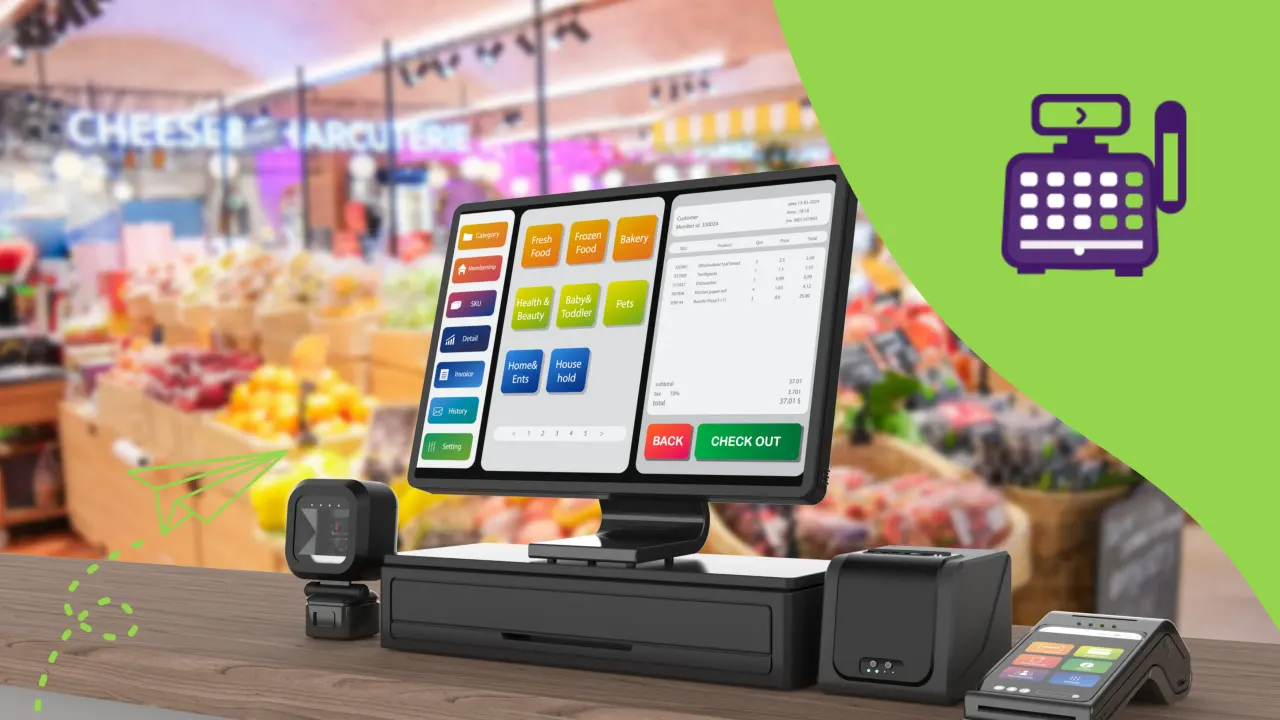
- Hardware: includes a tablet or cashier device, a barcode scanner, an invoice printer, interactive touchscreens, mobile payment terminals, and modern QR scanning devices that have become common in restaurants and small stores.
- Software: a cloud POS system such as Alcashier that manages operations, inventory and employees, and lets you prepare daily and weekly reports, follow sales performance through smartphone apps, and manage loyalty programs and discounts.
- Payment gateways: integration with local and global electronic payment methods, support for payments through digital wallets, contactless payment (NFC), and smartphone payment services such as Apple Pay and STC Pay.
Types of POS systems
1. Traditional POS
Runs on fixed devices inside the store and suits large stores. It offers high performance stability but may lack flexibility and mobility.
2. Cloud POS
Provides the flexibility to access data from anywhere at any time. This is what Alcashier offers as an integrated solution with additional features such as automatic syncing, continuous backup, and the ability to monitor multiple branches remotely.
3. Mobile POS
Runs on smartphones or tablets and suits restaurants, cafés and small stores. These systems give you great flexibility to serve customers right at the table or on the move. They are also an ideal choice for exhibitions and temporary kiosks.
The role of POS systems in Saudi Arabia's digital transformation
In line with Saudi Vision 2030, POS systems support the shift toward a fully integrated digital economy built on transparency and efficiency. The Saudi Ministry of Commerce has launched several initiatives to promote the adoption of electronic payment across sectors, from retail stores to restaurants and cafés. These efforts succeeded in raising the share of digital payments to more than 60% in 2022 (source), with future plans to increase it to 80% by 2030. This highlights the vital role of these systems in supporting economic growth goals and reducing reliance on cash.
Benefits of using Alcashier
- Multi-branch management: track sales and inventory from a single dashboard, with the ability to prepare comparison reports between different branches and monitor employee performance across all locations.
- Bilingual support: the system is available in both Arabic and English for users' convenience, with an easy interface that lets you switch between the two languages without any complication.
- Working online and offline: operations keep running even if the internet goes down. Data is saved locally and automatically re-synced when the connection returns.
- Detailed reports: analyze performance and sales accurately to make strategic decisions, with the ability to generate charts and interactive dashboards that show market trends and growth opportunities.
Key statistics on the POS systems market
- The global POS systems market was worth more than 30 billion dollars in 2022 and is expected to reach 58 billion dollars by 2030 (source), with a compound annual growth rate of more than 8% expected as digital transformation accelerates worldwide.
- In Saudi Arabia, POS payment transactions grew by more than 40% between 2020 and 2022 according to SAMA data, and the number of POS devices reached more than 1.2 million across different cities, which reflects the wide spread of this technology and confirms its role in supporting the non-cash economy.
How to choose the right POS system
- Size of the business: choose the system based on the size of the store and the number of branches, taking into account the number of employees, the size of the inventory, and the volume of daily operations.
- Integration with other systems: such as accounting software or delivery apps, as well as human resources management systems and loyalty programs, to deliver a complete experience.
- Ease of use: an easy interface that ensures employees can be trained quickly, with tutorials and training apps to shorten the learning curve.
- Technical support: round-the-clock customer service, with multiple communication channels such as phone, email and live chat to ensure fast response and problem solving.
Challenges businesses face when using POS systems
- Startup costs: can be high for small stores because of the cost of hardware and software, in addition to maintenance fees and ongoing updates.
- Training: the need to train employees to use the system efficiently, which may take extra time and resources, especially when hiring new employees or expanding branches.
- Cybersecurity: the need to protect data from any breach, by using modern encryption protocols, regular monitoring, and regular backups to reduce risk.
- System compatibility: some stores have difficulty connecting POS systems with other management systems such as accounting or human resources management.
- Scaling challenges: as the business grows, some systems may need additional updates or development to fit the larger volume of operations.
- Customization cost: some merchants may want to customize the system to their specific needs, which can increase costs and the time needed to implement it.
The future of POS systems in Saudi Arabia
With digital transformation accelerating and artificial intelligence being adopted, POS systems will evolve to include more accurate sales forecasting, using big data analytics, personalizing offers for customers based on their buying behavior, and full integration with e-commerce and digital marketing platforms. These systems are also expected to add advanced functions such as market trend analysis, customer recognition through artificial intelligence, and instant recommendations to increase sales. Programs such as Alcashier are expected to play a leading role in this field by offering innovative solutions that support business owners and help them make strategic decisions more accurately and quickly.
Frequently asked questions (FAQ)
1. Do POS systems work without the internet?
Yes, many systems such as Alcashier support working offline with data syncing later. This ensures operations continue even when the network goes down. This is a big advantage for stores located in areas with poor connectivity or restaurants that don't want service interrupted under any circumstances, since all operations are saved locally and then synced automatically when the internet returns.
2. Are POS systems suitable for small stores?
Absolutely. They help even small stores organize their operations and reduce errors. Instead of relying on manual methods, the store owner can follow sales and inventory and record expenses easily through a simplified dashboard. The system also provides daily and monthly reports that give the owner a comprehensive view of performance and let them make well-informed decisions to support the growth of their business.
3. How do POS systems help increase profits?
By improving operational efficiency, reducing errors, and analyzing sales data to make accurate decisions. In addition, these systems make it possible to forecast future demand by analyzing customer trends, which helps reduce waste and increase sales. They can also manage offers and discounts smartly in a way that increases customer loyalty and motivates repeat purchases.
4. Do POS systems support e-invoicing?
Yes, many systems support issuing e-invoices in line with the requirements of the Zakat, Tax and Customs Authority in Saudi Arabia. This compliance ensures full transparency and reduces the administrative costs of printing and storing paper invoices, in addition to making accounting review easier and saving time and effort.
Conclusion
POS systems are a strategic element for business success in Saudi Arabia. They are not limited to making sales easier but extend to the integrated management of inventory, employees and financial reports, while strengthening operational efficiency and cutting the costs that come from manual errors. They also help improve the customer experience through speed, accuracy and multiple payment options, which raises their satisfaction and loyalty. With solutions such as Alcashier, merchants and business owners can enjoy great flexibility and continuous support, along with in-depth analytical reports that help them make better strategic decisions. This improves their chances of expansion, sustainability and success in a fast-growing, competitive market.
The best POS system in Saudi Arabia: why Alcashier is your ideal choice
In the world of modern commerce, the point-of-sale (POS) system has become an indispensable tool for store owners of all sizes and types of business, whether…

Secrets to successful restaurant offers and campaigns: innovative strategies to increase sales
Promotional campaigns and special offers are a cornerstone of any successful marketing strategy. They are not limited to attracting new customers, but…
How a cashier system is changing the future of restaurants: a complete guide to increasing profits
With the intense and growing competition in the restaurant sector in the Kingdom of Saudi Arabia, relying on an advanced cashier system has become necessary and unavoidable…
The post POS systems: the complete guide to managing modern sales in Saudi Arabia appeared first on Alcashier.