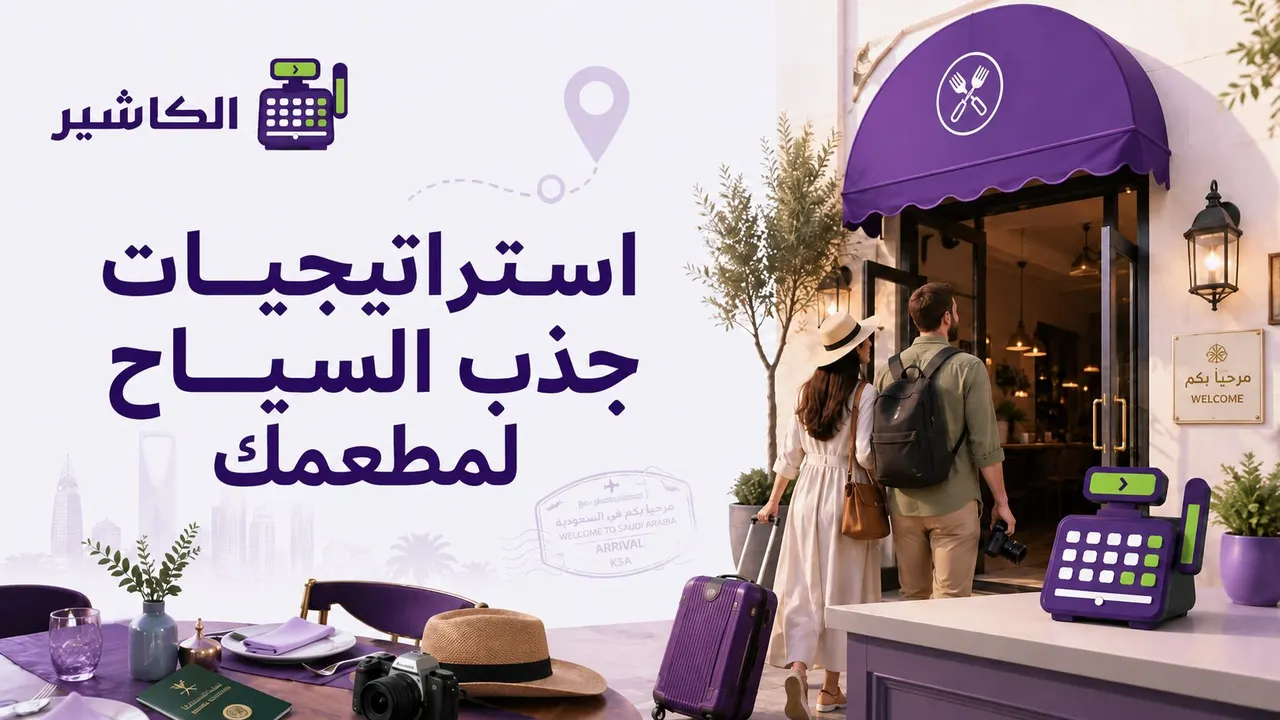
Tourists are an important opportunity for restaurants, especially in cities and areas with steady tourist traffic or with seasons and events that draw visitors from inside the Kingdom and abroad. But having a restaurant in a tourist area doesn't necessarily mean tourists will choose it automatically.
A tourist often doesn't know the local restaurants in advance, so they decide based on a handful of quick factors: the restaurant's location on Google Maps, customer reviews, photos of the dishes, how clear the menu is, how easy it is to get in touch, speed of service, prices, and the payment experience.
This is where attracting tourists becomes more than just posting an ad or offering a discount. The restaurant needs a complete experience that starts before the customer arrives, continues during ordering and payment, and then carries on after they leave through reviews and recommendations.
Technologies such as modern point-of-sale software can also help the restaurant owner understand their sales, know which dishes are most in demand, track peak times, manage inventory, and keep improving the customer experience.
In this guide, we review the key strategies that help you attract tourists to your restaurant and turn tourist visits into a sustainable source of higher sales.
Manage your sales and inventory in seconds with Alcashier!
Control sales, inventory and users in moments, and give your business an integrated system that runs smoothly without complexity.
Create your store for freeWhy should restaurants target tourist customers?
A tourist behaves differently from a local customer when buying. A local customer may know the restaurants around them and visit the same place several times, while a tourist often starts the search from scratch.
They might, for example, search for:
- best restaurants near me
- traditional Saudi restaurants
- best family restaurants
- restaurants near a tourist area
- restaurants serving local dishes
- highly rated restaurants
- places for breakfast or dinner
And once they reach the restaurant, they may also be ready to try new items or order a full meal, especially if the menu is clear and ordering is easy.
So improving the restaurant's presence in front of tourists can help with:
- Increasing the number of new customers.
- Raising occupancy during tourist seasons.
- Increasing the average order value.
- Getting new reviews from customers from different countries.
- Increasing the restaurant's reach on social media.
- Strengthening brand recognition beyond the local area.
But achieving these results requires combining good marketing with effective operational management.
1. Make your restaurant easy to discover on Google and Google Maps
A tourist behaves differently from a local customer when buying. A local customer may know the restaurants around them and visit the same place several times, while a tourist often starts the search from scratch.
They might, for example, search for:
- best restaurants near me
- traditional Saudi restaurants
- best family restaurants
- restaurants near a tourist area
- restaurants serving local dishes
- highly rated restaurants
- places for breakfast or dinner
And once they reach the restaurant, they may also be ready to try new items or order a full meal, especially if the menu is clear and ordering is easy.
So improving the restaurant's presence in front of tourists can help with:
- Increasing the number of new customers.
- Raising occupancy during tourist seasons.
- Increasing the average order value.
- Getting new reviews from customers from different countries.
- Increasing the restaurant's reach on social media.
- Strengthening brand recognition beyond the local area.
But achieving these results requires combining good marketing with effective operational management.
Pay attention to the words tourists search for
Don't settle for the restaurant's name in the description. Try to make clear the kind of experience you offer.
For example, if your restaurant serves Saudi food, it may help to describe it as a restaurant serving traditional and modern Saudi dishes.
This way, the restaurant is more likely to show up when a user searches for a local dining experience and not just for the restaurant's name.
2. Encourage customers to write reviews
Reviews are among the most important factors tourists rely on before trying a new restaurant.
When a tourist sees two restaurants that are similar in location and price, but one has a large number of positive reviews and recent photos, they are likely to feel more confident about it.
So make asking for a review a natural part of the customer experience.
You can place a small QR code on:
- The invoice.
- The table.
- The menu.
- The checkout counter.
- A small card served with the order.
And don't ask the customer specifically to write a positive review. It's better to encourage them to share their real experience.
Why do reviews help attract more tourists?
Because tourists often rely on the experiences of people who have visited the place before.
Reviews in English or other languages can also increase the trust of visitors coming from abroad.
3. Offer a clear menu in Arabic and English
A menu may be excellent in design, but it's of no use to a tourist if they can't understand the names of the dishes or their ingredients.
So it's best for the menu to be available at least in Arabic and English.
Translating the dish name alone isn't enough. Try to add a short description explaining its main ingredients.
Instead of writing the dish name on its own, you can make clear:
- The type of meat or protein.
- Cooking method.
- The main ingredients.
- The spice level.
- The available add-ons.
- The portion size.
These details cut down on questions and help the customer decide faster.
It's also best to show prices clearly to avoid any surprises at payment.
4. Offer a local experience tourists can't get anywhere else
Many tourists are not just looking for a meal, but for an experience tied to the place they are visiting.
If your restaurant is in Saudi Arabia, think about how to highlight some local elements within the dining experience.
This could be through:
- Distinctive Saudi dishes.
- Local ingredients.
- A presentation style inspired by local culture.
- An interior design that reflects the identity of the region.
- Local drinks or desserts.
- Short stories about some of the dishes.
You don't need to turn the whole restaurant into a heritage experience. Even adding one signature dish or a small section on the menu titled “Saudi Flavors” can give tourists an extra reason to visit.
5. Use professional photos of your dishes
Tourists often don't know the names of local dishes, so they rely more on photos.
A good photo can help them understand the dish and make a decision to order.
Use real photos of your own dishes instead of relying on generic images that don't represent the actual product.
Focus especially on:
- The most popular dishes.
- Local dishes.
- Sharing meals.
- Desserts.
- Signature drinks.
You can use these photos on Google Maps, Instagram, TikTok, your website and your digital menu.
Don't just show the food
Show the restaurant experience too.
Photos of the seating areas, the way dishes are served, the view, the open kitchen or the family atmosphere can help tourists know what kind of experience to expect before they arrive.
6. Make ordering easy and fast
Once a tourist decides to walk into the restaurant, another stage begins that is just as important: the service experience.
A tourist customer may be tied to a travel schedule or a tour, so they may not want to spend a long time waiting.
This is where a modern point-of-sale system comes in.
A well-organized system helps your team record orders quickly, track operations, issue invoices and reduce the mistakes caused by passing orders along by hand.
This becomes even more important during tourist seasons, when the number of customers rises all at once.
How does a POS system help during busy times?
By organizing the sales process better, the restaurant can:
- Speed up order entry.
- Reduce mistakes.
- Keep track of available items.
- Know which products have run out.
- Organize payments.
- Review sales at the end of the day.
As a result, staff can serve more customers without lowering the quality of the experience.
7. Use a POS system that supports Arabic and English
Ease of use matters not only to customers, but to staff as well.
When your restaurant team uses a POS system with a clear interface and language support that suits the nature of the work, training is faster and managing day-to-day operations is easier.
One example is Alcashier, which offers a system suited to businesses and restaurants and supports Arabic and English, helping business owners manage sales and daily operations from one place.
Having a well-organized restaurant POS system can also be an important asset when you have more than one employee, point of sale or branch, especially during seasons when visitor traffic goes up.
8. Find out which dishes tourists prefer through sales data
You might assume that your restaurant's most famous dish is also the one tourists order most, but the data may show a completely different result.
With a sales management system, you can track:
- How many times each item is sold.
- Total sales per item.
- The average check value.
- Times of peak demand.
- The busiest days.
- The performance of different branches.
You can then compare this data with the tourist seasons.
For example, you may notice a rise in demand for sharing meals at the weekend, or an increase in dessert and drink sales during a particular period.
This information helps you improve your menu and decide what is worth promoting.
Don't rely on order counts alone
A particular dish may sell a lot but have low profitability.
So it's better to study performance as a whole, linking sales to cost, waste and inventory when the data is available.
9. Design offers that suit tourists instead of random discounts
Not every offer has to be a straight price cut.
You can design offers that increase the order value while also giving tourists a better experience.
For example:
- A tasting meal of your most famous dishes.
- A menu for two.
- A family bundle.
- A meal that includes a local dish with a drink and a dessert.
- A tasting experience of several small dishes.
- A free add-on when the order passes a certain value.
These offers help customers choose, especially if it is their first visit to the restaurant and they don't know the best items.
And with a POS system, you can track how the offer performs and see whether it is really increasing the average invoice value.
10. Partner with hotels, guides and tour organizers
A tourist may ask a hotel employee or a tour guide about the best restaurants nearby.
That's why local partnerships can be an important source of customers.
Get in touch with:
- Hotels.
- Serviced apartments.
- Travel agencies.
- Tour organizers.
- Event organizers.
- Tour guides.
- Nearby entertainment venues.
Give them short, clear information about your restaurant, such as the location, type of food, opening hours, menu and a booking link or website.
The goal is not just to offer a discount, but to make your restaurant one of the options your partner remembers when a visitor asks where to eat.
11. Prepare for seasons and events before they start
Tourism is not always steady throughout the year.
Demand at your restaurant may rise during:
- Holidays.
- Occasions.
- Tourist seasons.
- Conferences.
- Sporting events.
- Festivals.
- Weekends.
- Hajj and Umrah periods in areas linked to visitor traffic.
Preparing in advance can make a big difference to your sales.
Review your inventory
A popular dish being unavailable during a busy period means lost potential sales.
So use past sales data to estimate which items are expected to see higher demand.
An inventory management system linked to your sales operations helps you track product movement more accurately.
Get your team ready
More customers at the same usual speed of service can lead to delays.
Review staff allocation based on peak hours, not just a fixed schedule all week.
Monitor sales in real time
With a system like Alcashier, a business owner can track sales performance and operations in an organized way, instead of waiting until the end of the month to discover problems.
12. Don't let an internet outage disrupt the customer experience
Your restaurant may be packed on one of the best days of the tourist season, and then an internet connection problem hits.
If your system depends entirely on a constant connection, this can disrupt sales and lengthen waiting times.
That's why offline working is an important feature when choosing a POS system for restaurants.
Alcashier, for example, is designed to work online and offline, helping the restaurant keep operating even when there is a temporary connection problem.
This matters especially at times when the restaurant is crowded and can't afford to stop selling.
How does a POS system help turn tourists into sales?
Strategies for attracting tourists may seem to be only about marketing, but most of their success happens inside the restaurant.
Imagine your campaign succeeded and brought in a large number of visitors, but when they arrived, customers found:
- A long wait.
- Mistakes in orders.
- Unavailable items.
- A slow invoice.
- An unclear menu.
- A team that wasn't ready for the rush.
In that case, the campaign won't deliver the result you wanted.
That's why marketing and operations work together.
A POS system helps you before the customer's visit
By analyzing the data, you can find out:
- The best working hours.
- The most-ordered items.
- The average order value.
- The products that need extra stock.
During the visit
A POS system helps organize orders, speed up the sales process and reduce mistakes.
After the visit
You can use reports to understand the results and improve performance in the next season.
That's why a sales management system is not just a tool for issuing invoices, but a source of data that helps restaurant owners make more accurate decisions.
How do you use your restaurant data to improve your tourist attraction strategy?
One of the biggest mistakes restaurant owners make is continuing to run the same offers without measuring the results.
Suppose you launched a special offer during a busy tourist week.
When the week ends, you should ask:
- Did the number of invoices go up?
- Did the average order value rise?
- Which items sold the most?
- Was there a stock shortage?
- What were the peak times?
- Did sales rise compared with a similar period?
- Were the discounts profitable?
Answering these questions through your POS reports is far better than relying on impressions.
And when the process is repeated across several seasons, you build up a record that helps you better predict what your restaurant will need in the future.
How do you make your restaurant's website more appealing to tourists?
If your restaurant has a website, it shouldn't be just a page with the restaurant's name and phone number.
Tourists need to quickly find specific information.
Make sure you provide:
The menu
Show the menu with prices, descriptions and photos where needed.
Website
Put the restaurant's address clearly, with a link to get there via maps.
Opening hours
Especially if they differ during seasons or holidays.
English
If you are targeting tourists from outside the Arab region, it's best to offer a clear English version of the website.
Ordering or booking
The fewer steps a customer needs to take to decide, the more likely they are to complete the action.
Invest in the social media platforms tourists use to search
Social media has become part of how people discover restaurants.
A user may type the name of the city into TikTok or Instagram and watch short clips of places to eat before they arrive.
So your content strategy can focus on topics such as:
- The restaurant's most famous dish.
- What to order on your first visit?
- Trying one of the local dishes.
- A tour inside the restaurant.
- How one of the dishes is prepared.
- The best meal for two.
- The best choice for families.
- Dishes you shouldn't miss when visiting the city.
Try to make your content useful and easy to discover, instead of just posting product photos.
Make your staff part of the tourist experience
Even the best technology system can't make up for poor service.
Train your team to deal with customers who may not know the names of the dishes or may need recommendations.
It helps if staff can explain:
- The most popular dishes.
- Main ingredients.
- The portion size.
- Suitable options for sharing.
- The spice level.
- The distinctive local items.
You should also train staff to use the restaurant POS system efficiently so that technology doesn't become a cause of service delays.
What are the most important performance indicators to track?
After implementing a strategy to attract tourists, track a simple set of indicators.
Number of invoices
Helps you know whether the number of customers is really going up.
Average invoice value
The number of visitors may rise without profits rising if orders are small.
Sales per item
Helps you decide which products deserve more space on the menu or in campaigns.
Peak times
Helps you schedule staff and prepare your inventory.
Discounts and offers
Watch whether offers increased sales or just cut your profit margin with no clear benefit.
Branch performance
If you have more than one branch, compare performance to see which locations benefit most from tourist traffic.
This data is easier to access when you rely on a centralized sales management system instead of recording information by hand in separate files.
Mistakes that may stop tourists from choosing your restaurant
Attracting tourists doesn't always depend on adding more marketing. Sometimes the solution is removing a few obstacles.
Outdated information on Google
If your opening hours or location are wrong, you may lose the customer before they even arrive.
No menu in English
Customers have to guess or search for photos of the dishes.
Old or low-quality photos
Photos are a major part of the first impression.
Ignoring reviews
Not responding to recurring problems may let them continue.
Slow service
A tourist with a packed schedule may choose another place if the wait is long.
Not being prepared for seasons
Marketing without the stock and a team able to handle the rise in demand can lead to a bad experience instead of higher profits.
How do you choose the right POS system for a tourist restaurant?
When choosing a POS system for a restaurant targeting high and varied customer traffic, don't focus only on the order entry screen.
Look for a system that helps you manage the business as a whole.
It's important that the system offers capabilities such as:
- Sales management.
- Clear reports and analytics.
- Product management.
- Inventory tracking.
- User and staff management.
- Support for more than one branch when needed.
- Arabic and English support.
- Working online and offline.
- Easy invoice issuing.
- An easy-to-use interface.
Alcashier is an example of a modern POS system that brings many restaurant and store management tools together in one system, helping business owners track sales, inventory and operations in a more organized way.
Conclusion
Attracting tourists to your restaurant doesn't depend on a single ad or a temporary discount. Real success comes from building an experience that lets customers discover the restaurant easily, understand the menu quickly, get good service, and leave ready to recommend the place to others.
Start by improving your presence on Google and maps, use good photos, provide a clear menu in Arabic and English, offer an experience tied to local identity, encourage reviews, and build partnerships with hotels and tourism organizations.
At the same time, make sure the operations inside the restaurant can handle the increase in demand.
This is where an integrated POS system plays a key role, because it helps you organize sales, track inventory, analyze performance and prepare for peak times based on real data.
And with a system like Alcashier, restaurant owners can manage their operations in a more organized way and track performance in real time, whether their goal is to serve local customers or to benefit from growing tourist traffic.
In the end, every tourist who walks into your restaurant is not just another invoice, but a chance for a new review, a new recommendation, new social media content, and perhaps a customer who comes back on their next visit.
The post How to attract tourists to your restaurant: 12 strategies to boost sales with a restaurant POS system appeared first on Alcashier POS.