Opening a new restaurant is one of the most attractive and widespread ventures in the world of entrepreneurship, but at the same time one of the most challenging and complex, especially amid fierce competition and changing consumer behavior. A restaurant's success depends not only on the quality of the food or a good choice of location, but on an integrated system that includes strategic planning, financial management, building a capable team, smart marketing, and using the right technology such as the POS system, which has become an essential, indispensable element in managing modern restaurants.
In this comprehensive guide, we review the most important practical strategies for anyone thinking of opening a new restaurant, whether their venture is small, medium, or aims to expand in the future. We will focus on the smart decisions that must be made from the earliest stages, and how sound planning and choosing the right management and technology tools can put your restaurant on the right path to sustainability and profitability from day one.
First: studying the market and defining the restaurant concept
1. Analyzing the local market
Before any execution step, you need to understand the target market deeply and not just superficially, because this stage is the cornerstone on which the restaurant's success or failure is built. Market analysis covers several key elements, including:
- The actual demand for the type of food you plan to serve, and whether it is seasonal or steady all year round.
- The level of direct and indirect competition, studying the strengths and weaknesses of competing restaurants.
- The age and income groups of potential customers, and their spending patterns and food preferences.
- Consumption habits in the area, such as peak hours, average check value, and preference for dine-in or takeout orders.
Market analysis greatly reduces investment risk and gives you a clear view that helps you make considered decisions based on real data, not just expectations. This analysis also helps you build a restaurant concept that meets a real need in the market, and increases your chances of attracting customers from the first months after opening.
2. Choosing a clear restaurant concept
After understanding the market comes the stage of defining the restaurant concept precisely, which sets your venture apart from others and defines its identity in customers' minds. Ask yourself:
- Is your restaurant specialized in high-turnover fast food?
- Or a family restaurant that focuses on the experience and longer sit-down visits?
- Or a specialty café targeting a specific group of coffee lovers?
- Or a cloud kitchen that relies mainly on takeout and delivery orders?
A clear restaurant concept makes all later decisions easier, from designing the space and the menu, through deciding the number of staff, and ending with choosing the right POS system that supports the nature of your business, whether it relies on speed of service, table management, or integration with delivery apps.
Manage your sales and inventory in seconds with Alcashier!
Control sales, inventory and users in moments, and give your business an integrated system that runs smoothly without complexity.
Create your store for freeSecond: preparing a professional business plan
1. The importance of a business plan
A business plan is not just a formal document; it is a basic strategic tool that helps you turn the restaurant idea into a venture that can be executed and measured. Through the business plan, you can set the right course from the start, anticipate potential challenges, and develop realistic solutions for them before they turn into crises. A business plan is also an important element when dealing with investors or financing bodies.
A professional business plan covers several main areas, the most important of which are:
- The vision and mission, which clarify the restaurant's identity, its values, and what sets it apart from competitors.
- Expected startup and operating costs, identifying the main spending points.
- Expected sources of income, whether from in-restaurant sales, takeout orders, or additional services.
- The marketing strategy, and how to reach customers and build a steady base from opening.
Having a clear business plan helps you make more informed decisions, and gives you a better ability to track performance and measure progress regularly.
2. Careful financial planning
Financial planning is one of the most sensitive stages when opening a new restaurant, as misjudgment at this stage can lead to the venture stumbling early. So you should account for all expected costs accurately, whether one-time or recurring.
Costs usually include:
- Rent and interior fit-out, including decor and infrastructure.
- Equipment and initial inventory of food and beverages.
- Licenses, government fees and insurance.
- Operating and management systems such as the POS system, which plays a pivotal role in controlling financial operations.
Choosing an integrated technical system from the start, such as Alcashier, helps you control costs, track sales in real time, and monitor revenue and expenses with great accuracy. It also makes it easier to prepare financial reports, find your break-even point, and make decisions based on real numbers that support the restaurant's sustainability and growth.
Third: choosing the right location
1. Location selection criteria
Choosing the restaurant's location is one of the make-or-break decisions that directly affect footfall and sales, in the short and long term. Even with good food and service, a restaurant may struggle to succeed if the location is unsuitable. The most important criteria to consider include:
- Ease of access and visibility of the location, for both pedestrians and cars, with suitable parking where possible.
- High population density or heavy traffic that ensures a steady flow of potential customers.
- Proximity to the target group, such as families, office workers, or university students, depending on the restaurant concept.
- The nature of the surrounding area, and whether it fits the restaurant's identity and the price level you are targeting.
- The presence of nearby competitors, assessing whether the competition is healthy and signals strong demand in the area.
2. The impact of location on operations
A good location does not only increase sales; it also improves the efficiency of daily operations, and reduces marketing costs and reliance on paid ads. A restaurant in a strategic location benefits from natural customer traffic and gains faster brand reach.
Choosing a suitable location also makes it easier to plan for future expansion and open new branches within the same geographic area or in similar areas. And when you use a POS system that supports branch management and consolidated reporting, connecting branches later becomes smoother, and you can track each branch's performance accurately from a single dashboard, which strengthens management control and supports the restaurant's orderly growth.
Fourth: restaurant design and the customer experience
1. Interior design and identity
A restaurant's interior design is not limited to aesthetics; it is a strategic element that directly affects the customer experience, how long they stay in the restaurant, and the likelihood that they return. The design should clearly reflect the restaurant's identity and concept, whether modern, traditional, family-oriented, or aimed at a younger audience.
Elements of successful design include:
- Choosing colours and lighting that suit the type of food and the atmosphere you want.
- Arranging tables for comfort while using the space efficiently.
- Paying attention to details such as music, scents and the cleanliness of the place.
The customer experience starts the moment they walk in, continues through seating and ordering, and runs all the way to payment and leaving. The more complete and smooth the experience, the better the chance of building long-term loyalty.
2. Speed and accuracy of service
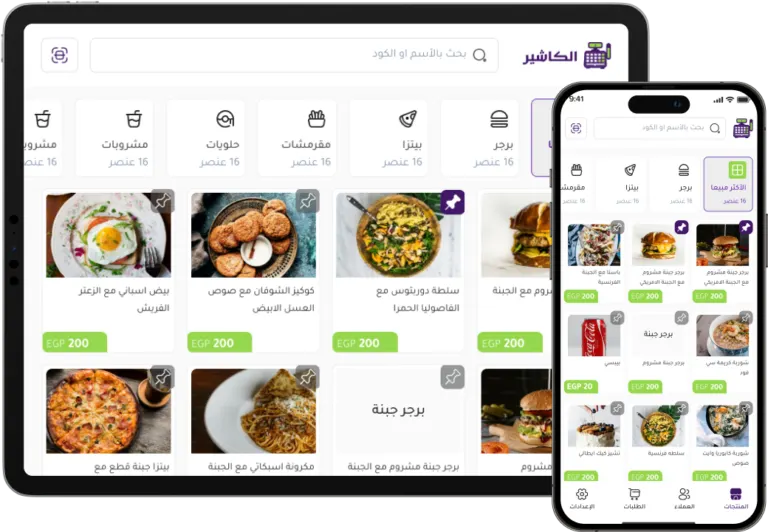
Speed of service and accuracy in fulfilling orders are among the most important factors in customer satisfaction, especially at peak times. This is where a point of sale (POS) system plays a vital role in improving operational efficiency in the restaurant.
A POS system helps by:
- Speeding up order entry and cutting waiting time at the cashier.
- Reducing human errors caused by manual orders or miscommunication.
- Sending orders straight to the kitchen so they arrive clearly and in order.
- Improving coordination between the service team and the kitchen, and speeding up order preparation.
With an advanced system, the workflow becomes smoother and the customer experience improves noticeably, which reflects positively on the restaurant's reputation and ratings.
Fifth: building and training your team
1. Choosing staff
Your staff are the face of the restaurant and one of the biggest factors in its success or failure, because they are the direct point of contact with customers and strongly influence service quality and the overall impression. So choose them carefully against clear criteria, rather than just filling vacancies.
The main criteria to focus on:
- Previous hands-on experience in restaurants, especially in the same type of business.
- Communication skills and courtesy with customers, and the ability to solve problems.
- The ability to work under pressure, especially at peak times.
- Commitment, discipline, and a willingness to keep learning and developing.
Investing in the right team from the start reduces staff turnover, raises the level of service, and helps build a positive work culture in the restaurant.
2. Training on systems
Even the best employees need structured training to keep the way of working consistent and reduce mistakes. Training the team on a modern POS system is an essential step that cannot be ignored, because it directly affects the speed and accuracy of service.
Good training helps to:
- Reduce errors when entering orders or recording payments.
- Speed up sales and customer service.
- Let management track performance easily.
Systems such as Alcashier have an easy, intuitive interface that supports Arabic and English, which makes it quick for new staff to adopt, shortens training time, and helps the restaurant run efficiently from the first days after opening.
Sixth: managing inventory and vendors
1. Why inventory management matters
Inventory management is one of the most sensitive aspects of running a restaurant, because it is directly tied to costs, service quality and business continuity. Good inventory management is not just knowing what is in the warehouse; it also covers careful purchase planning, proper storage, and continuous tracking of item movement.
When inventory management is neglected, a restaurant may run out of essential ingredients at peak times, lose food to spoilage from overstocking, or see waste rise, all of which hurt profits. By contrast, smart inventory management ensures essential ingredients are available when needed and balances actual demand against stored quantities, which helps cut costs and improve operations.
2. The role of the POS system
When you link sales to inventory through a POS system, the restaurant moves from haphazard management to data-driven management. The system gives you an accurate, up-to-date, real-time view of item movement, which makes fast, well-informed decisions easier.
The main benefits a POS system offers for inventory management:
- Tracking available quantities in real time and linking them directly to daily sales.
- Getting automatic alerts when stock reaches the reorder point, to avoid sudden shortages.
- Analysing consumption rates and seeing which items are used most and requested least.
- Improving relationships with vendors through advance purchase planning.
Using a POS system for inventory management gives the restaurant owner greater control over costs, reduces waste, and supports the sustainability of operations, especially in the early stages of the business.
Seventh: marketing before and after opening
1. Marketing before opening
The pre-opening phase is a golden opportunity to build brand awareness and create anticipation among potential customers. Early marketing helps ensure a strong start from day one, instead of relying on random foot traffic after opening.
The main pre-opening marketing strategies:
- Teaser campaigns on social media: share behind-the-scenes photos and videos, gradually reveal the restaurant's identity and menu, and build an appealing story around the project.
- Special opening offers: such as limited-time discounts, gifts with the first order, or invitations to a soft opening, which encourage customers to try you for the first time.
- Working with local influencers: choosing influencers who suit your target audience helps you reach a wide segment quickly and build early trust in the brand.
- Pre-registration and invitation programmes: encourage customers to follow the restaurant's accounts or sign up for exclusive offers at opening.
Smart pre-opening marketing shortens the time it takes to build an audience and increases the chances of strong sales in the first weeks.
2. Marketing after opening
After opening, the focus shifts from grabbing attention to building loyalty and encouraging repeat visits. Here, data plays a central role in improving marketing decisions.
Using sales data from your POS system lets you understand customer behaviour precisely, such as the most requested items, peak times, and average invoice value. Based on this data, you can:
- Offer personalised deals that match customer preferences.
- Launch loyalty programmes that encourage repeat visits and higher spending.
- Improve digital ad campaigns based on actual performance.
- Measure the success of offers and changes in real time.
Relying on a POS system for post-opening marketing turns marketing efforts from general guesswork into data-driven strategies, which supports sustainable growth and strengthens the relationship with customers.
Eighth: relying on technology from day one
1. Why does technology matter?
Technology is no longer an option but a necessity for running restaurants efficiently, given high competition and rising customer expectations. Relying on modern technical solutions helps restaurant owners reduce operational errors, speed up workflow and improve service quality, and also lets management track performance in real time and make accurate, data-based decisions instead of estimates.
Technology also plays an important role in improving the customer experience, by speeding up ordering and payment, ensuring accurate operations, and providing a smooth experience that builds customer satisfaction and loyalty over the long term.
2. Choosing the right POS system
The POS system is the backbone of any modern restaurant, because it connects sales, inventory, staff and reports in one integrated platform. Choosing the right system from day one saves a great deal of time and effort and gives you a complete view that helps you run your restaurant efficiently.
The ideal system should provide:
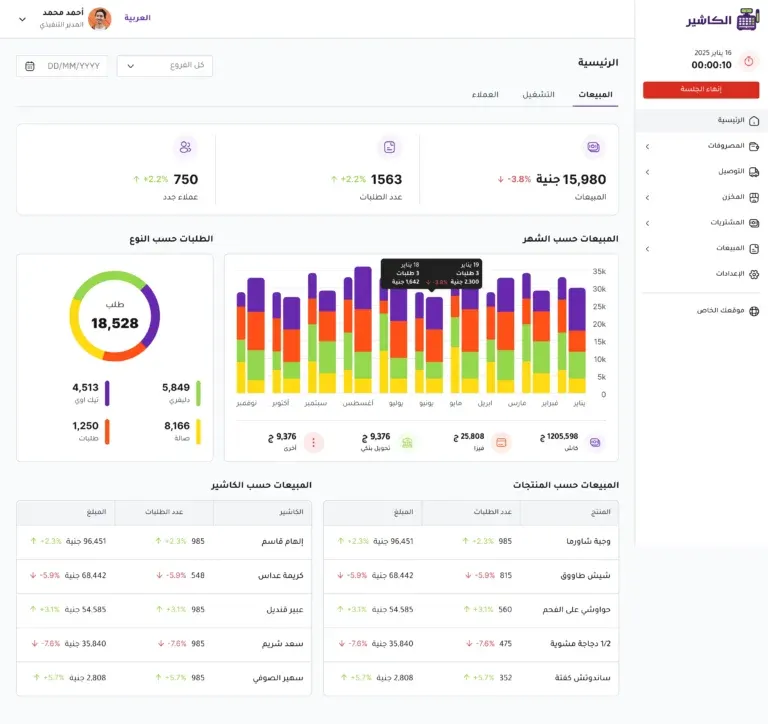
- Real-time, detailed reports on sales and profits.
- Online and offline operation to keep things running without interruption.
- Advanced staff and inventory management with permission controls.
- Ease of use and quick learning to cut training time.
Solutions such as Alcashier offer an integrated system that helps restaurant owners fully control their operations from a single dashboard, and supports future expansion and branch management with ease.
Ninth: follow-up and continuous improvement
1. Performance analysis
Regular performance analysis is one of the most important management practices for keeping a restaurant successful and developing over time. Following reports is not just about knowing the numbers, but about understanding what lies behind them and spotting opportunities to improve before problems appear.
By reviewing reports regularly, you can identify:
- Best-selling items, so you can focus on them, develop them or promote them more.
- Peak times, so you can plan staff schedules and improve speed of service during those periods.
- Staff performance, in terms of order speed and accuracy, which supports training or incentive decisions.
- Weak or unprofitable items, so you can decide whether to change or remove them from the menu.
Continuous performance analysis gives you a realistic picture of the restaurant's position and helps you act quickly to maintain service quality and profitability.
2. Making data-driven decisions
Data from your POS system gives you a clear, comprehensive view that helps you keep developing and make more accurate, professional decisions. Instead of relying only on instinct or experience, you can base your decisions on reliable information that reflects the restaurant's real performance.
With data, you can:
- Improve the menu based on actual demand and customer behaviour.
- Set prices that balance profitability with an attractive offer.
- Improve inventory management and reduce waste.
- Develop marketing strategies and offers based on real results.
Relying on data makes restaurant management more flexible and professional, and helps you adapt to market changes and achieve sustainable growth over the long term.
Manage your sales and inventory in seconds with Alcashier!
Control sales, inventory and users in moments, and give your business an integrated system that runs smoothly without complexity.
Create your store for freeConclusion
Opening a successful new restaurant does not depend on luck or individual effort alone, but mainly on smart planning, effective management and well-considered decisions from the earliest stages of the project. Every step, from studying the market and choosing the location to managing the team and marketing, plays a central role in building a restaurant that can last and stay profitable.
Choosing the right POS system from day one gives you a strong foundation for growth, because it helps you organise sales, control inventory, and monitor financial and operational performance accurately. It also makes it easier to expand later and open new branches without administrative complications, and gives you a clear view that lets you make decisions based on real data.
With integrated solutions such as Alcashier, you can run your restaurant with confidence and clarity from a single dashboard, easily control every detail of your daily work, and turn your idea from a startup project into a successful, sustainable restaurant able to compete and grow over the long term.
How do you choose the best POS system for restaurants?
Choosing the best POS system for restaurants is no longer just a technical decision, but a strategic step that directly affects operational efficiency,…

5 ways POS systems improve the customer experience inside the restaurant
Improving the customer experience inside restaurants is no longer a secondary task, but an essential element of success in a fast-evolving, competitive market. And with…
Digital transformation in restaurants starts with a restaurant POS system
The restaurant sector in the Middle East is undergoing a radical transformation driven by modern technologies and changing consumer behavior. The success of restaurants no longer depends only on…
The post How to open a successful restaurant: practical strategies backed by a POS system appeared first on Alcashier.