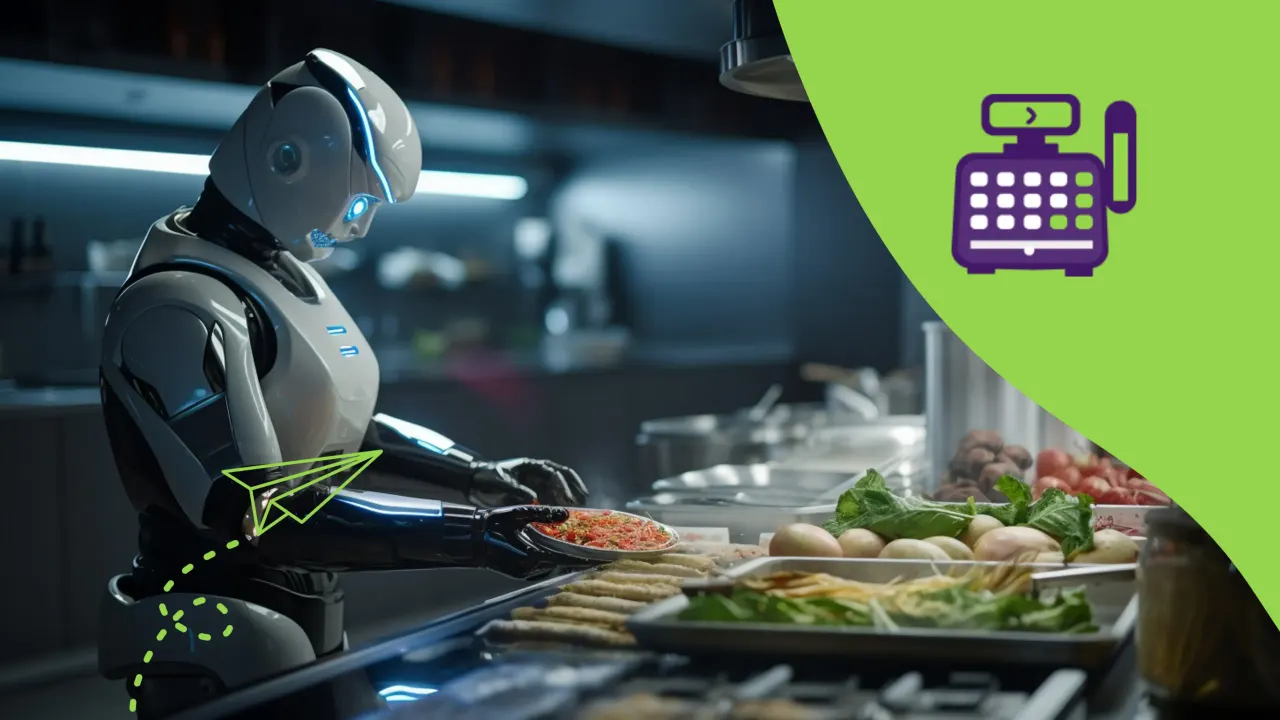
The restaurant sector in Saudi Arabia is growing at a remarkable pace, with the market value of restaurants and cafés in the Kingdom exceeding 45 billion riyals in 2023 according to Statista. Steady growth is expected in the coming years, driven by rising local demand and expanding investment in the food and beverage sector. With this huge growth, restaurant owners face mounting challenges in managing daily operations such as tracking sales, controlling inventory, managing expenses, and organizing staff and ensuring their efficiency. This is where an advanced POS system comes in, automating essential tasks and streamlining the workflow end to end, which helps ensure the restaurant’s success and continuity and increases its competitiveness.
By using innovative solutions such as Alcashier, restaurant owners can not only change the way they run their business to be more efficient and profitable, but also build a strong foundation for future expansion and achieve sustainable growth in the local and regional market.
What is a POS system?
A POS system is an integrated, comprehensive system that helps record sales instantly, manage inventory accurately, track daily expenses, and continuously analyze financial and operational data. Its role is not limited to recording financial transactions; it extends to being an advanced strategic tool that improves the customer experience by speeding up service and providing flexible payment options. It also gives business owners the ability to make accurate decisions based on real-time data and advanced analytical reports, which contributes to higher operational efficiency and sustainable growth.
The essential tasks you can automate to run your restaurant successfully
A POS system is an integrated, comprehensive system that helps record sales instantly, manage inventory accurately, track daily expenses, and continuously analyze financial and operational data. Its role is not limited to recording financial transactions; it extends to being an advanced strategic tool that improves the customer experience by speeding up service and providing flexible payment options, and it gives business owners the ability to make accurate decisions based on real-time data and advanced analytical reports, which contributes to higher operational efficiency and sustainable growth.
1. Order entry and sales management
Recording orders is one of the most time-consuming operations in restaurants, especially at peak times when orders pile up and the pressure on the team grows. With a POS system you can automate this process completely, smoothly and effectively:
- Enter orders quickly through an easy-to-use interface that supports Arabic and works on a variety of devices.
- Sync orders between the kitchen and the cashier in moments, so the order arrives instantly and without any confusion.
- Track and analyze daily sales, with the ability to create detailed reports on the most popular dishes and peak times.
- Merge external orders from delivery apps into the system automatically, reducing the need for manual entry.
This feature helps reduce manual errors, noticeably improves service speed, and ensures a smoother, more satisfying customer experience, which directly affects the restaurant’s reputation and increases customer loyalty.
2. Smart inventory management
Inventory is the heart of any restaurant’s operation, and one of the elements that most directly affects service quality and the project’s profitability. According to a study by Restaurant365, restaurants lose roughly 7% of their revenue because of poor inventory management, and the figure can be even higher when there is no close oversight. This is where a modern POS system helps by:
- Tracking inventory levels in real time, automatically and accurately.
- Sending instant alerts when key ingredients run low or are close to expiry.
- Linking every sale to an automatic inventory update to avoid manual errors.
- Preparing comprehensive reports showing inventory turnover and the most heavily used ingredients.
This means eliminating waste, lowering operating costs, and making sure ingredients are always available for uninterrupted service and consistent quality for customers.
3. Expense management and cost tracking
Automating expenses through a POS system makes it easier for restaurant owners to monitor their finances more closely and transparently, giving them a clear view of all sources of spending and revenue:
- Record invoices and purchases automatically, with the option to attach original documents and invoices.
- Compare revenue with expenses on a daily, weekly or monthly basis, which helps spot any financial deviations quickly.
- Prepare detailed, accurate financial reports that help cut unnecessary costs and provide practical recommendations for controlling spending.
- Track recurring expenses such as vendor invoices, utilities and rent to estimate the budget more accurately.
This way, the restaurant owner can fully control expenses, reduce waste, and achieve financial stability that has a positive effect on the project’s profitability.
4. Improving customer service
The customer experience has become one of the most important factors for success and competitive advantage in the restaurant sector. With an integrated POS system such as Alcashier you can:
- Offer multiple payment options (cash, cards, e-wallets) with support for payment through local apps such as mada Pay.
- Manage loyalty programs and promotions flexibly, such as collecting points or offering custom discounts to regular customers.
- Speed up payments to cut waiting times and improve the flow of service, especially at peak times.
- Save customer data to tailor offers based on their preferences and purchase history.
These features make the customer experience smoother and more professional, and help build a long-term relationship with customers and increase how often they visit.
5. Advanced reports and analytics
Accurate data is what separates a successful restaurant from another, since it is the basis for sound decisions and future planning. A POS system gives the restaurant owner advanced tools including:
- Detailed reports on daily and monthly sales, with the ability to export and analyze them.
- Knowing the most popular dishes, the busiest times and customer preferences.
- Comparing performance between different branches or even between staff to identify strengths and weaknesses.
- Interactive dashboards that help you follow key performance indicators (KPIs) directly.
According to a McKinsey report, companies that rely on data for decision-making achieve profits 23% higher than others, which confirms the importance of relying on a modern POS system that provides such analytical tools.
6. Staff and task management
Managing a team is one of the biggest challenges in the restaurant sector, as it requires strong coordination and close follow-up to ensure discipline and productivity. A POS system helps by:
- Setting user permissions flexibly according to the nature of their tasks and level of responsibility.
- Tracking staff working hours and recording clock-in and clock-out automatically for more transparency.
- Evaluating performance based on sales, service and how well staff deal with customers.
- Creating work schedules and scheduling shifts to avoid overcrowding or understaffing.
- Tracking each employee’s productivity and linking it to set goals to boost motivation and development.
Why is automation essential for restaurant success?
- Fewer human errors: Automation lowers the chance of mistakes in orders or calculations by relying on accurate systems that record every transaction instantly.
- Time savings: It lets staff focus on serving customers instead of tiring routine work, which increases team efficiency and customer satisfaction.
- Higher profits: By improving operational efficiency, managing inventory better and cutting waste of raw materials, which raises the profit margin in the long run.
- Regulatory compliance: In Saudi Arabia, a compliant POS system such as Alcashier helps you meet the e-invoicing requirements issued by the Zakat, Tax and Customs Authority, and ensures every transaction is securely documented, with cloud storage that keeps the data safe.
Conclusion
Automating the restaurant’s essential tasks with a POS system is no longer a luxury, but an urgent necessity to ensure success and continuity in a fast-growing market with increasing competition. From sales and inventory to customer service, financial reports and advanced analytics, a comprehensive system such as Alcashier gives you the complete solutions to run your restaurant efficiently and profitably, with room for future expansion and greater customer loyalty, making it a true strategic partner in your business’s growth journey. Relying on these modern systems also gives you a strong competitive edge over your rivals and helps you keep pace with the digital transformation in the Kingdom in line with Saudi Vision 2030. And with the ability to monitor performance at any time and from anywhere, the restaurant owner is better prepared to make the quick, accurate decisions that drive the business toward sustainable success.
Frequently asked questions (FAQ)
Can a POS system be used in small restaurants?
Yes, even small restaurants can benefit greatly from a POS system. The system helps organize sales and inventory and reduce manual errors, which saves the restaurant owner a lot of time and effort. It also gives them a clear view of how their restaurant is performing and helps them make accurate decisions based on real-time data and reports, which lets them run their business more effectively even with limited resources.
Does a POS system work without the internet?
Absolutely. Many systems such as Alcashier fully support working offline. This means that even if the internet goes down, staff can record sales and complete orders without any disruption. When the internet connection returns, data is synced automatically with the cloud system to ensure accurate information and continuous operations, so the restaurant can keep working without interruption or losses.
How does a POS system help improve the customer experience?
A POS system is not just a tool for managing sales; it is also a way to enhance the customer experience. It offers multiple, fast payment options and cuts waiting times at the cashier, which raises customer satisfaction. In addition, the system can manage loyalty programs and promotions, and store customer data to tailor offers based on their preferences and purchase history. This strengthens the relationship between the restaurant and its customers and makes them more likely to return often, which directly affects profits and the restaurant’s positive reputation.

Effective strategies to increase your restaurant's online orders and app orders
In the age of digital transformation, the internet and restaurant apps have become a main channel for attracting customers and increasing sales. Relying on passing customers is no longer…
Mobile cashier device: The solution for managing sales with ease and flexibility
In today's fast-paced business world, flexibility has become the deciding factor between success and falling behind competitors. If we look at the sector…
Alcashier | A POS system that works online and offline
All businesses today seek to keep pace with the technological developments in the markets, especially with the wide spread of e-commerce and growing reliance…
The post Essential tasks you can automate to run your restaurant successfully with a POS system appeared first on Alcashier.