With the intense competition in the restaurant and café sector today, success is no longer tied only to offering good products or fast service; it now depends mainly on understanding customer behavior and making data-driven decisions. Successful business owners no longer treat all customers the same way; they rely on smart strategies such as customer segmentation to improve performance and increase profits.
And with advances in technology, it has become easy to carry out these strategies thanks to advanced tools such as POS software or cashier software, which do not just record sales but provide deep analytics that help you understand your customers as never before.
In this article, we will explain in detail what customer segmentation is, why it is essential to the success of restaurants and cafés, and how you can apply it in practice using a modern POS system, with real examples and actionable tips.
Manage your sales and inventory in seconds with Alcashier!
Control sales, inventory and users in moments, and give your business an integrated system that runs smoothly without complexity.
Create your store for freeWhat is customer segmentation?
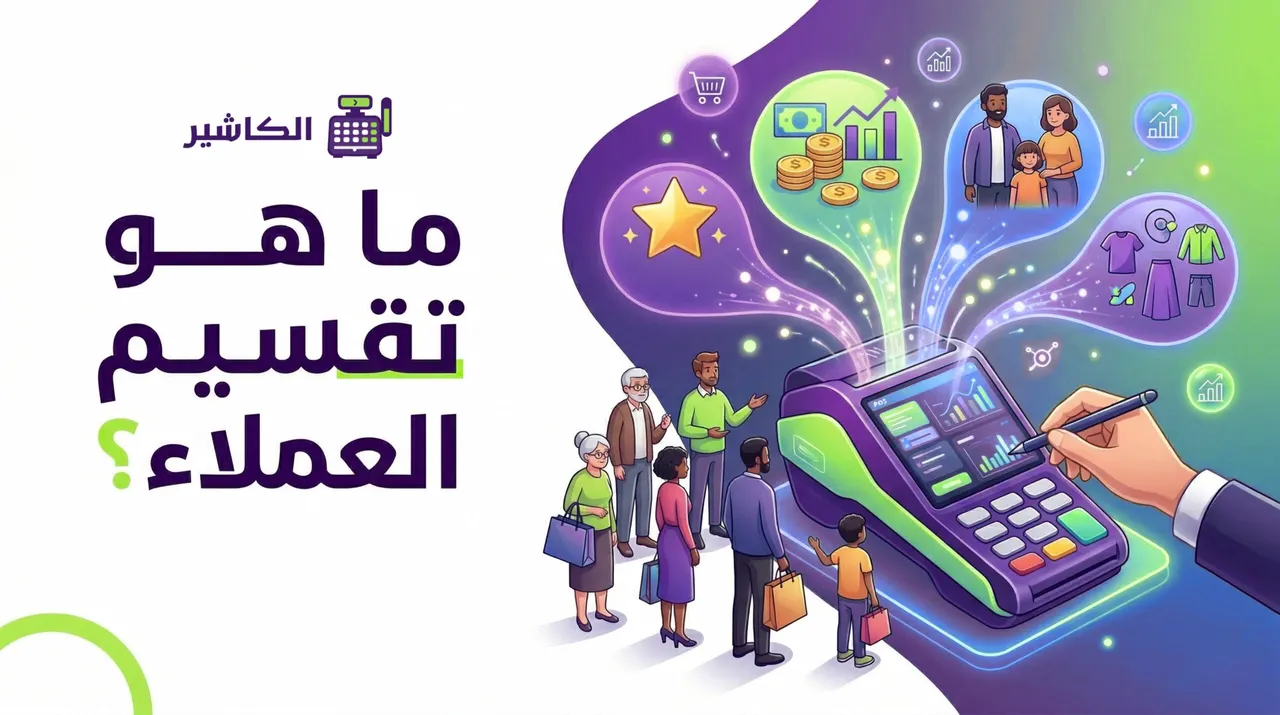
Customer segmentation is the process of dividing your customer base into groups or segments based on shared characteristics, such as buying behavior, age, geographic location, or interests. The goal is to understand each group better and offer deals and services that fit its needs.
In other words, instead of treating all customers the same way, you can tailor different strategies for each group, which increases your chances of success and improves the customer experience.
For example, in a particular café, you might have:
- Customers who visit every morning
- Customers who come on weekends
- Customers who order only through apps
Each of these groups needs to be handled differently, and that is where customer segmentation matters.
Why is customer segmentation important for restaurants and cafés?
In a sector that depends heavily on repeat visits and loyalty, understanding the customer is a decisive factor for success. Customer segmentation helps you achieve several strategic goals.
Improving the customer experience
When you know what each type of customer prefers, you can offer them a personalized experience, whether through special offers, product recommendations, or even designing the menu in a way that suits them.
Increase sales
By analyzing customer data with sales management software or POS software, you can identify the highest-spending customers and target them with special offers that increase the value of their purchases.
Build loyalty
Customers feel appreciated when they get a personalized experience, which strengthens their loyalty and brings them back again.
Improve marketing campaigns
Instead of launching a general marketing campaign, you can send tailored messages to each customer segment, which makes campaigns more effective and lowers costs.
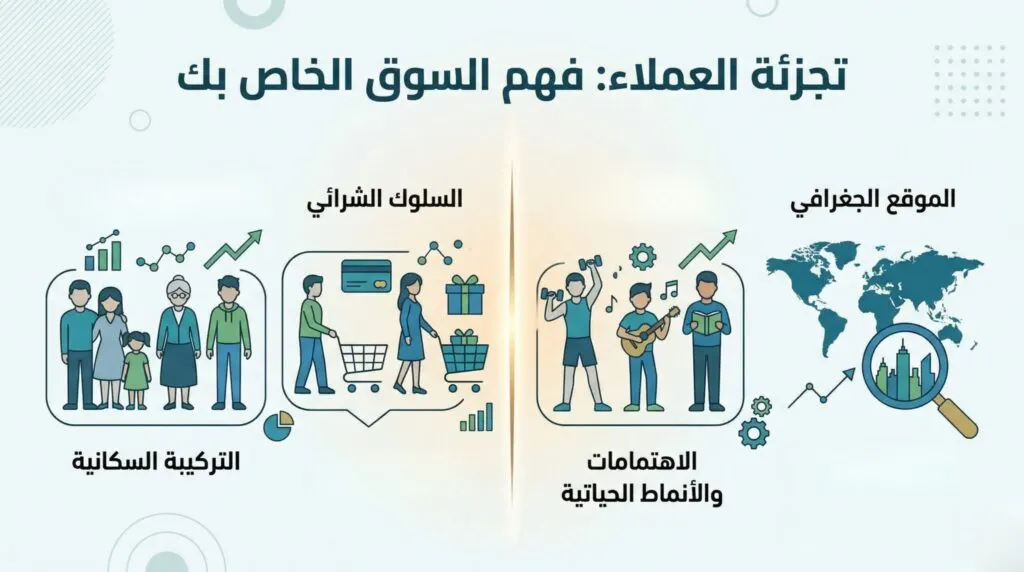
Types of customer segmentation in restaurants and cafés
There are several ways to segment customers, and each depends on the type of data you have, which is often collected through the POS system.
Demographic segmentation
Based on characteristics such as:
- Age
- Gender
- Income
This type is useful for understanding general customer groups, but it is not enough on its own to make accurate decisions.
Behavioral segmentation
Considered one of the most important types of segmentation, it is based on:
- Number of visits
- Average spend
- Favorite products
With advanced cashier software, you can easily track and analyze this data.
Geographic segmentation
Based on the customer’s location, it is very important for restaurants that offer delivery, as you can identify the areas with the most demand.
Psychographic segmentation
Focuses on lifestyle and interests, such as customers who prefer healthy food or specialty coffee.
How does a POS system help you segment customers?
Customer segmentation is no longer a complicated or manual process; it now relies heavily on technology. This is where modern POS software comes in.
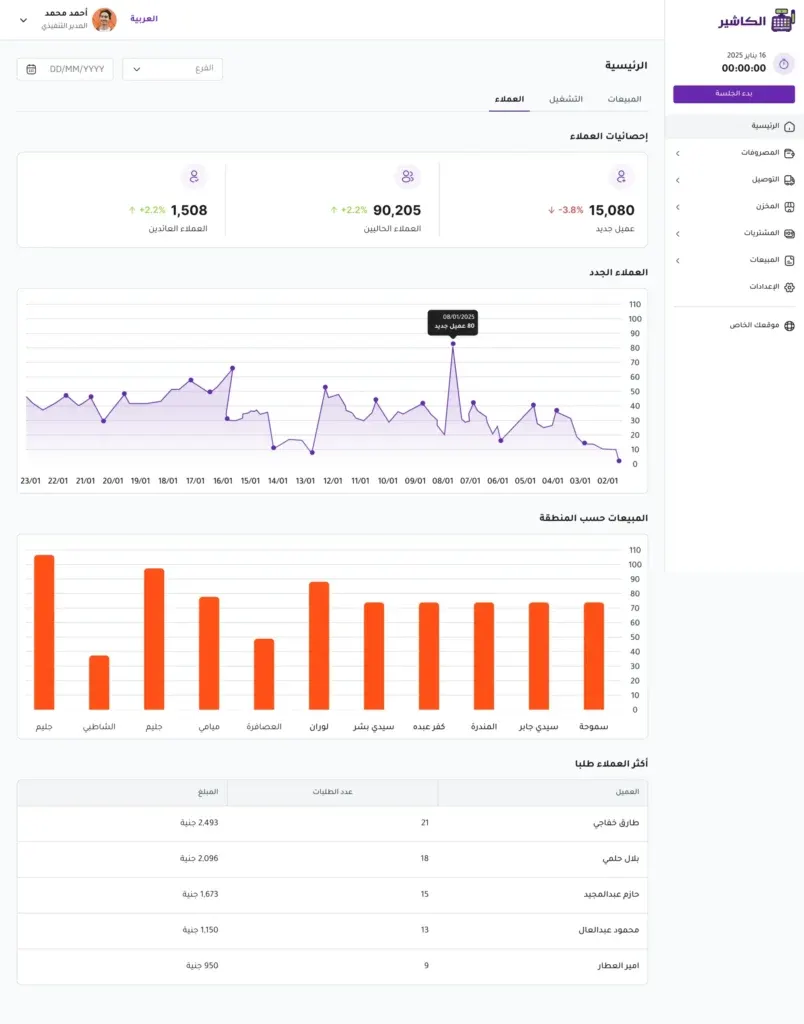
Automatic data collection
Every sale is recorded in the system, giving you a huge database about customers and their buying behavior.
Easy data analysis
With the smart reports in POS software, you can see:
- Best-selling products
- Peak times
- The highest-spending customers
Creating customer segments
You can automatically divide customers into groups, such as:
- Regular customers
- New customers
- Inactive customers
Making data-driven decisions
Instead of guessing, you can rely on real data to make accurate decisions.
Practical examples of customer segmentation in restaurants
To understand the idea more clearly, let’s look at some real-world examples.
Example 1: A morning café
It divides customers into:
- Morning customers (arriving before 10 a.m.)
- Evening customers
It can offer special discounts to morning customers to increase the number of visits.
Example 2: A family restaurant
It divides customers into:
- Families
- Individuals
And it offers tailored family meal deals.
Example 3: A delivery restaurant
It divides customers by geographic area and offers free delivery in the areas with the most demand.
How to apply customer segmentation in your business
Applying customer segmentation in your business does not require complex technical expertise, but it does need a clear methodology and well-planned steps based on data rather than guesswork. When done correctly, it turns from a theoretical idea into a practical tool that helps you make accurate decisions and achieve tangible results in sales and customer experience.
Define the goal
The first step in any successful strategy is to define the goal clearly. Without a clear goal, you will collect and analyze data without knowing how to actually benefit from it.
Ask yourself:
- Is your goal to increase daily sales?
- Or do you want to raise the repeat-visit rate?
- Or are you trying to improve the loyalty of existing customers?
- Or do you want to cut marketing costs?
Defining the goal helps you steer the segmentation process correctly and choose the indicators to focus on inside your POS software.
Collect data
After defining the goal comes data collection, the foundation on which every customer segmentation is built. Without accurate data, segmentation will not be effective.
Using a POS system, you can collect important information such as:
- Number of customer visits
- Average order value
- Their favorite products
- Purchase times
- Order method (dine-in or delivery)
Every sale recorded in the system adds value to your database, and over time you get a clear picture of your customers’ behavior.
Analyze the data
Collecting data alone is not enough; it must be turned into usable information. This is where analysis comes in.
Through the reports in your sales management software, you can discover:
- Recurring buying patterns
- The highest-spending groups
- The times when demand rises
- The products most often bought together
Good analysis helps you understand “why” a certain behavior happens, not just “what” happens, which gives you a strong competitive advantage.
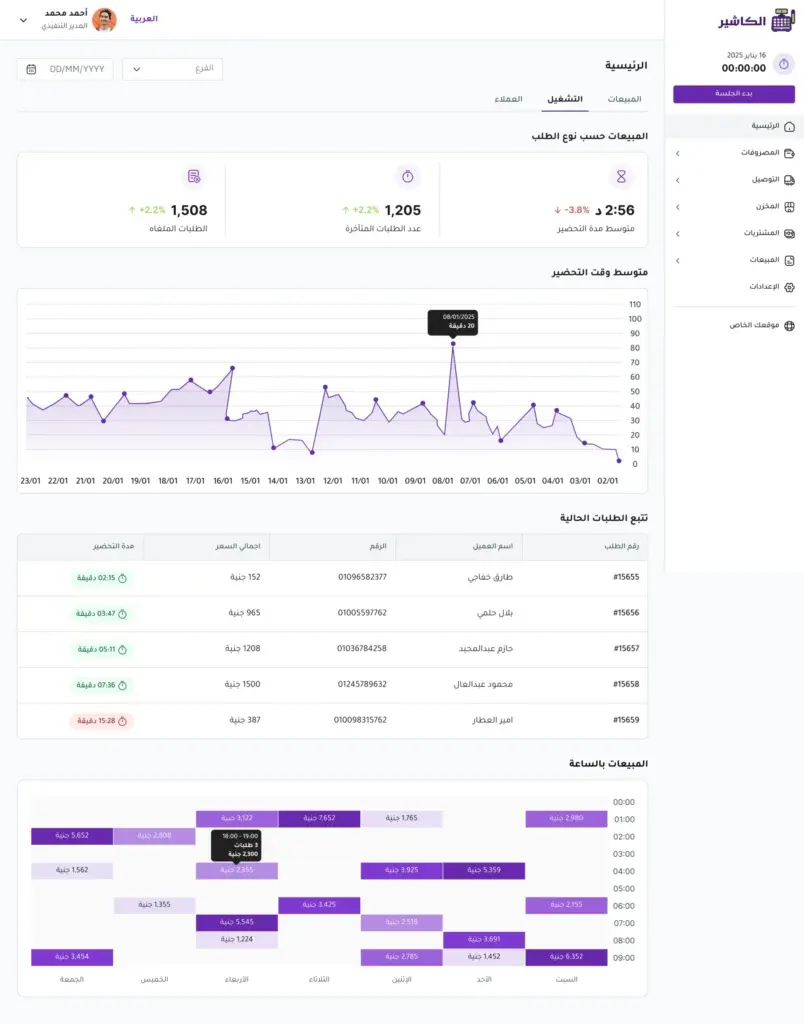
Create segments
After analyzing the data, the most important stage begins: dividing customers into clear segments you can work with.
You can divide customers into groups such as:
- Regular customers (who visit often)
- High-spending customers
- New customers
- Inactive customers
Each of these segments needs a different strategy, whether in offers, communication style, or even the types of products you promote.
Execute the strategy
After creating the segments comes the execution stage, where data turns into real results.
You can apply strategies such as:
- Offering personalized discounts to regular customers
- Sending offers to win back inactive customers
- Suggesting extra products to high-spending customers
- Launching targeted marketing campaigns for each group
Success here depends on how well you can personalize the experience for each segment instead of using one approach for everyone.
Challenges you may face
Although customer segmentation offers great benefits, applying it can run into some challenges, especially in businesses that do not rely fully on data.
Lack of data
If you are not using advanced cashier software, the data you have may be limited or inaccurate, which makes segmentation weak and ineffective. Relying on memory or observation alone will not give you a complete picture of your customers.
Poor analysis
Even when data is available, analyzing it wrongly can lead to inaccurate decisions. For example, you might think a certain product is the best seller when in fact it is only ordered at a specific time or by a specific group.
Outdated data
Customer behavior is not fixed; it changes over time with seasons, offers, or even new trends. So relying on old data can lead to ineffective results.
How to avoid these challenges
To avoid these problems, you need to rely on smart tools that help you manage and analyze data continuously and accurately.
Such as Alcashier, which gives you:
- Accurate, constantly updated reports that help you make decisions based on real data
- Easy-to-understand analytics even without technical expertise
- A simple user interface that lets you reach information quickly
- Automatic data updates ensuring your decisions rely on the latest information
These tools reduce human error, save you time and effort, and give you a clearer view of your customers.
The role of artificial intelligence in customer segmentation
With advances in technology, artificial intelligence has become a core part of modern sales management software, helping make customer segmentation more accurate and faster.
Smart systems can:
- Predict customer behavior based on their past data
- Suggest suitable products to each customer automatically
- Analyze data more deeply than is possible to spot manually
- Improve marketing campaigns through more precise targeting
This means you do not rely only on current data; you can also anticipate what will happen in the future, which gives you a strong competitive advantage.
Why should you start now?
Falling behind on techniques like customer segmentation can mean losing major opportunities to competitors.
Businesses that rely on advanced POS software are able to:
- Understand their customers more deeply
- Offer a personalized experience to every customer
- Make faster and more accurate decisions
- Achieve faster and more stable growth
Whereas businesses that do not rely on data keep depending on guesswork, which makes them less able to compete.
So the earlier you start applying customer segmentation, the greater your chances of building a successful and sustainable business in the restaurant and café market.
Manage your sales and inventory in seconds with Alcashier!
Control sales, inventory and users in moments, and give your business an integrated system that runs smoothly without complexity.
Create your store for freeFrequently asked questions (FAQ)
How does cashier software help with customer segmentation?It collects and analyzes customer data, allowing you to create precise segments that help improve marketing and increase sales.
What is the difference between sales management software and a POS system?A POS system covers day-to-day operations, while sales management software focuses on analysis, reporting, and decision-making.
Is customer segmentation suitable for small businesses?Yes, in fact it is even more important for small businesses because it helps them use their resources more efficiently.
What is POS software and why is it important?POS software is a system that helps manage sales, inventory, and customers, and it is an essential tool for any business that wants to grow and stay organized.
Conclusion
Customer segmentation has become one of the most important tools restaurant and café owners can rely on for success. By understanding your customers more deeply, you can offer a better experience, improve your marketing strategies, and noticeably increase your profits.
Using advanced POS software makes this process easier and more accurate, and this is where Alcashier stands out as an integrated solution that helps you turn data into successful decisions. If you are looking for a practical way to develop your business, starting customer segmentation with a smart system is the first step toward real and lasting results.
The best free cashier: your complete guide to choosing the ideal point-of-sale system for your business
In the modern business world, relying on traditional methods to manage sales and inventory is no longer enough to achieve success and continuity. With growing competition…
Free POS software for computers: the complete guide to managing sales
Many store owners and small businesses are looking for free POS software for computers to help them manage sales easily and organize…
Free restaurant cashier software: the complete guide to restaurant management in 2026
Restaurant management today no longer depends only on the quality of food and service, but increasingly on digital systems that…
The post What is customer segmentation? And how can you apply it with smart cashier software appeared first on Alcashier Software.