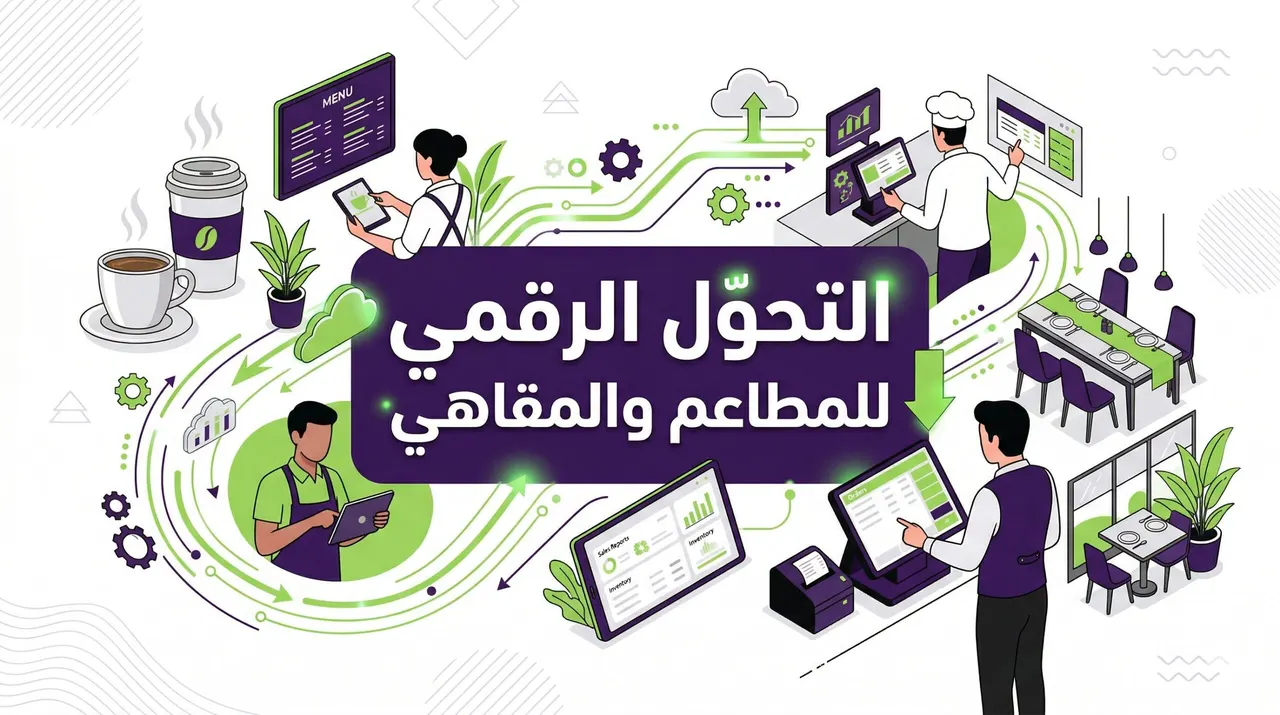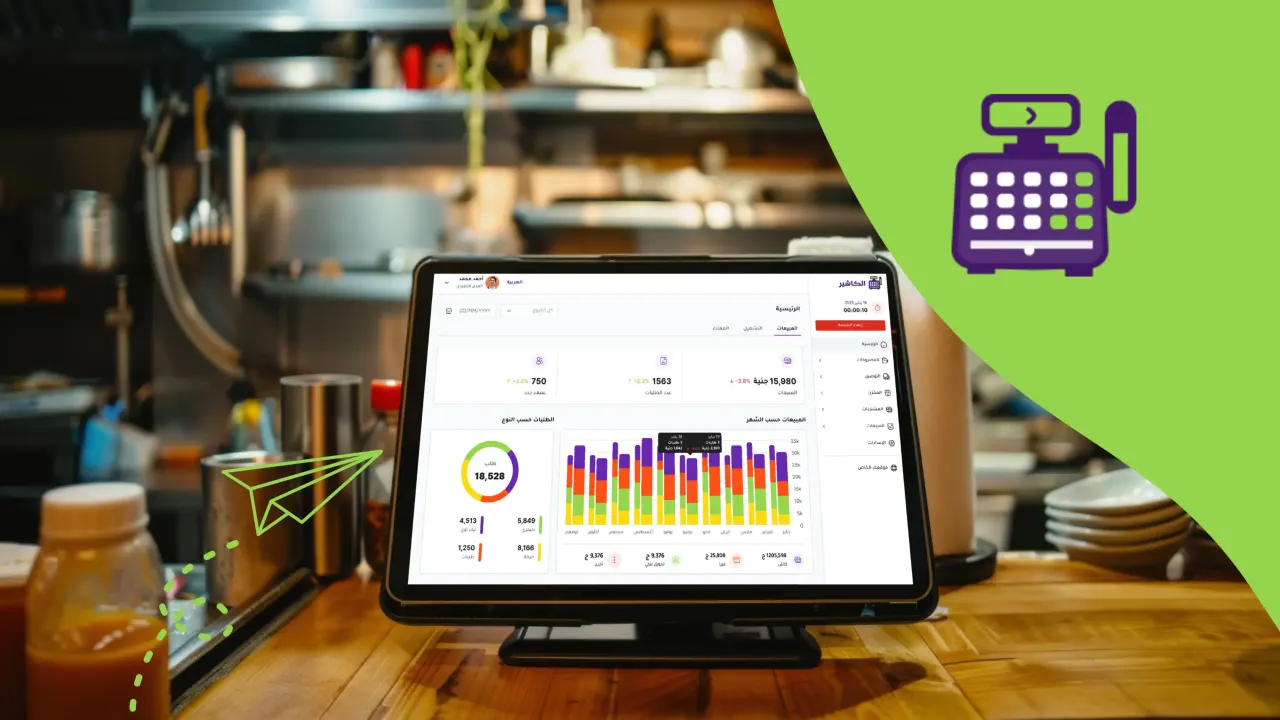
In the fast, ever-changing world of hospitality, POS is no longer just a tool for issuing invoices or completing transactions; it has become a key pillar in building the customer experience and strengthening operational efficiency. Today, the success of any restaurant or café depends on how well it can offer its customers a smooth, fast, and personal experience, and this is where modern POS systems come in. In Saudi Arabia, restaurants and cafés are going through a broad digital transformation driven by modern technologies, artificial intelligence, and SaaS systems such as Alcashier, which brings together sales, inventory, accounting, and branch management in one integrated, easy-to-use platform that supports Arabic and English and works online and offline with high reliability.
The evolution of POS systems in Saudi Arabia
A few years ago, POS in restaurants was just traditional devices for printing and totaling invoices. Today, thanks to digital transformation and Saudi Vision 2030, POS systems have become part of an integrated ecosystem that includes order management, online sales, and links with accounting platforms.
According to a 2024 Statista report, the size of the POS systems market in the Middle East is expected to exceed $1.2 billion by 2026, reflecting the acceleration of digital transformation in the restaurant and café sectors. This shift comes with wide adoption of QR self-ordering solutions, KDS kitchen display screens to deliver orders quickly and accurately, and direct integrations with local payment gateways such as mada and digital payment wallets. POS has also moved from being an "accounting box" to an advanced data platform that supports loyalty, vouchers, and personalized offers, with real-time dashboards that help managers make faster decisions.
In the Saudi context specifically, the growth of e-commerce and last-mile delivery is pushing restaurants and cafés to adopt omnichannel models that unify ordering channels from the dining room, delivery, and pre-orders into a single ticket synced with inventory. This is where cloud solutions like Alcashier stand out, making it easier to connect with delivery apps, providing tax compliance reports and compliant e-invoicing, and supporting offline mode so sales never stop during peak times or outdoor events.
From the invoice to the customer experience
A modern POS is not limited to speed of service; it plays a fundamental role in improving the customer experience from the moment of ordering through payment and leaving, as POS today has become a way to understand customer behavior and analyze their needs more deeply. Systems like Alcashier deliver a complete, comprehensive experience that includes many technical and operational elements:
- Speed and accuracy in recording orders, with fewer human errors and orders routed straight to the kitchen.
- Flexible payment options including mada, Apple Pay, digital wallets, and even installment payments in some modern systems.
- Smart personalization by tracking customer preferences and suggesting suitable offers or the most requested products based on buying behavior.
- Real-time and historical analytics that show peak times, staff performance, and the activity of repeat customers, helping management make data-driven decisions.
- Integration with marketing tools such as loyalty programs and reward points that encourage repeat visits.
This integration between operations and service makes the customer feel comfortable and confident, and gives management a comprehensive strategic view of the customer experience, which reflects positively on the business's reputation and increases the likelihood of customers coming back consistently.
The importance of POS in the Saudi restaurant environment
In Saudi Arabia, restaurants and cafés come in many types, from global brands to small local businesses. With this variety comes the need for a flexible, scalable POS system that suits fast-service environments, fine dining, specialty cafés, and temporary kiosks at events. Among the main advantages these systems provide:
- Real-time inventory management: knowing the available quantities of each item to avoid running out of materials during peak times, with reorder-level alerts and linking raw materials to recipes to reduce waste.
- Tracking sales by item or shift: to evaluate performance and improve pricing, with daily/weekly comparisons and profitability indicators for each product.
- Integration with delivery apps: such as HungerStation, Jahez, and ToYou to unify orders in one interface and update order status automatically from preparation to delivery.
- Working without internet: a key feature in a crowded environment or at outdoor events, with automatic data sync when the connection returns.
- Managing the dining room, tables, and QR ordering: visual table maps, moving a bill between tables, and splitting a bill partially or equally, with support for QR self-ordering.
- Support for local and international payments: integration with mada, Apple Pay, and Google Pay, with tipping options, a maximum discount limit, and "pay later" options where available.
- Detailed permissions and an audit log: setting permissions for discounts/cancellations and linking every action to the user and shift to limit losses and theft.
- E-invoicing compliance (ZATCA): printing/displaying the QR code and the e-invoice with a UUID, and generating tax reports ready for review.
- Full accounting integration: automatic posting of entries to the general ledger, support for cost centers, and VAT reports.
- Loyalty programs and offers: reward points, digital vouchers, internal wallets, and offers scheduled by time/branch/channel.
- Real-time dashboards (KPIs): average basket size, table turnover rate, order prep time, wait time, and the on-time delivery rate.
- Demand analytics and forecasts: critical stock alerts, sales forecasts by day/hour, and suggested work schedules that match peak times.
- Broad hardware compatibility: KDS kitchen screens, kitchen/receipt printers, barcode scanners, weighing scales, and cash drawers.
Systems like Alcashier offer practical solutions to these challenges, supporting Arabic and English, working online and offline without interruption, and integrating with local payment providers and ZATCA requirements, as well as with leading delivery platforms. They also provide local training and support, web dashboards, and manager apps to monitor branches in real time and expand quickly across multiple locations.
How does POS help increase profits?
Controlling sales is not the only purpose of modern POS systems; they can be seen as a strategic tool for improving profits through a wide range of operational and commercial levers:
- Smart sales analysis (Product Mix): identifying the best-selling and most profitable dishes (Stars) versus the least profitable (Dogs), and redesigning the menu accordingly.
- Fewer errors and less waste: linking orders to inventory and recipes reduces losses, raises stocktake accuracy, and limits unjustified cancellations.
- Raising team efficiency: tracking performance in real time, comparing the shift against benchmarks, and motivating teams with clear scoreboards.
- A faster payment experience: shortening the wait at the cashier, which raises table turnover during peak hours.
- Upsell/Cross-sell: automated recommendations for add-ons and bundles, and a higher average order value (AOV).
- Dynamic pricing and smart offers: scheduling discounts by hour/channel/branch and linking them to inventory and demand targets.
- Reducing shrinkage: detailed permissions and an audit log limit tampering and unauthorized discounts.
- Improving schedules and labor costs: peak forecasts help distribute shifts intelligently and cut unproductive working hours.
- Bargaining power with vendors: transparent COGS with product margins supports better purchasing terms and lower costs.
- Integrated channels (Omnichannel): unifying dine-in, delivery, and pre-orders reduces conflicts and improves planning capability.
A quick practical example: if you cut payment time by 30 seconds per invoice × 300 invoices a day, that frees up service time equal to 150 minutes/day, which can be turned into serving extra tables or reducing queues; and with a 3–5% increase in average basket size through upsell recommendations, the increase shows up directly in daily revenue without raising fixed costs.
Analyses of the hospitality sector (such as Forbes reports and HBR articles) show that improving the customer experience by 10% can raise revenue by up to 25% in restaurants, especially when paired with improved efficiency and reduced waste.
The shift to SaaS systems: the digital future of restaurants
One of the most notable shifts in the Saudi market is the move from traditional systems to SaaS (Software as a Service) systems, a qualitative leap that redefines the concept of infrastructure in restaurants and cafés. These systems don't require specific hardware or complicated installation; they can run from any computer, tablet, or smartphone connected to the internet, which makes remote management easier.
Key advantages of SaaS:
- Continuous automatic updates with no manual maintenance, which keeps the system compliant with new regulations such as ZATCA and digital security requirements.
- High security and advanced encryption thanks to cloud backup and multiple data centers, with protection protocols similar to those used by banks.
- Unlimited scalability suited to multi-branch businesses or busy seasons, with the ability to add users or branches at the click of a button.
- Lower operating costs by doing away with expensive hardware or regular maintenance contracts.
- Seamless integration with accounting and other cloud systems such as QuickBooks and Zoho, to simplify financial and inventory operations.
- Work from anywhere, at any time, as business owners can monitor performance, view reports, or change prices directly from their phone.
- Ongoing support and automatic security updates that protect data from breaches and ensure full compliance with local privacy standards.
The user experience in Alcashier embodies these concepts at their best, as it was designed to deliver fast, easy performance, with a simple, smart interface suited to all kinds of businesses, from small cafés to upscale, multi-branch restaurants. The system also gives you full control of your data through an interactive dashboard, real-time reports, and local technical support in Arabic available around the clock.
Connecting POS and marketing
The data collected by modern POS systems can be a huge marketing treasure if it is analyzed and put to use systematically. Restaurants today don't just collect numbers; they try to understand the story behind the numbers: where do customers come from? When do they visit? And what motivates them to buy?
Thanks to this data, POS systems can enable business owners to build precise, measurable marketing strategies:
- Sending personalized offers by email, text message, or even built-in loyalty apps, so the message arrives at the perfect time.
- Identifying repeat customers and dormant customers and designing loyalty programs that re-engage them.
- Analyzing order patterns and seasons to design seasonal menus that are more appealing and better suited to the general mood or the weather.
- Studying channel distribution (dine-in, delivery, pre-order) to find out which channels are most profitable.
- Tracking the impact of advertising campaigns and linking them to actual sales, which makes it possible to measure the real return on marketing investment (ROI).
- Using smart customer segmentation (Customer Segmentation) techniques to categorize customers by age, location, and buying behavior, and building offers that suit each group.
Marketing managers can use this data to forecast demand, prepare accurate budgets, and improve communication with customers. For example, you can notice higher demand for cold drinks in the summer months or family dishes on weekends, which allows proactive planning and higher profits.
According to a study by McKinsey, using marketing analytics built on POS data can increase customer loyalty by 20%, cut advertising campaign costs by as much as 30%, and boost the return on marketing investment by around 15–25% when combined with automation and advanced analytics tools.
Challenges restaurants face when implementing POS systems
Despite the big advantages, some businesses face difficulties at the start, including:
- Weak training on the new system.
- Lack of integration between the system and accounting or delivery software.
- Internet connection problems at some locations.
- Data migration from old systems done properly while preserving invoices, customers, and items.
- Resistance to change from work teams because of old habits or fear of technology.
- Hardware compatibility (printers, barcode scanners, scales) with the new cloud system.
- E-invoicing compliance (ZATCA) and QR/UUID requirements, and generating tax reports in the correct format.
- Information security and permissions to ensure discounts or cancellations are not misused.
How do you overcome these challenges?
- A phased training plan: a foundation session for each role (cashier, supervisor, manager), followed by hands-on training during operation, and "Quick Guides" next to the point of sale.
- A test environment (Sandbox): running the system at a pilot branch for a week with real data before rolling it out.
- A clear integrations list: making sure the system integrates with accounting (such as QuickBooks/Zoho), delivery (HungerStation/Jahez), and payment gateways (mada/Apple Pay).
- Hardware assessment: checking printers, scanners, scales, and payment acceptance for compatibility; replacing whatever is needed before launch day.
- A backup internet plan: a backup 4G/5G router and enabling offline mode to keep selling without interruption.
- Organized data migration: cleaning up items, customers, and inventory before import, and reconciling balances after migration.
- Governance and permissions: enabling an audit log, setting limits on discounts and cancellations, and linking every transaction to the user and shift.
- Tax compliance: testing e-invoices, QR, and UUID, and preparing monthly reports before launch.
- A phased launch: starting with one branch, collecting feedback, then expanding to the remaining branches within 1–2 weeks.
That's why it's important to choose a reliable system like Alcashier, which provides local technical support and free consultations during setup, along with a training environment, true offline mode, a detailed audit log, and ready-made integrations with payment and delivery providers.
The future of POS in Saudi cafés and restaurants
The future is heading toward artificial intelligence and predictive analytics, the two main pillars of POS evolution in the coming years. Soon, POS systems will be able to perform more complex tasks than is possible today:
- Forecasting demand with pinpoint accuracy based on weather, local events, prayer times, and tourist seasons, allowing restaurants to manage inventory and crews with proactive intelligence.
- Adjusting product prices dynamically by demand, time, and location (Dynamic Pricing), to encourage sales in quiet periods and increase margin during peak hours.
- Delivering custom reports to managers through mobile apps containing predictive indicators and operational suggestions such as: "Reduce preparation of product X by 15% tomorrow because demand is expected to fall."
- Analyzing sentiment and comments from customer reviews on Google, Instagram, and TikTok to identify the general attitude toward the brand and adjust offers based on actual impressions.
- Integrating voice intelligence into the system so that the manager or cashier can request reports or change prices by voice with no manual entry.
- Recommendation engines (Recommendation Engines) similar to those in e-commerce, to suggest add-ons or meal upgrades to customers while ordering based on their past behavior.
- Forecasting sales and operating expenses daily or weekly using machine learning (Machine Learning) algorithms that learn from historical data and adapt to changes in the market.
This future is closer than we think, especially with the support of digital transformation initiatives in Saudi Arabia such as the "E-commerce" program and national AI projects that encourage innovation in the food and hospitality sector, putting systems like Alcashier at the forefront of this evolution thanks to its cloud architecture that is ready for AI integration and advanced analytics.
Frequently asked questions (FAQ)
1. Why is a POS system important for small cafés?
The system helps track sales and inventory accurately, even if the business is small. It can also reveal the most requested products and analyze staff performance.
2. Do POS systems work without internet?
Yes, systems like Alcashier support offline mode to keep sales going even if the network goes down.
3. How does POS help improve the customer experience?
By cutting wait times, making orders more accurate, and offering a variety of payment methods, which raises customer satisfaction and increases loyalty.
4. Are POS systems compatible with e-invoicing?
All systems approved in Saudi Arabia, such as Alcashier, comply with ZATCA e-invoicing requirements.
5. What is the difference between a traditional and a cloud system?
A cloud (SaaS) system runs over the internet without needing special hardware, and offers flexible management from anywhere.
Conclusion
Modern POS systems are no longer just tools for issuing invoices; they have become part of the operational and marketing identity of any successful restaurant or café, and can even be seen as the backbone of modern management that links operations with the customer's digital experience. POS is no longer just a screen for entering orders; it has become an integrated platform that links sales with inventory and provides analytical insights that help business owners make strategic, data-driven decisions.
In Saudi Arabia, where digital transformation is accelerating, driven by Vision 2030, investing in an integrated system like Alcashier is a strategic step toward improving the customer experience, increasing profits, strengthening e-invoicing compliance, and making it easier to expand in local and regional markets. A cloud system isn't limited to daily operations; it is a smart infrastructure that can grow and integrate with the future of AI and business analytics.
Transformation is no longer an option, but a necessity to stay competitive in a market evolving at an unprecedented pace, where survival goes to those best able to innovate, make use of data, and deliver an integrated experience that links operational quality with the customer's emotional loyalty.

Behind the scenes at Riyadh Season: how POS systems keep the visitor experience running smoothly
Riyadh Season is one of the most prominent entertainment events in the Arab world, bringing together entertainment, culture and commerce in an exceptional experience…

Riyadh Season: how restaurants and shops prepare to manage sales with smart POS systems
Riyadh Season is one of the largest entertainment and economic events in the region, attracting millions of visitors every year from inside and outside the Kingdom, and it forms…
The post POS for restaurants and cafés in Saudi Arabia: from the invoice to the customer experience appeared first on Alcashier POS.